
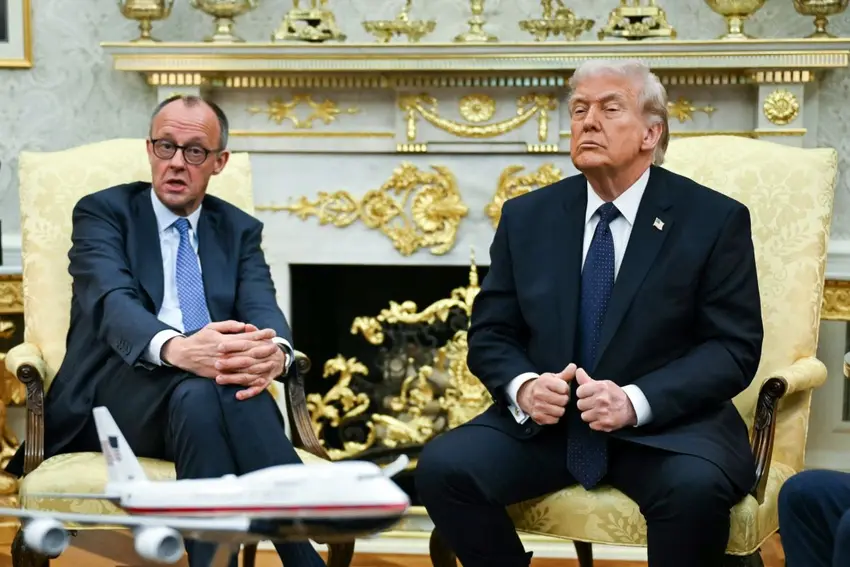
Wednesday's top story: Trump praises Germany’s Iran policy at meeting with Merz
US President Donald Trump praised Germany’s stance on the war in Iran on Tuesday, describing Berlin’s approach as “great” during a meeting with Chancellor Friedrich Merz at the White House.
In contrast, Trump sharply criticised other NATO allies, notably Spain and the United Kingdom, for what he portrayed as a lack of cooperation.
Germany has allowed the continued use of the US air base in Ramstein but has ruled out direct participation in the strikes, unlike France and the UK, which have deployed naval assets to the region.
Trump accused Spain of acting “unfriendly” after Madrid reportedly restricted the use of its bases and said he had ordered the suspension of unspecified agreements with the country.
READ ALSO: How will war in Iran impact life in Germany?
Merz voiced broad alignment with Trump’s objectives, and no public defence of his European allies. He said the Iranian regime must be removed while stressing the need to plan for the post-conflict period.
The chancellor also urged continued focus on ending Russia’s war in Ukraine, which Trump said remained a high priority.
Repatriation begins for travellers stranded in the Middle East
The German government wants to start its repatriation campaign for children, the sick and pregnant among the Germans stranded in the Middle East this Wednesday.
A first flight is planned to Muscat, the capital of Oman, Foreign Minister Johann Wadephul (CDU) announced on Welt TV.
On Tuesday, German travel giant TUI said it planned to start flying home thousands of tourists stranded on two of its cruise ships in the Gulf.
READ ALSO: TUI to fly stranded cruise ship passengers back from Gulf to Germany
In total, roughly 30,000 German tourists were stranded across the Middle East when thousands of flights were cancelled following US and Israeli missile strikes in Iran and retaliatory attacks in surrounding regions.
Berliner Morgenpost reported that a Berlin district politician and innkeeper in Reinickendorf, Norbert Raeder, was among those on the 'Mein Schiff 4' cruise ship when it got stuck in the port of Abu Dhabi.
Germany's government said earlier this week that it would send charter flights to Saudi Arabia and Oman to evacuate the most vulnerable travellers. The foreign ministry said it was working with TUI, airline group Lufthansa and the German Travel Association.
One in three EU citizens in Germany thinking of leaving
Around a third of EU citizens living in Germany are considering emigrating, largely due to the high cost of living and difficulties integrating, according to a new study commissioned by the federal government’s migration and integration commissioner.
The research, presented in Berlin on Tuesday, found that 35 percent of EU nationals surveyed were thinking about leaving Germany, with 13 percent having already made concrete plans to do so.
Rising housing costs and everyday expenses were the most frequently cited reasons, followed by a broader sense of discomfort about living in the country. Experiences of discrimination were also reported, particularly among people from southern Europe.
READ ALSO: ‘Short-sighted’ - Cutting access to integration courses in Germany doesn't make sense
Germany is home to around 5.1 million EU citizens, a figure that has almost doubled since 2010. The largest groups come from Romania and Poland, followed by Italy, Bulgaria and Croatia. Many moved to Germany for work, with nearly half arriving to seek employment or take up an existing job. Around 2.7 million EU citizens are currently employed in the country.
Despite their equal legal status, the study found that many EU nationals face language barriers, labour market obstacles and discrimination in practice.
Migration commissioner Natalie Pawlik warned that Germany could not afford to lose such a large share of its EU workforce and called for better access to language courses, stronger protection against labour exploitation and faster recognition of foreign qualifications.
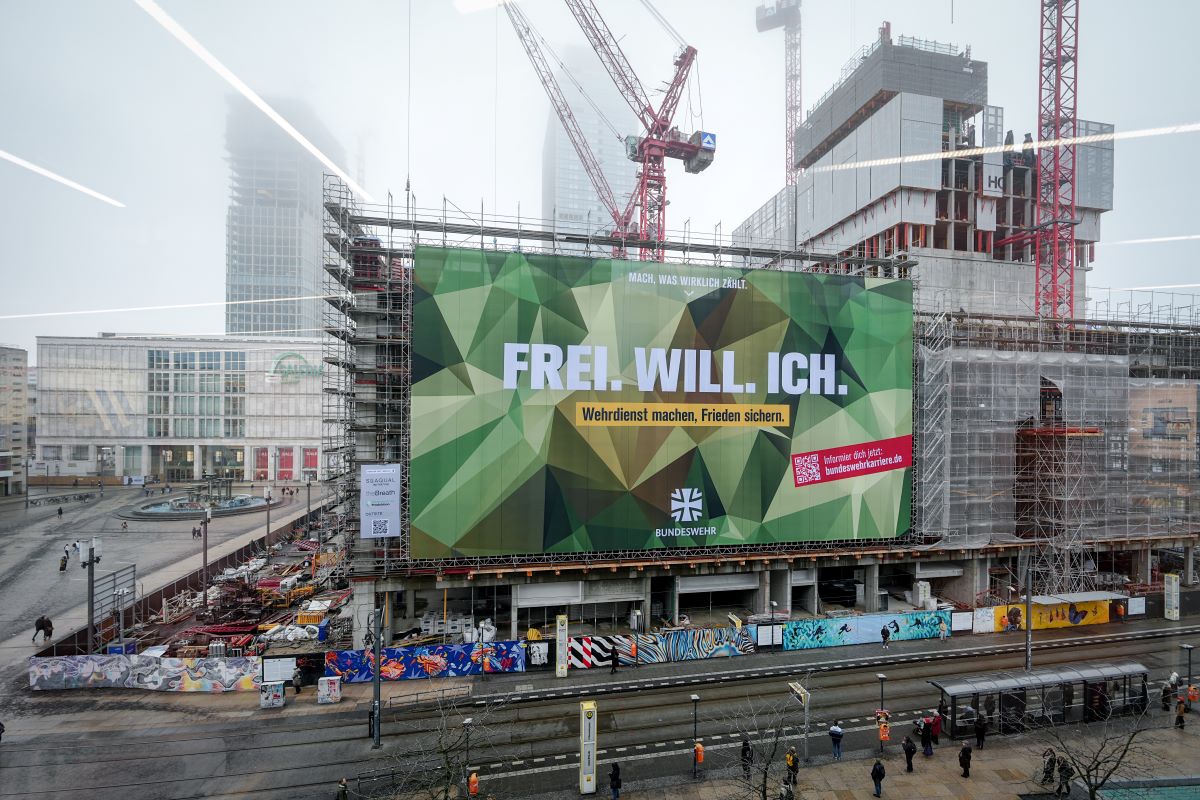
Structures of the Bundeswehr 'not effective', says Armed Forces Commissioner
The Commissioner for the Armed Forces, Henning Otte, called for a purification of paralyzing administrative processes in the German Army (Bundeswehr) on Tuesday.
"The current structures of the Bundeswehr and the Ministry of Defence are too top-heavy, too complicated and in large parts not effective," wrote the CDU politician in his annual report.
Otte also criticized the personnel structure, noting the low proportion of soldiers compared to officers and those of higher rank.
"Within the current personnel structure of the Bundeswehr, there is almost one officer for every enlisted soldier. It is questionable whether the tasks of national and alliance defence of the troops can really be mastered sustainably with such top-heaviness," Otte wrote.
READ ALSO: Everything you need to know about Germany’s new military service letters
According to Otte's assessment, staff and growth remain the central challenges.
At the end of 2025, the number of personnel had increased significantly by around 3,000 soldiers compared to the previous year. It was the year with the highest number of hires since the suspension of compulsory military service in 2011.
Women are still rarely the main earners in German couples
Women remain far less likely than men to be the main breadwinner in heterosexual couples in Germany, according to new figures from the Federal Statistics Office.
In just under one in ten couples, the woman earns the higher net income, highlighting a persistent imbalance in household finances.
The data, published to mark International Women’s Day, show that in 55.8 percent of cohabiting couples the man is the main income earner, while incomes are broadly equal in around a third of cases. A main breadwinner is defined as contributing at least 60 percent of a couple’s combined net income.
READ ALSO: Why Germany’s tax system could be putting women off marriage
The gap widens further once children are involved. Among couples with children, only 7.7 percent of women are the primary earners, compared with nearly two thirds where the man earns most.
Statisticians attribute this largely to employment patterns, noting that mothers are more likely to work part-time, while fathers rarely do so.
The figures also reveal little progress over time. The share of female main earners has even fallen slightly since 2021.
Bettina Kohlrausch of the Hans Böckler Foundation said the findings reflect both persistent pay gaps and an unequal division of unpaid care work. She called for expanded childcare provision and urged fathers to take on a greater share of caring responsibilities.
With reporting by AFP and Paul Krantz
Comments