
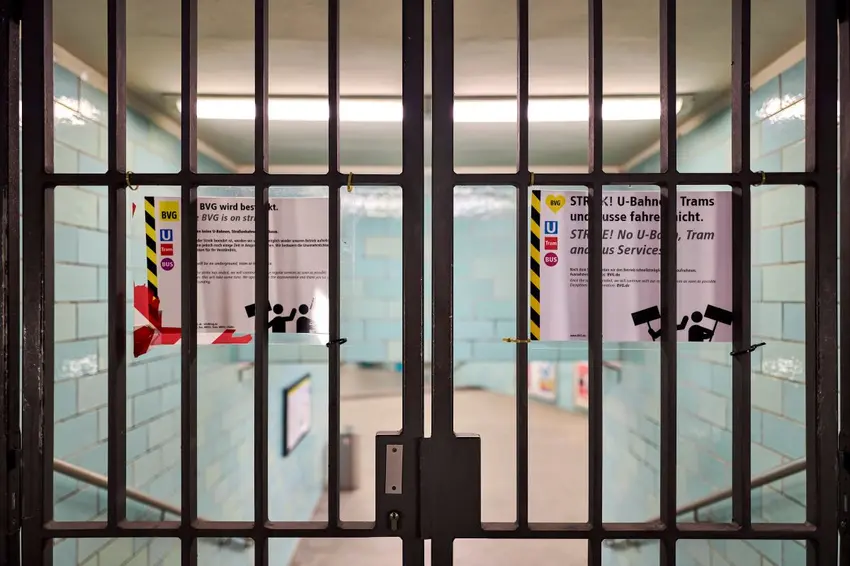
Friday's top story: Warning strikes in public transport sweep Germany
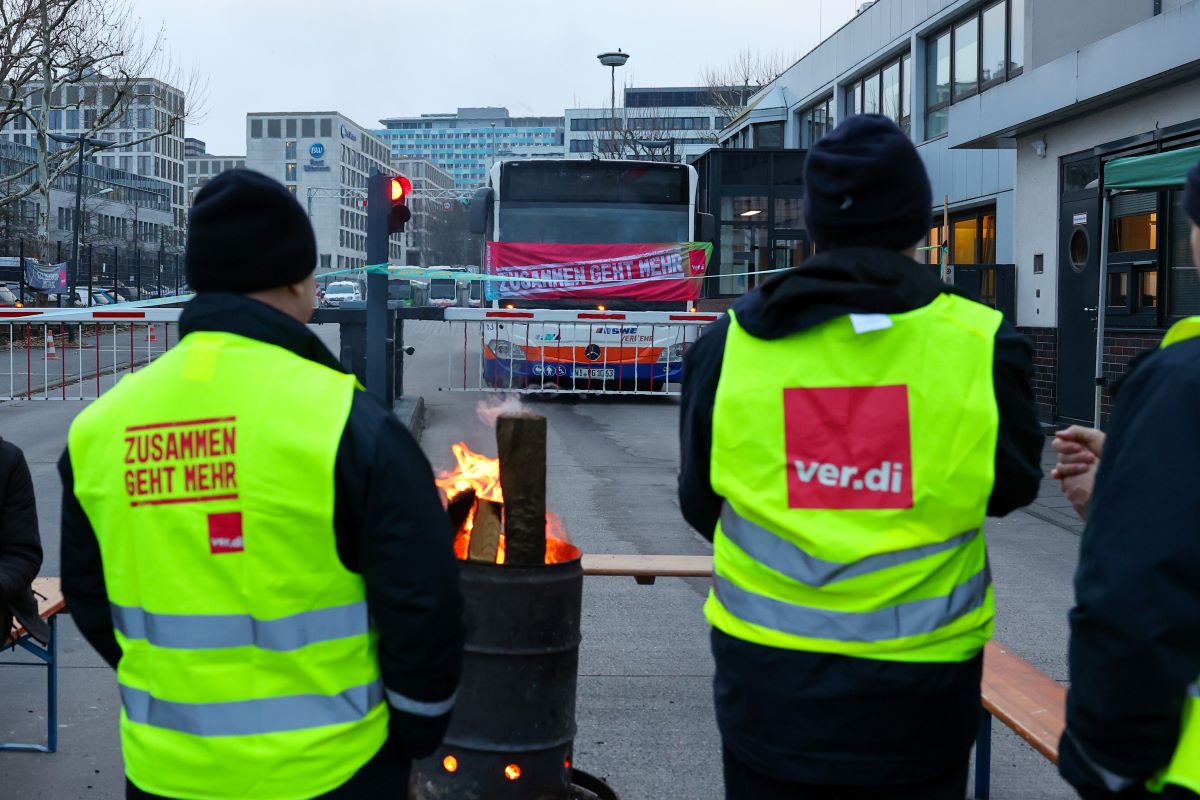
Since the early hours of the morning, there have been considerable restrictions on buses and trains in local transport in almost all federal states due to warning strikes.
According to the union, Germany's largest local transport company, the Berliner Verkehrsbetriebe (BVG), has been on strike since 3 am.
"The strike has begun," Verdi negotiator Serat Canyurt confirmed to the German Press Agency. Buses, trams and subways are to remain in the depots for 48 hours. Traffic is not expected to resume until the start of operations on Sunday morning.
The work stoppage has also begun in Hesse -- affecting transport in the cities of Frankfurt, Wiesbaden, Giessen, Marburg, Offenbach and Kassel -- and in 13 cities in Bavaria, including Munich, Nuremberg, Augsburg, Regensburg and Ingolstadt.
In North Rhine-Westphalia, the list of affected cities is long, but among them are the larger cities of Bonn, Cologne, Düsseldorf, Essen and Münster.
READ ALSO:
- Where in Germany passengers will be hit by transport strikes on Friday and Saturday
- How to get around Berlin during the two-day public transport strike
Transport is also affected in Saxony in Leipzig, Dresden, Chemnitz, Zwickau and Plauen. In Leipzig, the call is also valid for Saturday.
In most regions, the warning strikes will last for 48 hours until the early hours of Sunday morning. But in some places, transport could still be affected on Sunday.
In Bremen, for example, warning strikes are announced until Monday night, but in Mecklenburg-Western Pomerania only on Friday.
The warning strikes come as the second large-scale action in the current public transport collective bargaining round.
German court rules spy service may not label AfD 'extremist' for now
A German court ruled on Thursday that the domestic intelligence agency cannot label the far-right Alternative for Germany (AfD) party as a "confirmed right-wing extremist" group, at least for now.
The AfD had challenged the designation, which would empower the spy agency to use broader surveillance powers to monitor it and would embolden political opponents seeking a ban of the anti-immigration party.
The Cologne administrative court's decision puts the designation on hold pending the final outcome of a legal battle between the AfD and Germany's intelligence agency, the Federal Office for the Protection of the Constitution (BfV).
The court found that there were indeed efforts to undermine Germany's free democratic order from within the AfD, highlighting its demands to ban Muslim minarets, public calls to prayer and headscarves in public institutions.
But it ruled that the party as a whole was not "shaped by these efforts" such that "an anti-constitutional tendency can be established" to characterise the party in its entirety as extremist.
READ ALSO: Anti-immigration AfD party wants to bring ICE to Germany
German firms raided over illegal Russian imports
German customs officials have raided three companies in Hamburg over accusations they illegally imported goods from Russia, authorities said Thursday.
Russia has been hit with repeated rounds of European Union sanctions since its full-scale invasion of Ukraine in 2022, severely limiting trade between the bloc and Moscow.
The searches at the firms in Hamburg, a major port in northern Germany, are over suspicions that a managing director violated restrictions on Russian imports in over 900 cases, customs officials said.
"Goods worth over €4 million are said to have been imported indirectly from Russia," according to a statement from the customs office in the city of Essen, which is leading the probe.
The office declined to give details about the goods, citing the ongoing investigation.
Two luxury cars were seized during the search, and assets worth €3.5 million belonging to one of the companies were frozen. Documents and storage devices were also seized as evidence.
Germany begins direct deportations to Afghanistan after deal with Taliban
Germany has carried out its first direct deportation of convicted criminals to Afghanistan following a new agreement with the Taliban authorities in Kabul.
A total of 20 Afghan nationals were flown from Leipzig to Kabul on Wednesday, the Federal Interior Ministry announced, marking a significant shift in Germany’s deportation policy.
According to the ministry, those deported had committed serious crimes in Germany, including assault, sexual offences and drug‑related crimes.
Interior Minister Alexander Dobrindt said the agreement with the Taliban created a “reliable basis for direct and permanent deportations” and described the move as a core element of stricter migration enforcement. Further deportations are expected to follow.
READ ALSO: Germany close to deal with Taliban on Afghan deportations
Several federal states confirmed details of the cases. Baden‑Württemberg deported three men aged between 22 and 38, including a convicted sex offender involved in the rape of a minor in 2019.
Saxony removed three Afghans, one of whom had seriously injured a train driver, while Hesse deported four offenders.
The government has faced criticism for negotiating directly with the Taliban, but Dobrindt has defended the talks as necessary to ensure the removal of serious offenders.

Puma posts biggest loss in company history
Sportswear manufacturer Puma has reported the largest loss in its nearly 80‑year history, posting a deficit of €643.6 million in 2025, according to figures released on Wednesday.
The result marks a sharp reversal from the €280.7 million profit recorded the previous year. Chief executive Arthur Hoeld said the company also expects to remain in the red in 2026, with a return to growth planned for 2027.
Hoeld described 2025 as a “reset year” as Puma embarks on a far‑reaching restructuring aimed at restoring profitability and regaining its long‑term ambition of becoming the world’s third‑largest sportswear brand, behind Nike and Adidas.
READ ALSO: Adidas-Puma family feud to be featured in TV series set in Germany
The company has slipped in industry rankings and has been overtaken by competitors including Skechers and its own major shareholder, Anta Sports.
Puma’s sales fell by 13.1 percent to just under €7.3 billion last year, weighed down by excess inventory and heavy discounting by retailers. As part of its overhaul, the company is cutting product ranges, closing unprofitable stores and reducing jobs, while shifting more strongly toward direct‑to‑consumer sales.
Shareholders will not receive a dividend for 2025.
With reporting by DPA, AFP and Tom Pugh.
Comments