
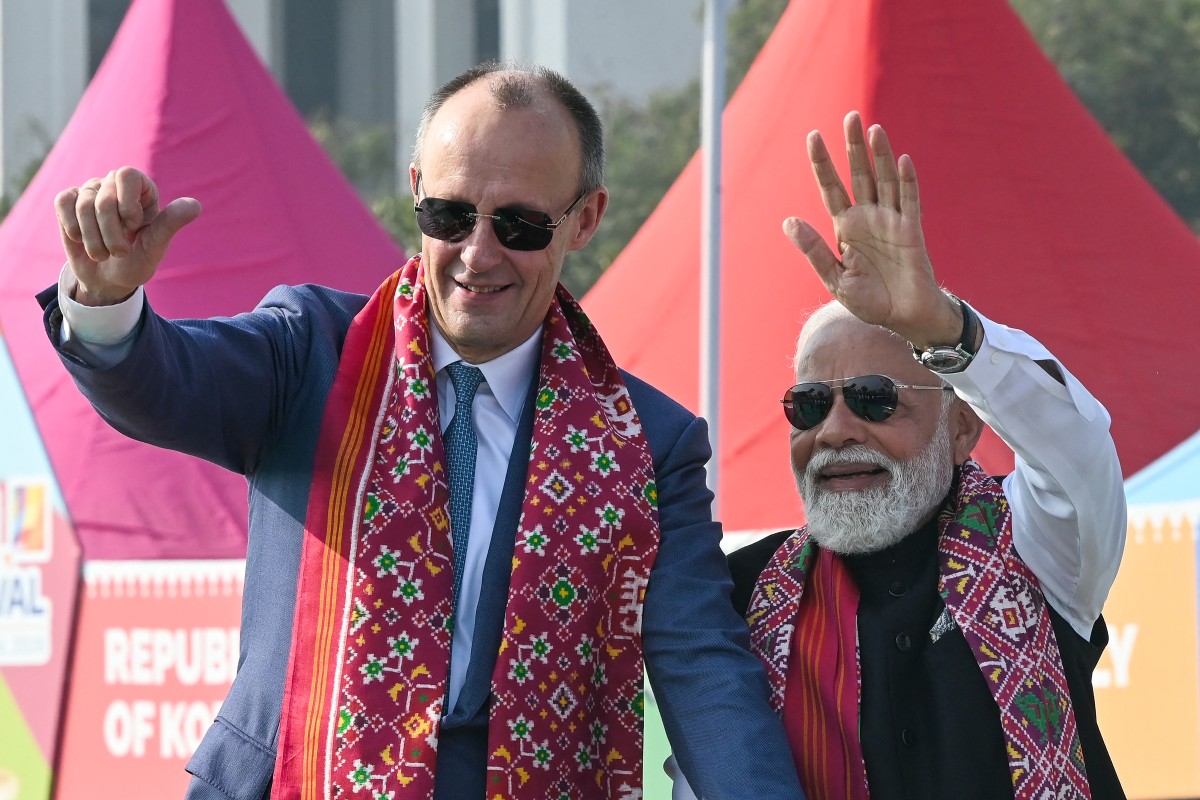
Wednesday's top story: Germany hails EU-India trade deal
Germany welcomed Tuesday a massive trade deal signed by the European Union and India, saying it could support growth at a time of increasingly challenging ties with other major economies.
"This agreement creates new opportunities for growth and good jobs -- in Europe and India alike -- while deepening the strategic partnership with the world's largest democracy," said Lars Klingbeil, Germany's finance minister and also vice chancellor of Europe's biggest economy.
The deal, announced in New Delhi during a visit by EU chiefs, "opens a new chapter in European trade policy", Klingbeil said.
"At a time of upheaval, we are consciously focusing on openness, reliability, and strong partnerships."
READ ALSO: How Indians can protect their residency rights in India after becoming German
As trade with the United States and China has become increasingly difficult in the wake of President Donald Trump's tariffs blitz, Europe has been seeking to strike trade deals and open up new markets for its exporters.
This is particularly important for Germany, whose export-driven economy is mired in a long decline due to a host of challenges.
The country's crucial auto industry, which is set to benefit from reductions in auto tariffs, cheered the deal.
"India is a key partner for the German automotive industry, an important production location, and an important market for the future," Hildegard Mueller, president of the VDA car industry group, said in a statement to AFP.
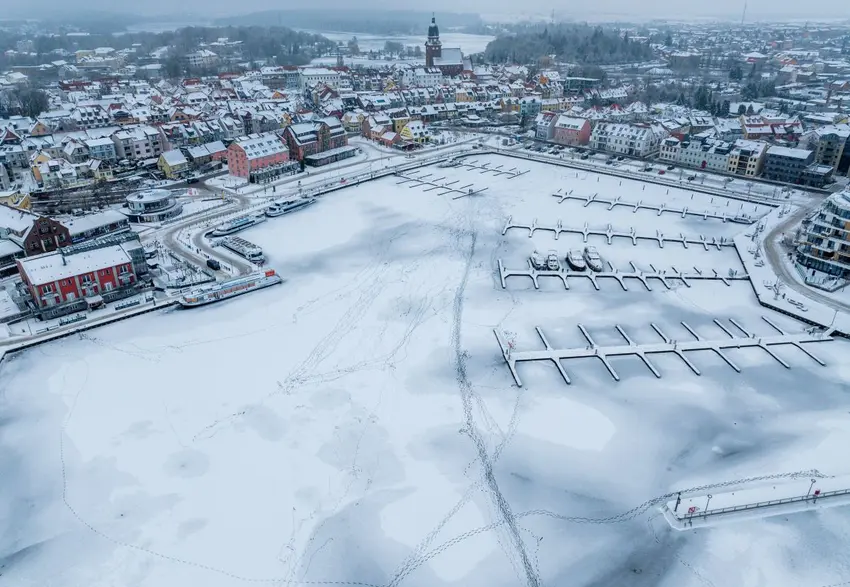
Germany’s largest inland lake completely frozen
Germany's largest inland lake, the Müritz in Mecklenburg-Vorpommern, is completely frozen over for the first time in years, forming a vast 211-square-kilometer ice sheet with connected regional lakes.
The Waterways and Shipping Authority (WSA) Elbe in Waren confirmed the closed ice cover on Tuesday, with the ice measuring between 16 and 25 centimetres in thickness.
Nonetheless, authorities strongly advised against venturing onto the ice due to safety risks.
State Fishing Association President Sebastian Paetsch hailed the rare event, which he said recalled the winter of 1995/96 when the lake froze to a depth of half a metre – thick enough to support the weight of cars.
READ ALSO: 'Eat for the season' - The verdict on how to survive the German winter
Wind and sun supply electricity for Germany almost every day
While critics, and fossil fuel lobbyists, continue sowing doubts, the development bank KfW suggests recent figures show that renewable energy sources provide electricity for Germany on the vast majority of days each year.
According to a KfW analysis, there are only about 15 days a year when the wind and sun do not supply sufficient electricity.
On average over the past three years, unfavourable conditions for the two energy sources have coincided on only four percent of all days of the year, according to KfW.
READ ALSO: France, Germany and Nordic countries back North Sea wind power at summit
Last year, according to KfW calculations based on data from the Federal Network Agency, more than half (56 percent) of the electricity consumed in this country came from wind (29 percent), solar (16 percent), biomass and hydropower (11 percent).
For the first time, two renewable energy sources, wind and solar energy, were at the top of local electricity generation with a share of 45 percent of the electricity consumed.
Germany takes aim at 'bureaucratic jungle' with welfare reforms
Germany's government unveiled major reforms Tuesday aimed at slashing the "bureaucratic jungle" of its welfare system but insisted that benefits to those in need would not be rolled back.
The EU's most populous country is notorious for its myriad rules and regulations, and conservative Chancellor Friedrich Merz has vowed to slay the "monster" of onerous red tape.
Part of this drive is directed at overhauling a state welfare system where multiple agencies oversee different entitlements, and citizens have to fill out numerous lengthy documents to claim benefits.
A government-appointed commission laid out proposals that include moving more of the system online and reducing the number of agencies involved in overseeing benefits.
"The welfare state of tomorrow will be simpler, fairer and more digital," Labour Minister Baerbel Bas told a press conference, unveiling the commission's report.
READ ALSO: 'Digital reboot' - How Germany is planning to overhaul its welfare state
German auto supplier Aumovio to cut up to 4,000 jobs
German auto supplier Aumovio said Tuesday it planned to cut up to 4,000 jobs worldwide, the latest sign of the crisis gripping the car industry in Europe's top economy.
The cuts, amounting to almost five percent of the group's staff, will affect sites in Germany, Romania, Serbia, Singapore, India and Mexico, Aumovio said in a statement.
The process is expected to be largely completed by the end of this year, it said.
READ ALSO: Is Germany really on course to cut 140,000 auto industry jobs in a decade?
Aumovio, which was spun off from tyre maker Continental last year, said the move was part of a restructuring of its research and development activities to reduce costs.
Germany' flagship auto sector has in recent years been battling rising manufacturing costs, weak demand in Europe and fierce competition from fast-growing Chinese rivals.
Other auto suppliers, including Bosch, have announced job cuts as have leading carmakers, with Volkswagen aiming to axe 35,000 jobs in Germany by 2030.
Aumovio said the cuts in Germany would be in the hundreds and would be carried out "as socially responsible as possible".
With reporting by AFP and Paul Krantz.
Comments