
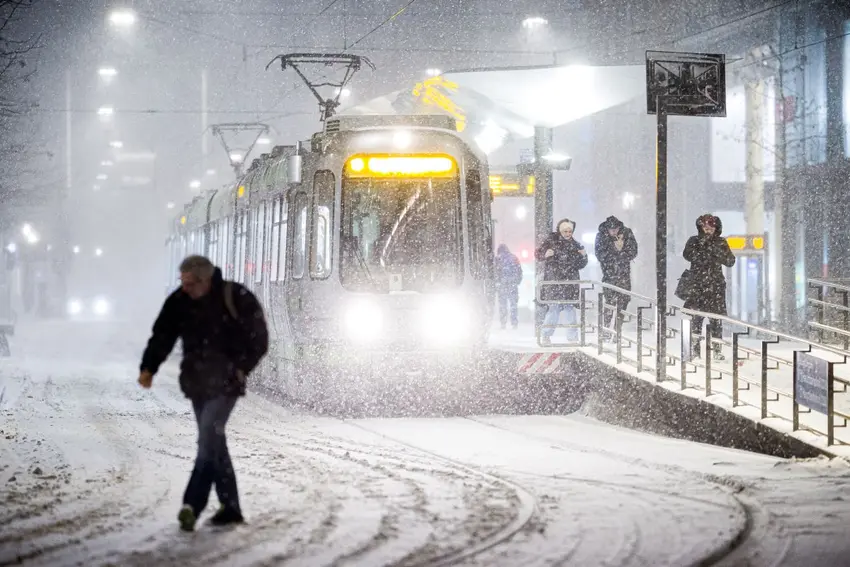
Friday's top story: Heavy snowfall paralyses life in Germany
Large parts of Germany are facing severe disruption as icy winter storm “Elli” brings heavy snow, freezing temperatures and strong winds. The German Weather Service (DWD) issued storm warnings across northern and central regions, with up to 15 centimetres of snow expected in many areas and over 20 centimetres in mountainous regions.
Driving conditions remain treacherous after several weather-related accidents overnight, including a bus sliding off a slope in Baden-Württemberg.
Many schools across Hamburg, Lower Saxony, Bremen and parts of Schleswig-Holstein are closed, with remote learning and emergency childcare in place. Some regions in Bavaria, Brandenburg and Thuringia have also suspended classes due to unsafe travel.
READ ALSO: What drivers in Germany need to know about staying safe in snowy conditions
Rail and ferry transport are severely affected. The Deutsche Bahn expects delays and cancellations in long-distance travel until Saturday, advising passengers to postpone trips.
Routes between Hamburg, Berlin and the North Sea have already been disrupted, while North Sea ferries to islands such as Langeoog and Norderney have been suspended because of low water levels caused by strong easterly winds.
The DWD warns that snowdrifts and black ice could continue to hinder travel through Friday, although conditions are expected to ease later in the day.
Green party calls for climate money to be paid out to citizens
The Green parliamentary group is once again demanding the payment of revenues from CO2 pricing to citizens.
"Two hundred and fifty euros in climate money per year per person would noticeably relieve people with low incomes in particular," the climate policy spokeswoman of the Green parliamentary group, Lisa Badum, told the German Press Agency in Berlin.
"Climate money", or Klimageld was an idea proposed by Germany's previous government coalition of SPD, Greens and FDP, but it failed to come to fruition.
Germany achieved record revenues last year from the sale of carbon dioxide pollution rights. According to the German Emissions Trading Authority (DEHSt), more than €21.4 billion were collected from European and national emissions trading in 2025. In 2024, the figure was €18.5 billion.
Under current plans, that money will flow entirely into the Climate and Transformation Fund, which is intended to be used to finance energy transition and climate protection measures. Ideally the money would then be used for energy-efficient building renovations, for example, or the expansion of the charging station network for electric cars.
READ ALSO: Germany's energy transition put on the back burner in 2025
Badum accused Chancellor Friedrich Merz and Economics Minister Katherina Reiche (both CDU) of not using the special fund for infrastructure and climate protection properly. "Billions that are supposed to finance the path to climate neutrality are fizzling out in short-sighted gas subsidies."
Instead, Green party leaders would rather see the money returned to German citizens. This would be a boon to low-income households and presumably inspire greater enthusiasm for Germany's climate goals.
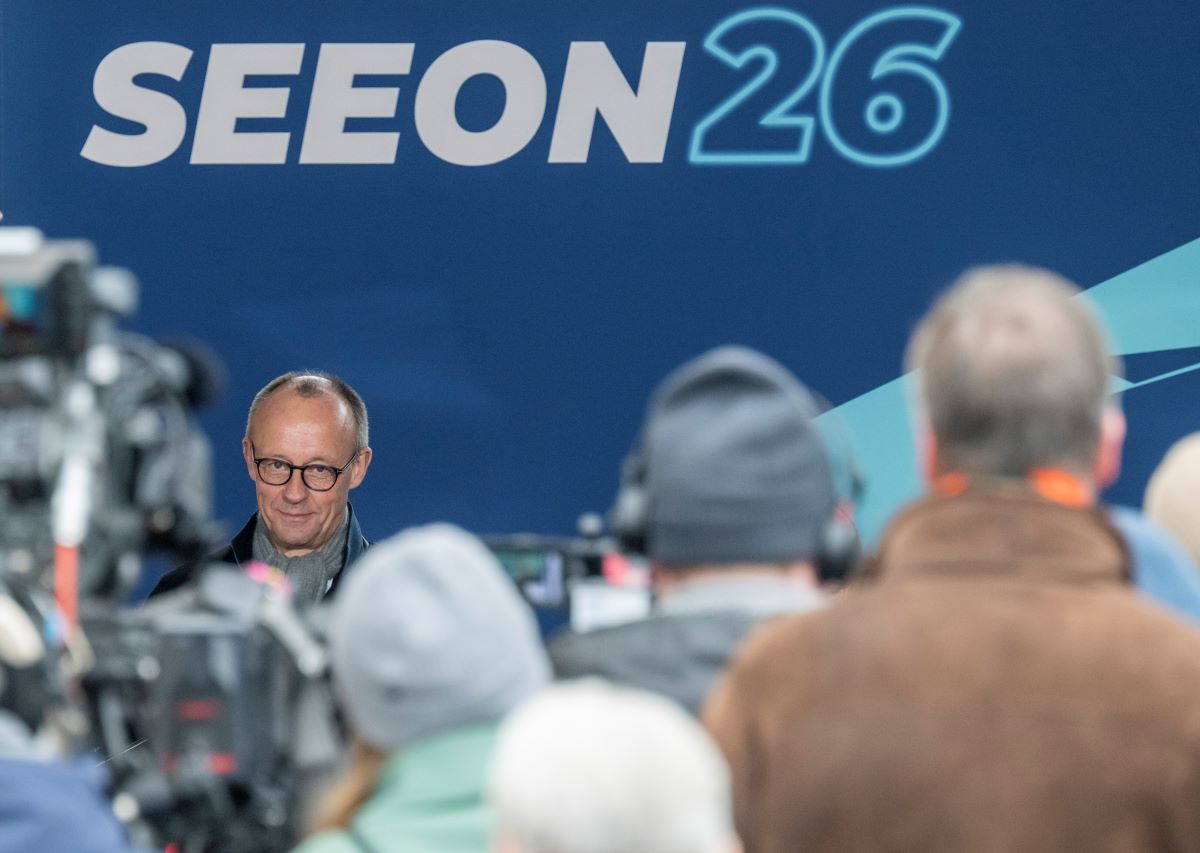
Merz defends Wegner's blackout response
Christian Democrat (CDU) leader and Chancellor Friedrich Merz indirectly defended Berlin Mayor Kai Wegner on Thursday amid backlash over his crisis management during a major power outage.
Speaking at a CSU parliamentary retreat in Kloster Seeon, Bavaria, Merz told journalists: "There is nothing to criticise in the procedures. We probably couldn't have done it much better."
READ ALSO: 'Unworthy' - Berlin mayor caught playing tennis during widespread blackout
Wegner, also CDU, admitted playing tennis for an hour shortly after the January 3rd blackout hit southwest Berlin, affecting over 100,000 residents. Merz avoided direct comment on the match but shifted focus to national resilience. "We cannot protect our infrastructure comprehensively, but we need redundancies," he said, noting Berlin's apparent lack thereof.
He called for thorough analysis to bolster future safeguards against such attacks. The remarks came as Wegner's party rallied behind him earlier on Thursday, dismissing opposition resignation demands.
READ ALSO: Just how vulnerable is Germany’s infrastructure to attacks and sabotage?
Verdi threatens warning strikes at Autobahn GmbH after failed pay talks
Motorists can expect warning strikes after the first round of collective bargaining negotiations with the federal government's Autobahn GmbH ended without a result. Verdi union secretary Martin Krupp told the German Press Agency that they are counting on “the employer to take the second round of negotiations in early February seriously and to present a concrete offer on pay.”
He added: “Until then, we will obviously have to emphasise our demands.” According to information from the German Press Agency, this refers to warning strikes.
Verdi, along with the civil service union dbb, is asking for a seven percent pay rise, or at least €300 more per month for the company’s 15,000 employees. The dbb’s lead negotiator also did not rule out strike action.
Autobahn GmbH expressed regret over the early end to the talks, saying it aims for “fair and sustainable solutions” that reflect both employee performance and financial realities.
With reporting by DPA and Paul Krantz.
Comments