
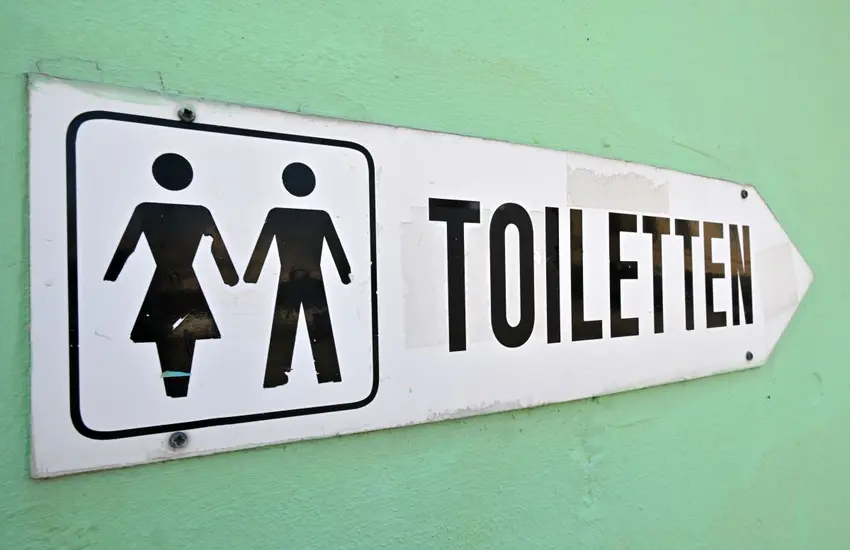
For some newcomers and visitors to Germany, it may come as a surprise that using the toilet at a train station is not free. Passengers here typically pay between €1.00 and €1.50 per visit – regardless of if they have bought a train ticket or not.
This can come as an especially bitter surprise to people from the United States or other countries where public toilets are typically free to use. Toilets are available for free use by passengers on many regional and long-distance trains operated by Deutsche Bahn, however they are not available on all trains and conditions inside are sometimes less than ideal.
Germany’s Left Party (Die Linke) recently brought this issue to the national stage, submitting a formal inquiry to parliament, asking why toilets at train stations are not free and urging action to make them so.
While the move has shone a light on the issue, the response from Deutsche Bahn (DB) and the government suggests there's little prospect of change.
Should use of public toilets be free?
Die Linke argues that universal access to clean, safe and free toilets is a matter of "dignity, mobility and participation in public life" and that this is especially true for groups that are particularly dependent on reliable sanitary facilities, such as children, seniors and menstruating people.
“We need a public and barrier-free supply of free toilets as a basic requirement for democratic participation,” said Katalin Gennburg, Die Linke’s tourism and construction expert in the Bundestag, in an interview with RND.
READ ALSO: Where in Germany bus and train fare prices are rising in 2026
Gennburg also emphasised that toilets are part of travel safety for passengers.
This is not the first time the Left party has raised the issue. In summer 2024, the party submitted a similar question to parliament.
The issue has also been discussed in expert forums led by Die Linke members, including a recent event in the Bundestag timed to coincide with World Toilet Day on November 19th.
Deutsche Bahn’s Response
Deutsche Bahn (DB), Germany’s national railway company, maintains that providing free toilets is not feasible.
According to DB and the Federal Ministry of Transport, “free use is currently not feasible because high standards of cleanliness, hygiene and equipment require considerable investment.”
Public toilets are operated at a total of 327 locations at train stations in Germany, 174 of which are managed by DB's infrastructure subsidiary Infrago.
READ ALSO: How rail journeys across Europe could be made faster in the coming years
"It is not possible for DB Infrago AG to operate these facilities at smaller, less frequented train stations...," wrote the ministry.
They added that, "At more frequented train stations, cost-covering operation is only possible by charging a usage fee of €1.00 to €1.50 per use."
As the debate continues, organisations such as EU-Schwerbehinderung (EU Severe Disability) and various social advocacy groups remain engaged, highlighting the importance of accessible, free toilets for all.
But for now, travellers in Germany should be prepared: when nature calls at the station, it pays to have a euro or two handy.
Comments