
Germany's controversial military service law, which received a majority of votes in parliament, marks a major shift in the country's security policy as the government seeks to boost the Bundeswehr (German army).
Under the planned changes, from January next year a questionnaire will be sent to all young German men and women turning 18-years-old to assess their interest in serving, including questions on their level of fitness, skills and interests.
While men are required to complete it, it will be voluntary for women, according to the draft law.
In a second phase, from July 1st 2027, all 18-year-old German men will also be required to undergo a mandatory medical examination, even if they do not opt for voluntary military service.
READ ALSO: Who would be affected by Germany's new military service draft law?
However, if there is a shortage of recruits, compulsory service may be introduced in future following a further legislative decision.
The government argues the reforms are necessary to strengthen its army as Europe faces heightened geopolitical instability.
Experts have warned that war may spread further in Europe if Russia, which is still locked in battle with Ukraine, feels emboldened to attack a NATO country in the coming years.
READ ALSO: How Germany is stepping up preparations for war
Defence Minister Boris Pistorius (SPD) admitted the law was controversial and that it had not been an easy decision, but that it was "necessary".
Pistorius added that service should initially be voluntary however, "if that is not enough, we will have no choice but to introduce partial conscription".
"This country, this democracy deserves it," he said.
The aim of the law is to increase the number of active soldiers from 183,000 to between 255,000 and 270,000 by 2035. In addition, there are plans to recruit 200,000 reservists.
Protests by students
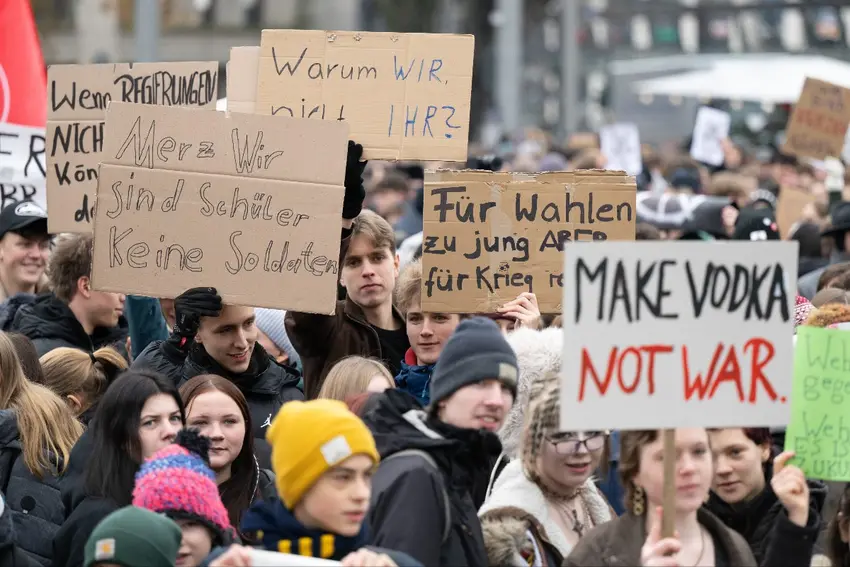
It came as widespread protests by school students against the law took place in around 90 German cities.
Students walked out of the classroom and rallied under the banner 'school strike against compulsory military service', arguing: 'We don't want to end up as cannon fodder.'
The protests are primarily directed against the planned medical examination of all young people born in 2008 or later.
The Bundesrat, which represents German states, still has to approve the bill.
Comments