
These days it seems there is a new poll showing growth in support for the far-right Alternative for Germany (AfD) every other week. Recent polls indicated that the anti-immigration party has become a significant electoral force, with support reaching between 27 and 38 percent in some regions.
Over the weekend, the party held a founding congress for its new youth organisation, 'Generation Germany', in Gießen.
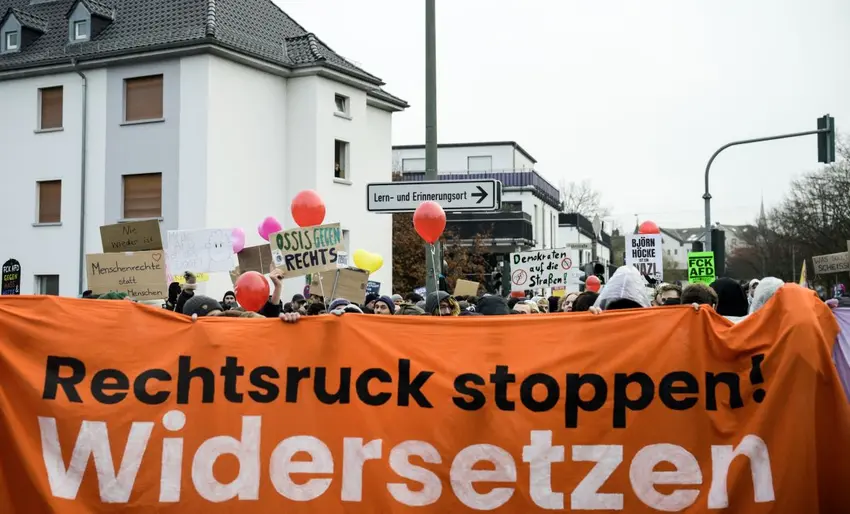
Simultaneously, tens of thousands of demonstrators arrived in the city to protest against the party’s growing influence, and the establishment of its youth wing. The protests, organised by alliances such as Resist (Widersetzen), saw blockades at multiple points, delaying the congress and disrupting traffic.
The events illustrated the AfD’s growing organisational strength and electoral support, but also the resilience of civil society and political opposition.
Ultimately, these developments show that both support for, and resistance to, the AfD are intensifying – in a conflict that is shaping the future of German politics in real time.
What happened at the party conference?
On Saturday the AfD held its founding congress of Generation Germany, its new youth organisation which is replacing the disbanded 'Young Alternative'. The party's former youth wing had been classified as right-wing extremist by Germany’s domestic intelligence agency.
The congress was attended by over 800 participants, including AfD federal chairpersons Alice Weidel and Tino Chrupalla.
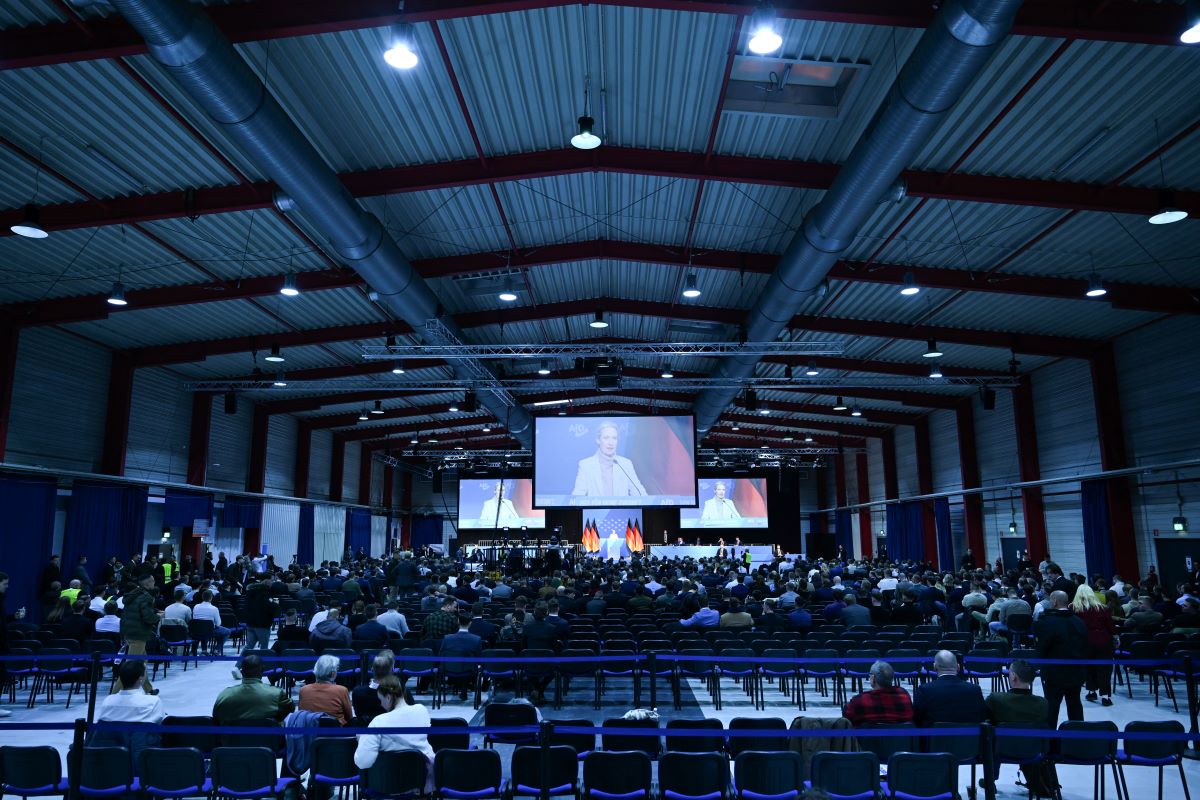
The political tone inside was set by speeches advocating for hard-line policies.
One youth party member called for ramped up deportations, and to make “the runways in Germany glow”. Another board member said that “only millions of remigrations will protect our women and children.”
The congress also saw a controversial appearance by Alexander Eichwald, whose speech was reminiscent of Nazi rhetoric and led to calls for his expulsion from the party.
A new youth party chairman
Jean-Pascal Hohm was elected chairperson of Generation Germany at the congress.
Now 28, Hohm has been a member of the AfD since the age of 17 and currently represents the party in the Brandenburg state parliament.
The Brandenburg Office for the Protection of the Constitution classifies both the Brandenburg AfD and Hohm as confirmed right-wing extremists. It describes Hohm and other state politicians as “personally networked" among Brandenburg's “strongholds of right-wing extremism”.
READ ALSO: How Germany's leaders are empowering the far right
Surrounding protests
Outside the congress, the Resist alliance and other groups organised blockades at 16 points around Gießen.
They had aimed to prevent delegates from reaching the venue. Police counted over 25,000 demonstrators, while organisers claimed more than 50,000.
The protests were largely peaceful. But police used water cannons, pepper spray and batons to clear blockades. Three people were arrested and released shortly afterwards, and between ten and 20 police officers were reported to have suffered minor injuries.
The alliance accused police of excessive force, with a spokeswoman for Resist stating: “In Gießen, police officers beat a path for the fascists.”
READ ALSO: How German media reveals its bias when foreigners commit crimes
Gießen Mayor Frank-Tilo Becher of the centre-left Social Democrats (SPD) praised the peaceful protest, saying, “Gießen did not burn, but shone – through the many eyes of those who took to the streets and cheerfully and peacefully celebrated their support for our democracy...”
READ ALSO: Why a German orchestra is using music to protest against the far-right
Pushback against normalisation
Inside the AfD some party leaders, such as co-leader Weidel, appear to be making an effort to soften the party's image. But far-right watch dogs are sceptical that the party would truly reorient its goals and platforms.
Commentary published by Swiss newspaper Neue Zürcher Zeitung suggested that Weidel, “has not curbed the party’s radicalism at all, but has merely packaged it in such a way that it appears increasingly electable to the outside world.”
Meanwhile, recent actions of major German business group, the Association of Family Businesses, showed that the party had succeeded in legitimatising itself to some extent.
Last week, the association announced it would begin direct discussions with the AfD, declaring that the longstanding “firewall” (Brandmauer) against the party had failed.
This move was met by immediate public criticism, and prompted several well-known companies to resign from the association in protest, including Rossmann, Vorwerk and Fritz Kola.
READ ALSO: Students walk out on German Chancellor's speech on integration
In contrast, the founder of DM, a direct competitor of Rossman’s, criticised what he called the “diabolisation” of the AfD and argued for an issues-based debate instead. His comments triggered a wave of criticism and boycott calls on social media, with many users urging, “buy at Rossmann, not DM.”
Under pressure, DM later clarified it was no longer a member of the association, and issued a statement supporting diversity and rejecting discrimination.
The Association of Family Businesses also ultimately reversed its position, with its president, Marie-Christine Ostermann, stating, “We distance ourselves from extremists and will not allow them to co-opt us.”
Comments