
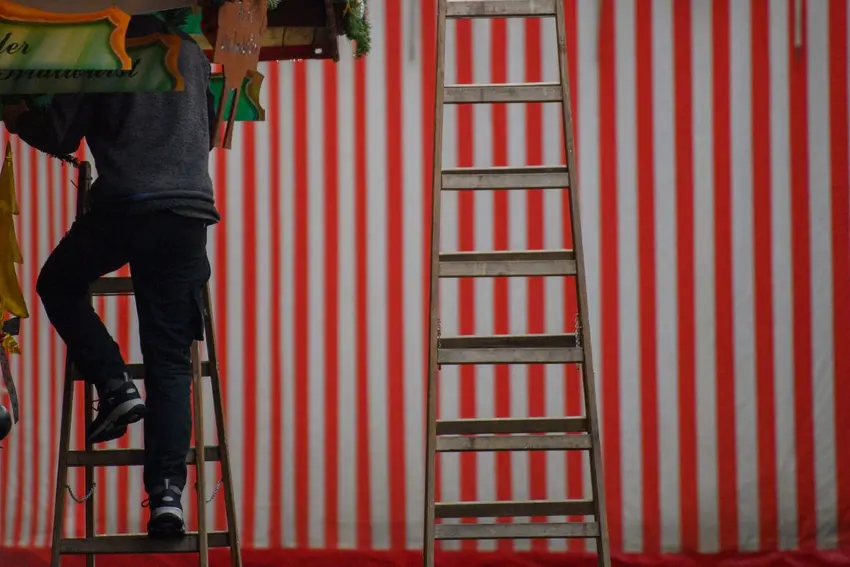
Wednesday's top story: Magdeburg Christmas market to open after doubts
Magdeburg Christmas market is set to open on Thursday after debates around its security concept were resolved successfully.
The organiser will receive approval from the state authority, the city administration announced. It's the result of various inspections over the past few days.
It had been unclear whether the market would receive official approval, after the state authority had raised safety concerns.
However, market bosses updated their security concept further, and it has now been given the green light to open.
On December 20th last year, a 50-year-old man drove through the market in a rental car, killing six people and injuring more than 300 others. The trial against the driver is currently underway at Magdeburg Regional Court.
The man had driven through gaps in barriers to get the SUV into the market area.
READ ALSO: When are Germany's Christmas markets opening in 2025?
Government to offer less support to Ukrainians in Germany
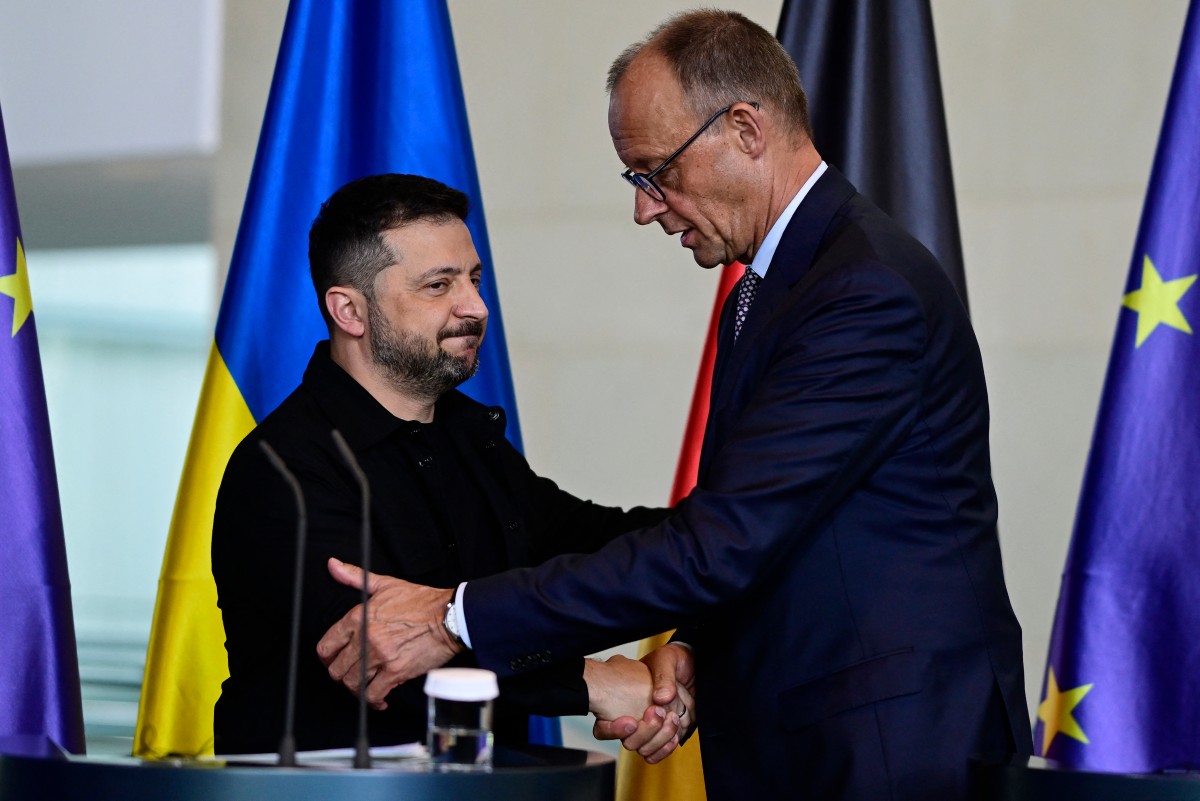
The coalition government – made up of the CDU/CSU and SPD – wants refugees from Ukraine to receive less financial support from the state.
Chancellor Friedrich Merz this week reiterated the goal that was was part of the coalition agreement. He said the plan is to move Ukrainians, who have come to Germany since April this year, from Bürgergeld (long-term unemployment benefit) to asylum seekers benefits.
In practice, this means that in the future, some refugees from Ukraine will no longer be the responsibility of job centres – and instead they will attend social welfare offices. The government says those affected will still be able to get a job quickly.
The new law has been drafted by SPD Labour Minister Bärbel Bas, even though she considers it a mistake.
“I don't like it. I'll say that quite openly,” Bas said in the Bundestag. She believes it is better to continue with the integration path because it is more effective and sustainable for the labour market.
A recent report found that Ukrainian refugees are integrating into German society and the workforce more rapidly than refugee groups from other countries.
READ ALSO: How Ukrainian refugees have rapidly integrated in Germany
Criticism of the government's plans have also come from the employment agency. It fears that it will be more difficult in future to advise Ukrainians and place them in jobs.
If fewer people have contact with job advisors, it could also become more difficult to offer language and integration courses or training measures.
People in Germany see rising living costs – but electronics prices plunge
Consumers in Germany are facing a mixed picture on inflation as everyday expenses continue to rise – while many electronics have become significantly cheaper.
Recent data from the Federal Statistical Office shows that food, car repairs, package holidays and rents all increased again in October, piling pressure on households.
READ ALSO: German households continue to feel the pinch as prices for daily goods rise
But in contrast, several electronics saw steep price drops. For example, television prices fell by more than 10 percent compared to last year, with laptops, desktop PCs, printers and monitors also noticeably cheaper.
Analysts say it's because of pre-Christmas discounting, global overcapacity and low production costs abroad. But despite the lower prices, surveys indicate that many consumers remain reluctant to spend.
Retailers in Germany are pinning their hopes on the Black Friday weekend (starting November 28th), which marks the unofficial kickoff to the holiday shopping season.
The German Retail Association expects nearly €6 billion in sales during this period, although it warns that promotional revenues may slip compared with 2024.
At the same time, shoppers should brace for higher prices on certain gifts: smartwatches, e-readers have all become more expensive. The same applies to chocolate, which (sadly) rose by a whopping 21.8 percent in October compared to the same month last year.
German Foreign Minister urges Serbia to pick EU over 'mixed signals'
Germany's foreign minister on Tuesday urged Serbia's government, with its close ties to Moscow, to choose between joining the European Union or instead pursue a path of "mixed signals".
Foreign Minister Johann Wadephul, appearing alongside his Serbian counterpart in Belgrade, told the media that the Balkan nation needed to decide if it would "align itself with European positions in foreign and security policy".
"Or send mixed signals that are incompatible with the fundamental values of the European Union," Wadephul said, in the latest stop in his tour of the Balkans.
Serbia remains one of the few countries not to sanction Russia following its invasion of Ukraine in 2022.
But in recent months, Belgrade's close ties with the Kremlin have become increasingly difficult to balance with Brussels, as Washington and its allies ratchet up pressure on Russia.
Foreign Minister Marko Djuric said that Serbia remained "unequivocally and firmly committed" to joining the bloc, including accepting its foreign and security policies, but his country still needed "various reforms".
The visit comes amid a looming energy crisis in Serbia, with its only oil refinery expected to run out of reserves within days due to US sanctions targeting the firm's majority Russian owners.
Wadephul also highlighted "repeated instances of violence against peaceful demonstrators", referring to reports of police brutality against the year-long anti-government protest movement.
"It is the responsibility of authorities and decision-makers to ensure the right to peaceful protest."
Roughly half of EV drivers in Germany would avoid Tesla over politics
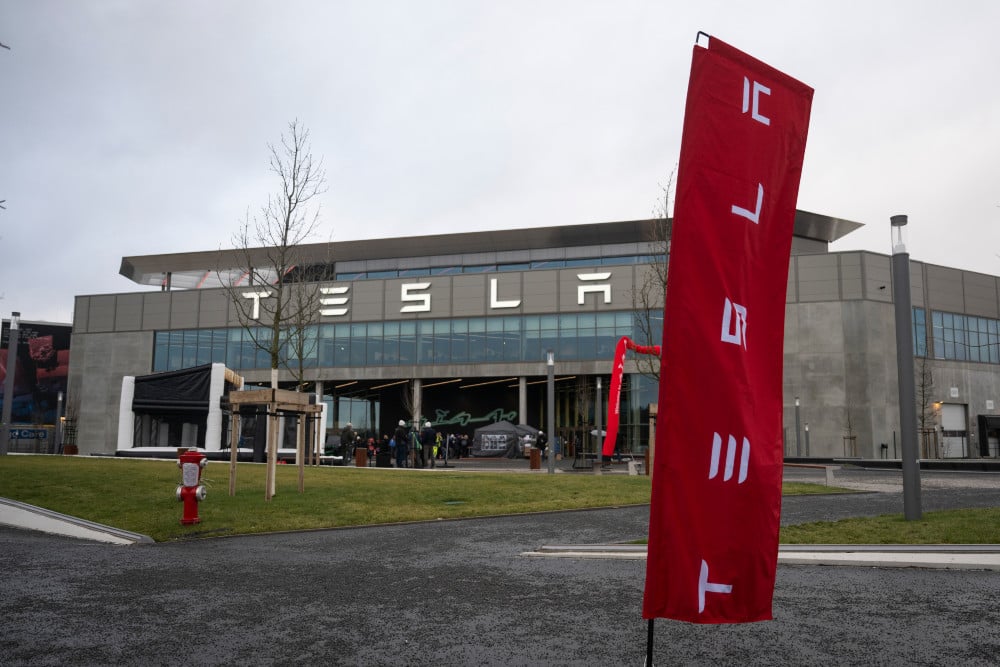
More than 40 percent of electric car drivers worldwide would avoid owning a Tesla, the brand run by controversial billionaire Elon Musk, for political reasons, according to a recent survey.
More than 26,000 electric car owners in 30 countries were queried on behalf of the Global EV Alliance, an international network of national electric vehicle driver associations.
When asked to specify which brand or country of production they would avoid, 41 percent of all EV drivers named Tesla, 12 percent said China, and five percent said the United States.
According to the survey, reservations against Teslas were particularly strong in the United States (52 percent), Germany (51 percent), as well as in Australia and New Zealand (45 percent).
Tesla CEO Elon Musk, the world's richest person, made headlines in the past year for supporting European far-right movements, criticising diversity policies and making a gesture many observers interpreted as a Nazi salute.
Tesla's stock price saw significant declines at the beginning of the year when a large-scale protest movement against Musk's politics gained traction, but it has recovered significantly since then.
Germany hopes new data centre can help bring 'digital sovereignty'
A new mega data centre is slated to rise in a rural stretch of eastern Germany in what backers hope is a starting point for a European AI sector that can compete with the United States and China.
Executives from the Schwarz Group, owner of discount retailers Lidl and Kaufland, donned hard hats and braved a light drizzle on Monday to formally break ground on a roughly €11 billion (about $13 billion) digital hub in the town of Lübbenau, about 100 kilometres (60 miles) southeast of Berlin.
The site is destined to become "the backbone of Germany's digital sovereignty", German Minister for Digitalisation and Government Modernisation Karsten Wilderger declared at the ceremony.
Companies will be able to work with their own data and that of German or European customers without it being stored in the United States, where regulations offer fewer protections.
With Europe lagging behind in the AI race -- including in key areas like microchip manufacturing and cloud computing -- political leaders are trying to reclaim control of digital policy.
Germany played host to a tech "sovereignty" summit in Berlin on Tuesday in response to the dominance of American tech giants, jointly led by Chancellor Friedrich Merz and French President Emmanuel Macron.
With reporting by AFP, DPA and Paul Krantz.
Comments