

Inside Germany is our weekly look at some of the news, talking points and gossip in Germany that you might've missed. It’s published each Saturday and members can receive it directly to their inbox by going to their newsletter preferences or adding their email to the sign-up box in this article.
Sunday marks the anniversary of Kristallnacht, a devastating event in 1938 when Nazi-led mobs attacked Jewish homes, businesses, and synagogues across Germany.
Known as the Night of Broken Glass, it marked a violent escalation of anti-Jewish persecution, foreshadowing the horrors of the Holocaust.
One way Germany remembers victims of the Nazi regime is through Stolpersteine (stumbling stones). These small brass plaques are set into pavements in front of the residences of Holocaust victims.
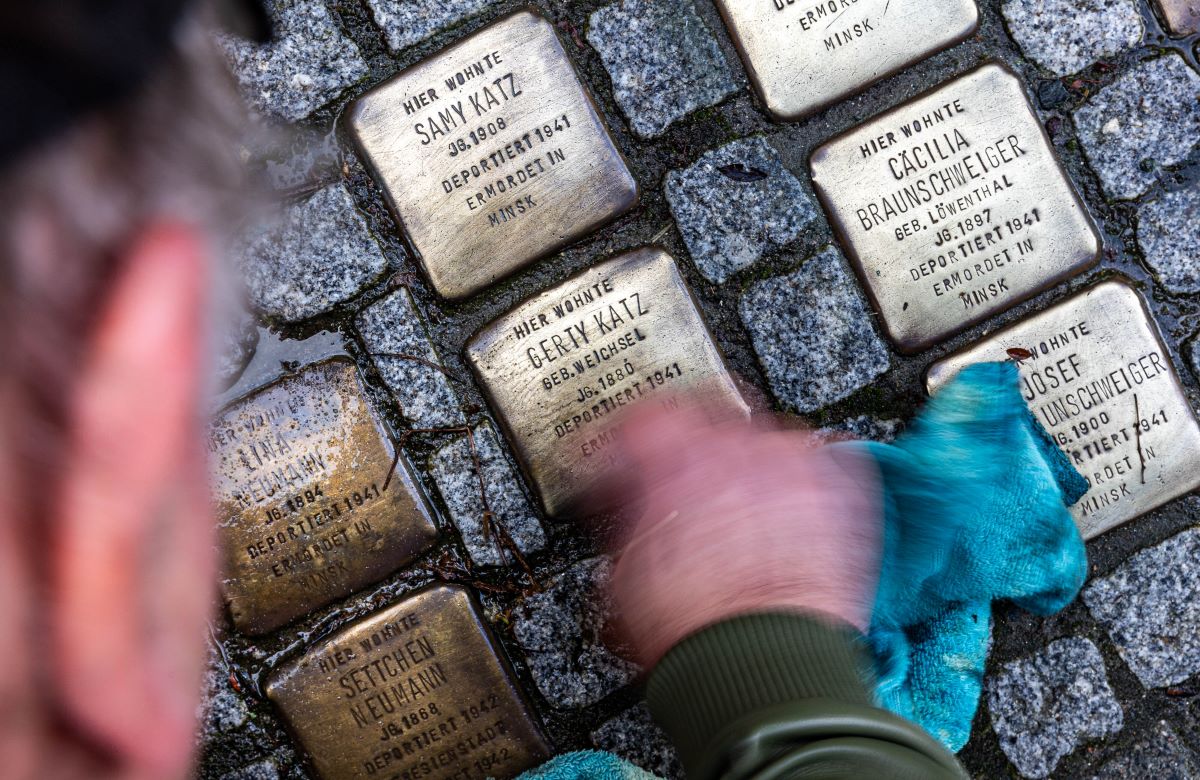
Each stone bears the inscription Hier wohnte ("here lived") along with the name, birth date, and fate of the person commemorated. The project, initiated in 1992 by artist Gunter Demnig, has installed over 100,000 stones across many cities in Germany and Europe, making it the world's largest decentralised memorial.
On Sunday, readers may see people cleaning these Stolpersteine as part of an initiative to educate and encourage reflection, although the practice isn’t common in every city in Germany.
There are no Stolpersteine in Munich for example, after Jewish leaders in the city objected that it was disrespectful for the names of victims to be displayed on stones that people walk over.
Twenty-one hours in Brazil
German Chancellor Friedrich Merz knows how to stir the pot and how to keep himself busy, and this week he's certainly done a good bit of both. With all the headlines around his inflammatory comments that Syrian refugees should go home, and about him leading a big steel summit, it wouldn't be surprising if you missed the news that Merz caught a flight to Brazil on Friday. But fly to Brazil he did.
The biggest international climate conference, the UN's Conference of Parties (or COP) is currently underway in Belém, Brazil. And in a move that was somewhat unusual for the right-leaning chancellor who has not said much about climate during his tenure so far, Merz made a last-minute decision to attend.
It would be easy to be cynical about Merz's efforts here. To spend 20 hours on a government plane just to show face for 21 hours at a climate conference does give a sense of talking the talk more than walking the walk. And that's from a man who notably does not even talk the talk most of the time. Earlier this year he was quoted as saying, "It is of no use at all if we become climate neutral in Germany alone..." for example.
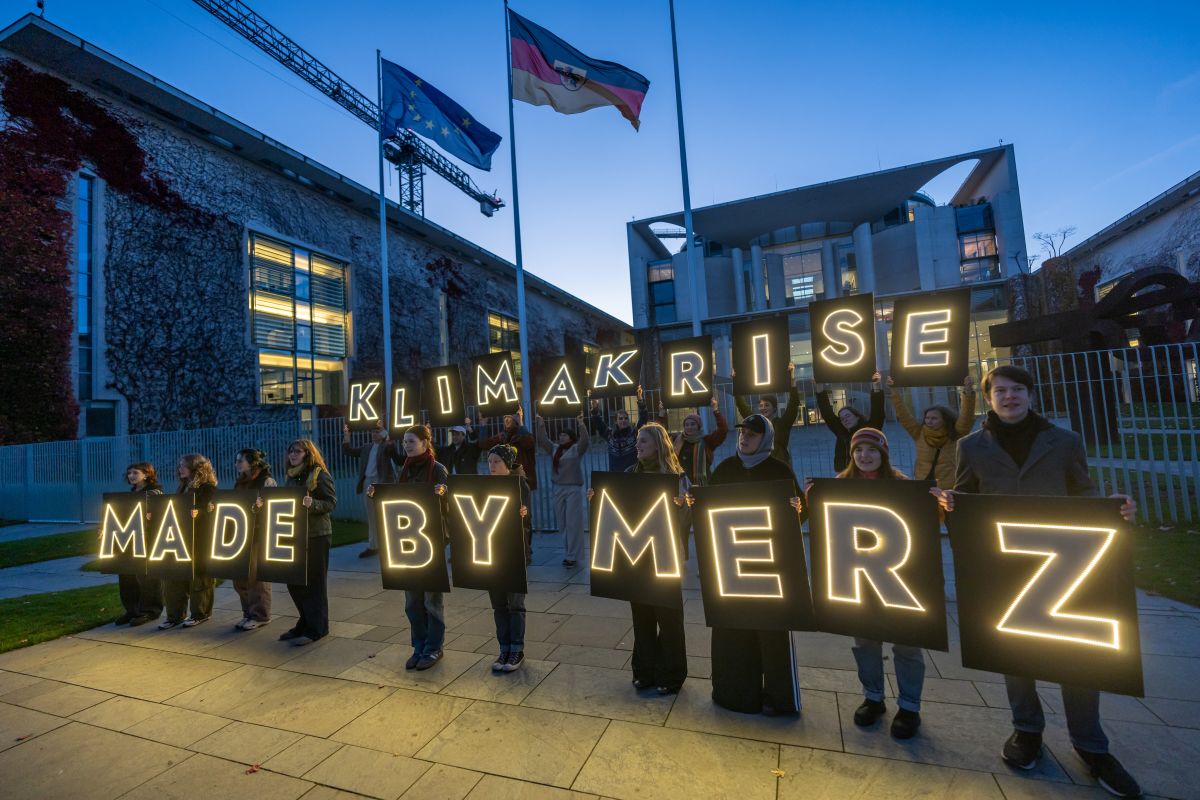
But to give credit where credit is due, having Germany's top politician show up at COP30 is a welcome sign that the world's third strongest economy hasn't turned its back on the climate cause completely.
Merz is reportedly concerned with "flying the flag for multilateralism", i.e. for international cooperation based on common rules of the UN, which is also a welcome difference between his conservative party and the far-right Alternative for Germany (AfD).
On a related note, another bit of positive news for climate came from Deutsche Bahn this week, which concluded a contract to buy 1,000 tonnes of "green" steel rails for future use in its rail network. As opposed to conventional steel which is made in coal-powered blast furnaces, "green" steel is made in electric-powered furnaces with up to 70 percent fewer emissions.
Photo of the week:

This week saw the biggest full moon of 2025 rise over Germany.
The moon's distance from earth fluctuates somewhat over time. This year the two celestial bodies reached their closest point, known as perigee, at 356,833 kilometres, just before the moon turned full.
Full moons that coincide with the moon's closest approach to earth are known as supermoons, and full moons that occur in November are also called a Beaver Moon. The Beaver Moon is so-named because this is the time of the year when the river-dwelling rodents begin to take shelter in their dams.
Eurasian beavers were hunted to near extinction for their fur and castoreum (a substance that has been used in perfumes, foods and even cigarettes), with only around 200 beavers surviving in all of Germany at the end of the 19th century.
But thanks to successful reintroduction and conservation programmes they are now strongly established in the country, and are found in all federal states.
With reporting by Tom Pugh.
Comments