
Friday's top story: Inflation in Germany eases, but remains above two percent
After two months of rising inflation rates, inflation in Germany has eased somewhat.
However, at 2.3 percent in October, according to an initial estimate by Germany's Statistical Office, it remained above the European Central Bank's medium-term target for the euro area.
The higher the inflation rate, the lower people's relative purchasing power is -- meaning you get less value for your hard-earned euros.
Core inflation, which excludes the volatile prices for food and energy, remained at 2.8 percent in Germany in October.
Rising prices for services and food in particular have driven up the inflation rate in Europe's largest economy in recent months.
As of this month, people in Germany are paying 3.5 percent more for services than a year earlier. Food prices, on average, are up 1.3 percent compared with October 2024.
READ ALSO: German economy stagnates, narrowly dodging recession
Merz hopeful for Trump-Xi deal to end global trade wars
German Chancellor Friedrich Merz on Thursday cautiously welcomed warming relations between US President Donald Trump and Chinese leader Xi Jinping, expressing hope for an end to their tariff war.
Merz said he could make only a "provisional assessment" of a meeting between the two leaders in South Korea, but expressed tentative optimism that the meeting would "contribute to a peaceful resolution of the conflict over tariffs".
Trump and Xi agreed to calm the US-China trade war that has roiled global markets, with Washington cutting some tariffs and Beijing committing to keep supplies of critical rare earths flowing.
German exporters have suffered under both Trump's tariff onslaught and Chinese export restrictions on key materials like rare earths and microchips.
"I can only express my hope that a viable solution will be found," Merz said.
The German economy stagnated in the third quarter, narrowly dodging a recession, official data showed Thursday, hit by weakening exports as the country struggles to recover from a long downturn.
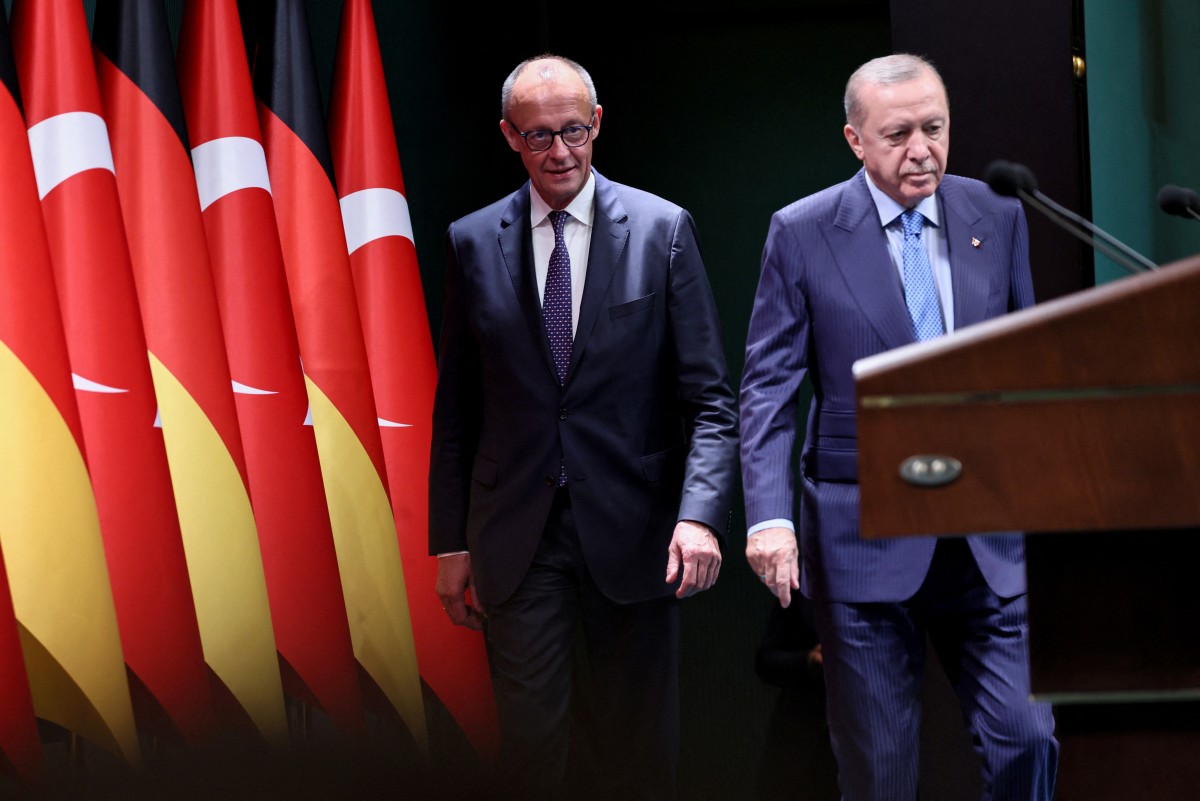
Merz, who was speaking alongside Turkish President Recep Tayyip Erdogan in Ankara, also signalled willingness for Germany to work with Turkey on certain global issues.
Specifically, he hailed the purchase by NATO-member Turkey of 20 Eurofighter jets, saying they would bolster the military alliance in the face of the threat from Russia.
READ ALSO: Conservatives are taking aim at Germany's dual citizenship rules, again
German dentists acknowledge complicity in Nazi-era atrocities
German dentists have publicly acknowledged their profession's widespread complicity in Nazi-era atrocities during a first-ever memorial ceremony held by the German Society for Dental, Oral and Orthodontic Medicine (DGZMK) this week at Berlin's Humboldt University.
The event acknowledged horrific acts committed by dentists under the Nazi regime, including forced sterilisations, cruel tooth extractions, unethical human experimentation, murder, and systematic theft of gold dental fillings from Holocaust victims.
Over 60 percent of dental educators and 55 percent of dentists were Nazi party members, a significantly higher rate than for either doctors or teachers.
Dentists also served in the Waffen-SS and participated in deadly selections and the looting of gold teeth in concentration camps.
The memorial event remembered the victims of these atrocities and emphasised the importance of learning from this past and opposing antisemitism and inhumanity in all forms.
Court sends Afghan knife attacker to psychiatric facility
A German court on Thursday ruled that an Afghan migrant who attacked a group of toddlers in southern Germany must be placed in a psychiatric hospital.
The 28-year-old man, identified as Enamullah O., killed a two-year-old boy and a 41-year-old man who tried to intervene in a park in the German city of Aschaffenburg nine months ago.
"There is no motive or normal psychological explanation" for the attack, said presiding judge Karsten Krebs, adding that O. had acted during an "acute psychotic phase of schizophrenia".
The man could remain confined to a psychiatric hospital for the rest of his life, although regular evaluations will determine whether he still poses a threat.
Five toddlers from a kindergarten class were in a public park, accompanied by two teachers, when the assailant attacked them with a kitchen knife on January 22.
He also wounded a two-year-old Syrian girl, a teacher and a 72-year-old man who had tried to protect the children.
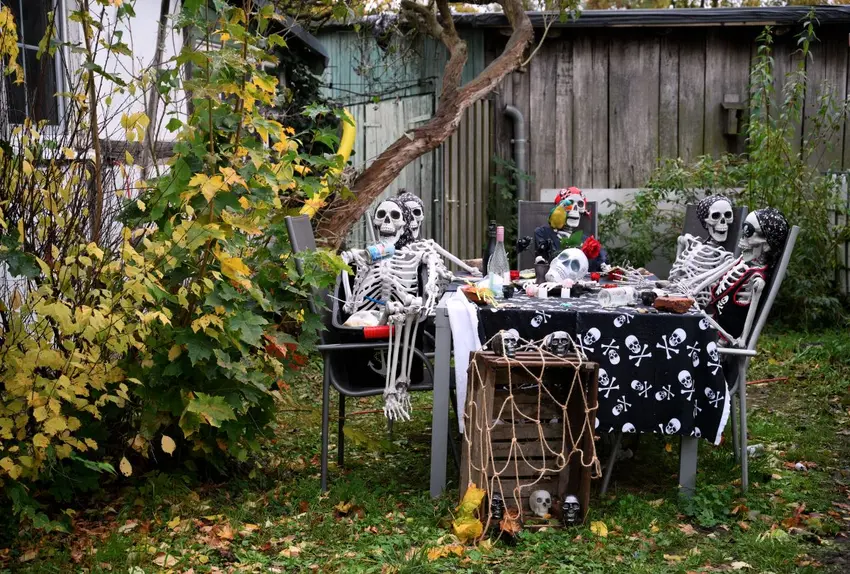
Have you prepared sweets for trick or treaters this year?
Are you ready for Halloween? A 2025 study by the gummi bear giant Haribo reveals almost half of Germans (48 percent) enjoy giving sweets to kids on Halloween, but nearly as many (47 percent) have pretended not to be home to avoid trick-or-treaters.
The main reasons are either running out of treats or not wanting to distribute any.
Only 42 percent make a point of preparing Halloween sweets for trick or treaters, and some resort to "emergency gifts" like old sweets, coins, or leftover cookies.
Reportedly, the most popular candies are fruit gummies followed by chewable candies, lollipops and chocolates. Mini-packaged treats are preferred for portion control.
READ ALSO: Nine unmissable Halloween events in Germany
NGOs file complaint in Germany accusing coffee giants of rights abuse
Several NGOs said Thursday they had filed a legal complaint in Germany accusing giant coffee companies of sourcing beans from suppliers that exploit workers and violate human rights.
The complaint alleges that Nestle, Starbucks, Dallmayr and the Neumann Kaffee Gruppe (NKG) have all violated Germany's Supply Chain Act, which requires companies to monitor human rights and environmental issues throughout their global supply chains.
The group cited several previous reports by NGOs that found alleged human rights and labour issues at coffee suppliers in China, Mexico, Brazil and Uganda.
Starbucks told Germany's Spiegel magazine that it rejects the "unfounded" accusations in the complaint and said that the company is committed "to sourcing coffee responsibly, including by promoting respect for human rights".
Nestle told AFP in a statement that the company has "robust human rights due diligence processes" and has already "duly investigated each situation referred to by this NGO at the time each report was released".
Controversy has surrounded Germany's supply chain law since it went into effect in 2023.
Supporters contend it is a vital measure to stop German firms from profiting from labour and environmental abuses abroad.
But some industry groups contend it puts an excessive and unfair burden on businesses.
Germany's current coalition government has agreed to significantly relax the law's requirements and eventually replace it with a European Union regulation passed last year.
Comments