

The EU's long-delayed Entry and Exit System (EES) is finally set to come into force from October.
The new biometric border control scheme, which involves taking fingerprints and facial scans from non-EU travellers, will gradually replace the current system of manual passport stamps.
The EU has asked each country to have at least one point of entry operating EES checks from October 12th. In Germany, Düsseldorf is set to be the first airport to roll it out.
Non-EU travellers have been warned to expect some delays as the new system is bedded in over the coming months.
How will Germany roll it out?
Düsseldorf airport in North Rhine-Westphalia will be the first to start operating EES checks on travellers from October 12th, 2025. Frankfurt and Munich airports will follow in the weeks after.
A statement from the Interior Ministry said after these airports have launched the system, "the EES will gradually be introduced at all of Germany’s other airports as well as its ports at maritime external borders".
The Interior Ministry added: "The aim is to ramp up operations in a controlled way to ensure that border control processes keep running smoothly at all times.
"This guarantees security while also providing the flexibility to respond to any technical issues that may arise."
The ministry said that by April 9th, 2026, which marks the end of the six month bedding-in period, "Germany will have the system in full operation at all of its external air and sea borders".
The Local reached out to several German airports for a comment on the EES rollout and to ask how the checks will affect passengers.
A spokesperson from Düsseldorf airport told The Local that the airport had worked with police, industry associations and other airports to prepare for the introduction, and adapt new border control systems.
"In the entry areas, the non-EU zones have been expanded, additional control lanes have been created and the waiting areas have been enlarged," the spokesperson said.
A total of 35 self-service kiosks are available for pre-registration upon entry and exit, while new signage and routing are designed "to make it as easy as possible for travellers to find their way around".
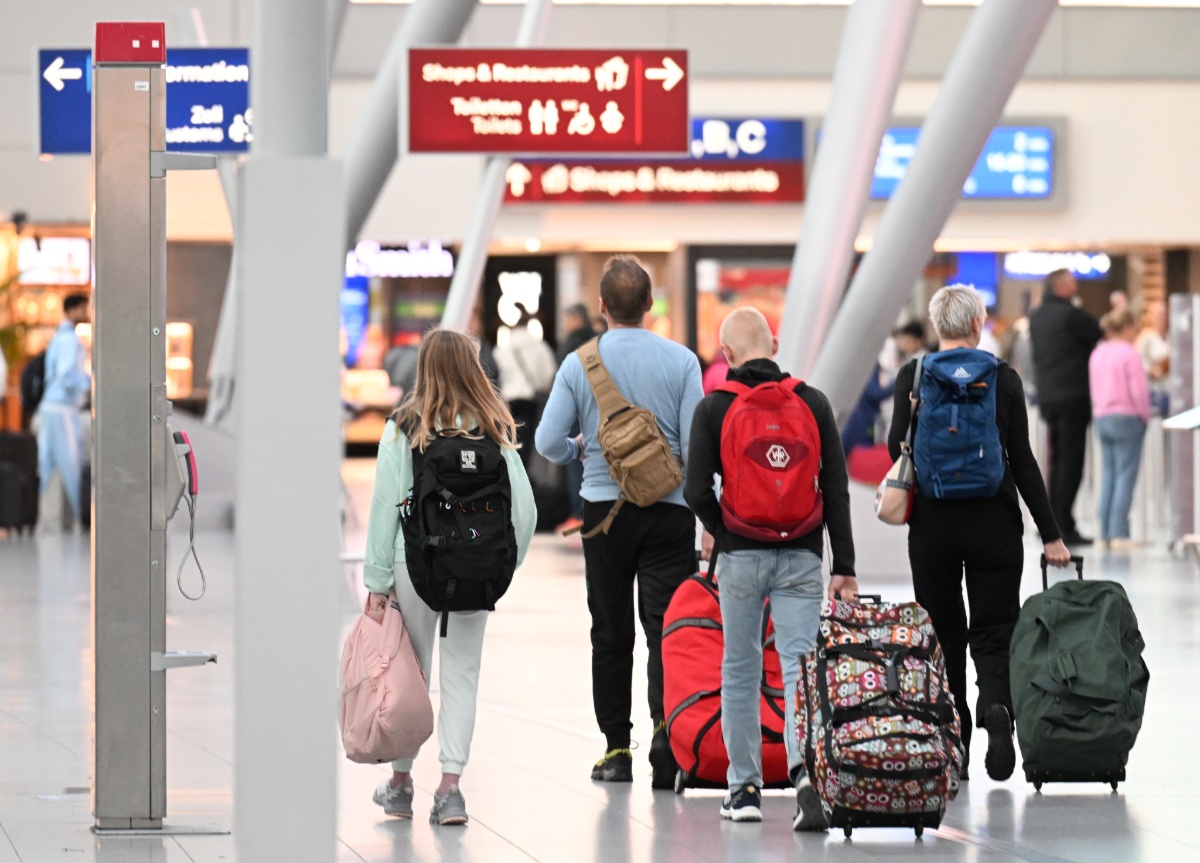
"We recommend that third-country nationals allow more time for border control after the introduction of the EES, especially during the initial phase," said the spokesperson.
"Those who have a biometric passport should use the self-service kiosks for pre-registration."
A spokesperson from Frankfurt airport told The Local: "We welcome the fact that the introduction of the EES in Germany will take place in the form of a 'soft launch.'
"This enables us to gradually familiarise the entire Frankfurt Airport system with border controls under the EES over several months and, if necessary, to adapt procedures at certain process points."
The spokesperson said many passengers will be affected.
"Due to the high level of connectivity at Frankfurt Airport, numerous non-Schengen travellers pass through our hub and are therefore directly affected by the introduction of the EES," the spokesperson said.
"In order to ensure a smooth and comfortable process for our passengers, we have been intensively preparing for the implementation of the EES for several years. Together with our partners (Federal Police, airlines), we are taking infrastructural and procedural measures to ensure the smoothest and most effective implementation of the EES possible and to avoid unnecessary delays."
At the time of publication, no other German airports had got back to us with a statement on the checks.
LISTED: The new flights to and from Germany in autumn 2025
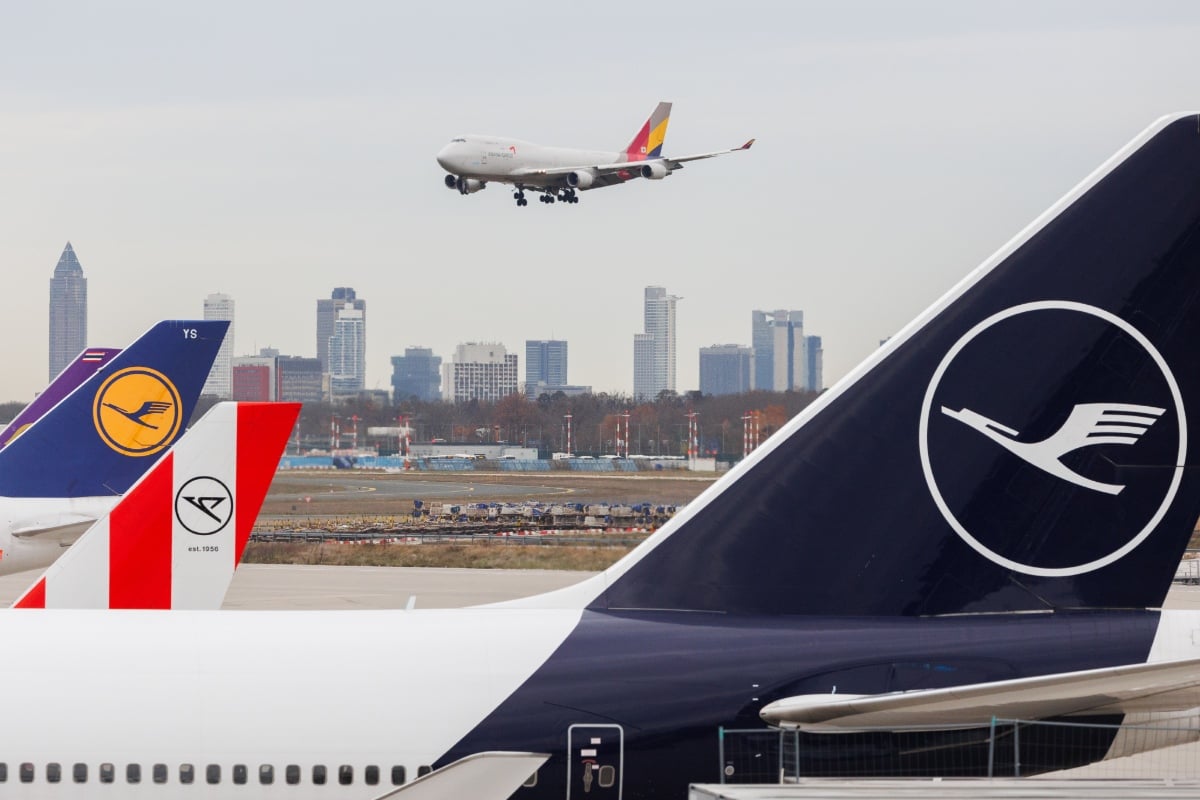
People in south-west Germany often travel to the Basel-Mulhouse EuroAirport in Switzerland which serves border regions. The EES system will also start operating at this airport from October 12th.
What should travellers know?
Travellers from outside the EU or Schengen Area – including the UK, US and Canada – will have to use the new system.
The German Interior Ministry pointed out that the rules "apply to third-country nationals who are permitted to enter the Schengen area for a short stay – both those who do not require a visa and those who enter with a short-stay visa".
EU and Schengen nationals are exempt, as well as non-EU residents living in Germany and other Schengen zone countries. However, they may still be impacted by extra queues at airports during the transition period.
Those affected by the rules will have to register extra data, including a facial scan and finger prints.
Passenger data will be stored for three years which means travellers will be exempt from registering again if they enter another Schengen zone country during this time.
More information can be found here.
READ ALSO: Travel to Germany - your questions answered about ESS and ETIAS
What else to be aware of
The Entry and Exit System is an EU-wide database designed to register the entry and exit of non-EU nationals visiting the Schengen Area for short stays.
The EES will automatically record each entry and exit, tracking how long travellers spend in the Schengen area to ensure they do not exceed the 90-days-in-180 rule.
There are a number of exemptions, which are listed here.
Although originally planned for November 2024, the rollout has been delayed until October 2025, with the European Commission deciding to phase in the system over six months.
From the launch-date, at least one border crossing in each member state must be operational, with coverage expanding to half of all border points within three months and to all of them within six months.
The EES checks will be followed by the introduction of the European Travel Authorisation and Information System (ETIAS) in the final quarter of 2026, although the exact date still is to be confirmed. It will also involve a phased introduction.
Comments