
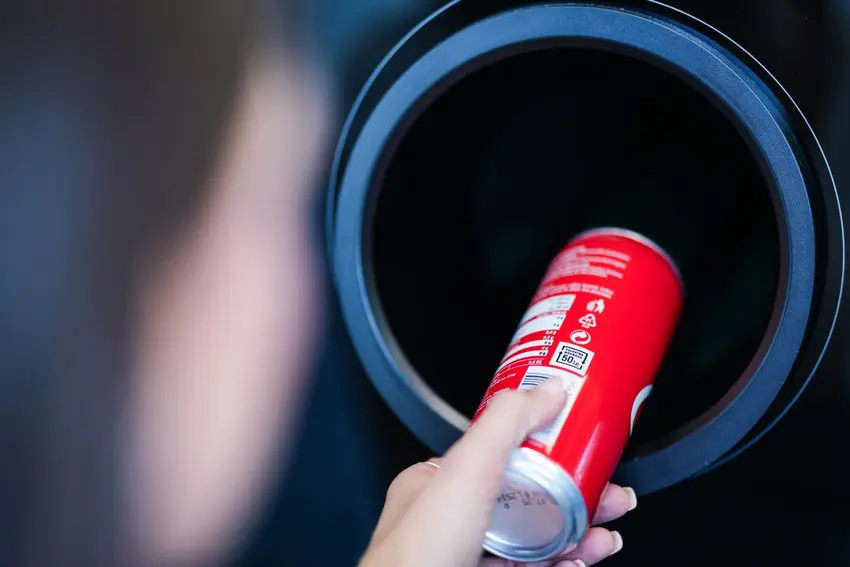
"Don't crush that can!"
Add that to the list of trivial statements you may find yourself yelling at someone whilst living in Germany.
Collecting your recyclable beverage containers – like plastic water bottles, glass beer bottles and aluminium soda cans for example – and returning them at a nearby grocery store to be paid out for the deposit (Pfand) on the containers is a regular chore that many German residents soon get used to.
Part of that process is ensuring that cans and plastic bottle retain their shape, because crushed cans aren't accepted by the bottle return machines where those returns are made.
This is different to some similar recycling schemes in other countries, such as the US for example, where cans can be crushed because they are paid back according to weight.
But is it true that you've effectively lost 25 cents every time you accidentally crush a can?
READ ALSO: How some German cities are cracking down on biowaste violations
Not really. It takes a bit more effort, but crushed cans and bottles with damaged barcodes should still be accepted and Pfand paid out.
No Pfand lost
Deposit machines, typically found in grocery stores will typically not accept dented, compressed or otherwise damaged cans or bottles. But this doesn't necessarily mean you're not entitled to reclaiming your deposit on the item.
"If a retailer sells beverage cans, they must take back all beverage cans, regardless of brand, shape or content," Annett Reinke, a lawyer at the Brandenburg Consumer Advice Centre (VZB), told DPA.
This means that beverage cans brought back to a store where they were bought must be accepted. The same applies to disposable bottles made of glass or plastic with a capacity of 100 millilitres to three litres.
There are exceptions in the case of dietary beverages, cartons such as Tetra Paks and some other types of packaging. In addition, stores with a sales area of less than 200 square metres are only required to take back packaging from the brands they sell themselves. The general rule is that as long as a can or bottle is recognisable, it should be accepted.
READ ALSO: How Germany plans to expand its bottle deposit scheme in 2024
Even if the EAN code or the deposit logo are no longer legible, retailers are obliged to refund deposits, according to lawyer Reinke.
Practically speaking, this means that if the deposit machine cannot read the packaging, you can bring the damaged container to an employee and ask for the deposit.
This applies to both disposable and reusable empties. In contrast to disposable containers, however, reusable containers only have to be accepted if the store also has them in its range.
Of course, to have better luck with this, you'd be advised to approach an employee who is not actively working a cash register with a long queue.
Comments