

Friday's top story: Germany expands mission to defend Polish airspace
Germany said Thursday it would expand its role in a NATO mission to defend Polish airspace, a day after drones from Russia flew across the border into Poland.
The chancellery said Berlin would "extend and expand" its participation in the alliance's Air Policing program.
The German defence ministry said it would double the number of Eurofighter jets deployed to four and extend their mission by three months to the end of the year.
NATO says that its Air Policing aims to "preserve the security" of member states' skies through a round-the-clock deployment of fighter jets "to react quickly to possible airspace violations".
The system was enhanced along NATO's eastern border with Russia following Moscow's 2014 annexation of Crimea.
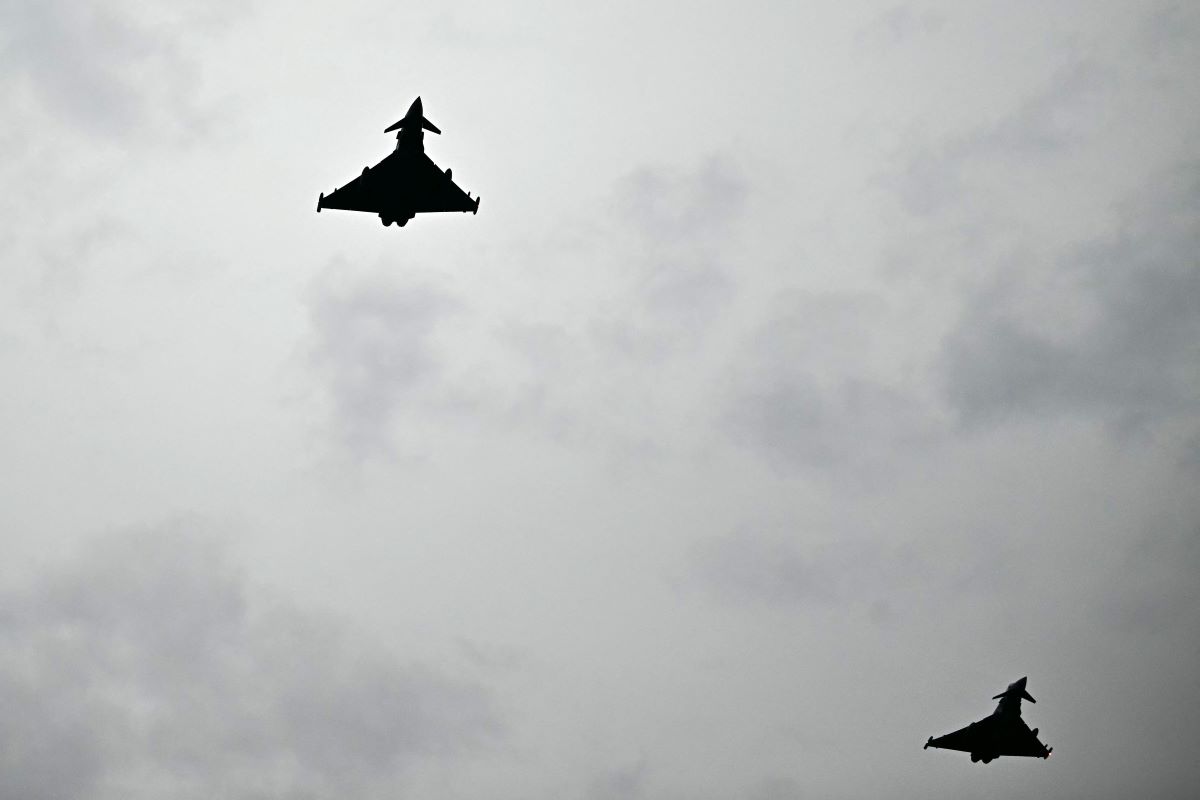
Other NATO members have also contributed to the mission, with Dutch Prime Minister Dick Schoof saying that Dutch F35 fighter jets helped shoot down some of the Russian drones over Poland.
The German chancellery also promised to "intensify its support for Ukraine", including by pushing for the "quick adoption of a robust 19th package of sanctions" against Russia by the EU.
READ ALSO: How Germany is stepping up preparations for war
Berliners protest against cuts to social projects
Several thousand people protested loudly in Berlin on Thursday against planned cuts to social projects in the city’s budget.
The protest, called by the Alliance for a Social Berlin, took place in front of the Berlin State Parliament simultaneously with the first reading of the city’s 2026-2027 double budget.
According to the Paritätischer Wohlfahrtsverband, around 4,000 demonstrators participated under the slogan, "Berlin must not be gutted – Together for a Social Berlin."
More than 100 associations, workers’ councils, and unions joined forces to highlight the risk these funding cuts pose to Berlin’s social infrastructure. Oliver Bürger, state director of the Berlin Workers’ Welfare Association (AWO) and co-initiator of the alliance, warned that the cuts would disproportionately affect children, youth, people with disabilities, refugees, and single parents.
READ ALSO: Berlin, Frankfurt and Munich: How expensive is life in Germany's big cities?
Additional protests marked the "Day of Homeless People," with participants symbolically drawing attention to worsening housing shortages and the fragile state of Berlin’s homelessness support services. Despite political promises to combat homelessness by 2030, activists say that concrete actions are lacking.
Burial laws liberalised in Rhineland-Pfalz
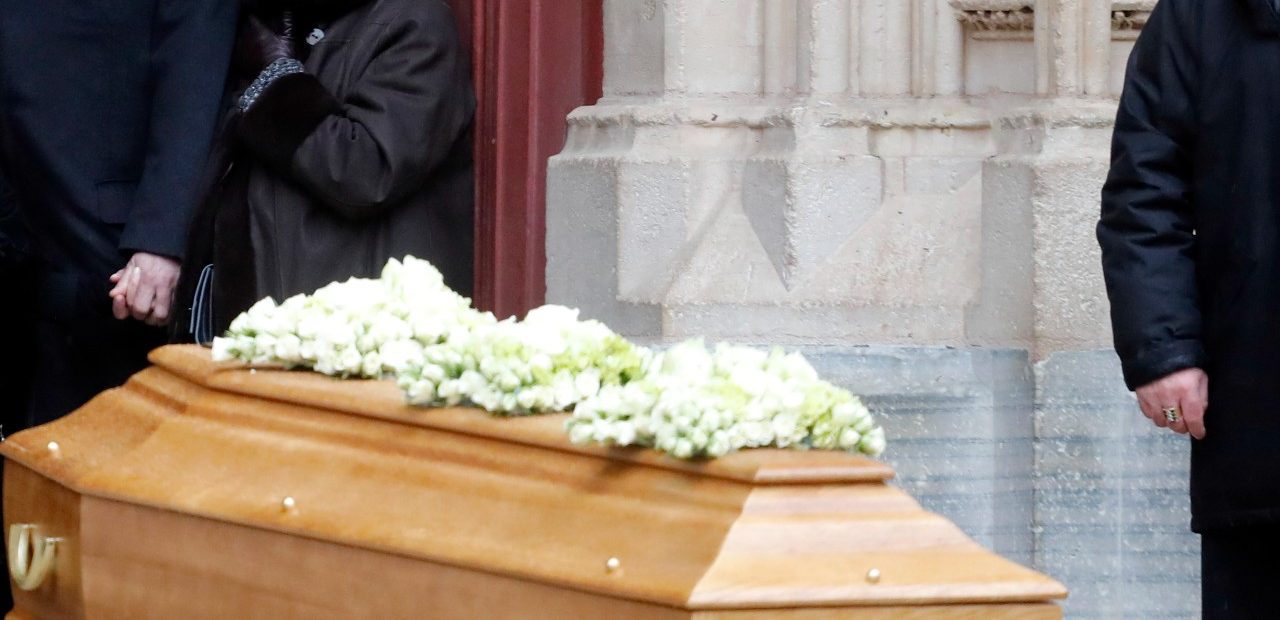
The Rheinland-Pfalz parliament voted to adopt the most liberal burial laws in Germany, set to come into force from October 2025.
The law abolishes the mandatory use of coffins and cemetery burial, allowing burials in shrouds and permitting ashes to be scattered in rivers such as the Rhine, Mosel, Lahn, and Saar. For the first time, ashes can be kept at home in urns, and mourners can produce memorial items such as synthetic diamonds from parts of the ashes.
The law also introduces protections and dignified provisions for "star children" (stillborns or infants who die shortly after birth) and mandates autopsies for children under six if the cause of death is unclear.
Health Minister Clemens Hoch emphasized that traditional burials remain an option, but the law gives more choice and respects diverse practices. The bill passed with support from the SPD, Greens, FDP, and AfD, while the CDU and Free Voters opposed it, arguing that it undermines burial culture and tradition.
Number of strikes in Germany falls in 2024
In 2024, German workers participated in fewer strikes than in 2023, with a total of 286 industrial actions – 26 fewer than the previous year.
However, the number of striking participants rose to approximately 912,000, an increase of 55,000 compared to 2023, according to the latest strike report by the Hans-Böckler-Stiftung’s WSI institute.
Despite more people taking part in strikes, the total working days lost dropped significantly to around 946,000, almost one million less than in 2023. The shorter duration of strikes in 2024 was the main reason for this decrease.
READ ALSO: Have we seen the last of the major strikes in Germany this year?
Most strikes were warning strikes, focusing primarily on demands for higher wages in response to the previous high inflation period, as well as improvements in working conditions. The metal and electrical industries led these labour disputes, with large participation in warning strikes, notably at Volkswagen and in public transport sectors.
Long-running conflicts remain a challenge for unions. The strike at the scrap and recycling firm SRW Metalfloat ended unsuccessfully after 180 days, while disputes at online retailers Amazon and Zalando continue without resolution.
German is Europe's most widely spoken native language
German remains the most widely spoken native language in Europe, according to the fourth “Report on the Status of the German Language.”
The report, compiled by 22 language scientists from two German academies, highlights that an estimated 95 million people speak German as their first language, with another 30 million using it as a second language.
German grammar tips: Why some verbs use 'sein' instead of 'haben' in the past tense
The majority -- 94 percen -- of German speakers are based in Europe. German is spoken in 15 European countries and holds official status in seven European countries: Germany, Austria, Switzerland, Belgium, Luxembourg, Liechtenstein, and the northern Italian province of South Tyrol.
Beyond these, German is regularly used as a minority or regional language in countries such as Poland, Czechia, Hungary, Slovakia, and Romania, due to historical migration and settlement patterns.
German’s position as the second-most spoken language on the continent after Russian is rooted in the central location and economic influence of the German-speaking “D-A-CH” region (Germany, Austria, Switzerland), according to the language report.
With reporting by AFP.
Comments