
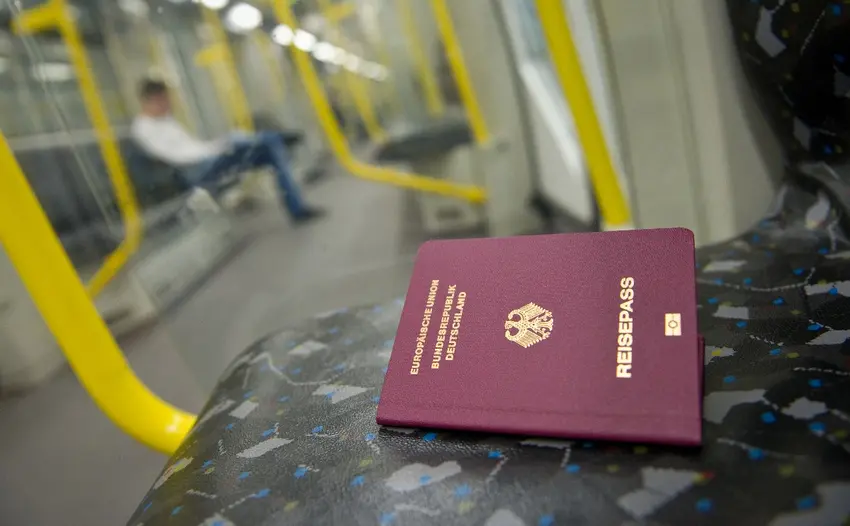
Germany's citizenship laws are about to be shaken up.
The government, formed of the centre-right Christian Democrats (CDU), its Bavarian sister party the CSU and the centre-left Social Democrats (SPD), is expected to push through a law to get rid of the fast-track option to citizenship, dubbed "turbo-naturalisation" by critics.
Currently, foreign residents can apply for German citizenship after just three years if they demonstrate exceptional integration, which includes having C1-level German language skills, as well as having engaged in volunteer work, working in a certain field or other "special achievements".
Under the changes proposed by the current federal government, this option will disappear. Naturalisation will then only be possible via the standard route of five years of residence and at least B1-level German skills.
Who will be affected by the changes?
The three-year track for naturalisation was introduced in June 2024 as part of a sweeping reform of Germany's citizenship rules, which also included allowing dual citizenship for all.
The vast majority of people who get German citizenship take the standard five-year-route. However, there are a few foreign residents who manage to meet the high requirements, and some of them are rushing to apply before the three-year track is shelved.
We recently profiled one applicant named Rachel, a 33-year-old software developer from the US, who was keen to get her C1 language certificate and integration achievements to meet the deadline.
Luckily, Rachel is expected to get her German naturalisation certificate in time.
READ MORE: 'Turbo-German studying' - an American in Berlin on the race to qualify for three-year citizenship
At the moment it's still unclear what the deadline actually is. Here's what we know so far about the next steps and whether there will be a transition period.
Negotiations to continue
At the end of May, Interior Minister Alexander Dobrindt (CSU) unveiled a draft law which would get rid of the three-year option to naturalisation. At the same time, he presented plans to limit migration to Germany.
READ ALSO: What's the difference between German citizenship and residency?
According to the draft law on citizenship, the aim is to "strengthen the importance of lawfully completed residence in Germany as a central and essential prerequisite for naturalisation".
These changes were previously agreed as part of a coalition compromise between the conservatives and Social Democrats. Before the snap election in February, CDU leader Friedrich Merz, who is now Chancellor, said he wanted to reverse all of the citizenship reforms.
We asked MP for Berlin-Neukölln, Hakan Demir, of the Social Democrats, what the next steps are.
"The negotiations about the removal of three-year path to German citizenship will continue in September," Demir told The Local.
Demir said he is in favour of a "fair transition period". If introduced, the measure would benefit applicants still awaiting a decision when the fast-track route is scrapped.
"The removal has been agreed between the coalition partners," Demir added, saying the compromise means the CDU/CSU has to accept dual citizenship for all, as well the five-year path to naturalisation.
That means the rest of the citizenship law is not currently under threat.

"I believe that this compromise fosters a broad consensus on the rights and obligations for people who find a new home in Germany and become an equal part of our society," said Demir. "However, a fair transition period must be part of this consensus."
READ ALSO: 'Slap in the face' - Applicants blast Germany's plan to scrap citizenship reform
Is a transition period likely?
Whether a transition period will actually be written into law is still unclear, however, and will depend on how much support there is for an adjustment period.
Demir said: "The effects on people awaiting a decision on their current application fully depend on the transition period. If the law is passed without a transition period, the respective local authorities must decide based on the new law."
The Local asked Berlin's Immigration Office if they had received any information on the timeline for the law change and what their plans are for applicants.
A spokesperson told us that the three-year citizenship path will continue to apply "as long as it remains in force under Section 10 (3) of the German Citizenship Act (StAG)".
They added: "Apart from the well-known statement in the coalition agreement that this legal regulation is to be abolished, no further information is available.
"If, in accordance with the will of the legislature, the regulation is to be abolished on a specific date, no citizenship authority is free to continue naturalising citizens after that date on the basis of a legal basis that no longer exists. That would be grossly unlawful."
In other words, a decision on your citizenship application is based on the laws that are on the books on the date that your application is reviewed. So if the fast-track option were scrapped without a transition period written into the law, then any fast-track applications still waiting review at that time would ultimately be rejected.
According to government sources, it is likely that an agreement on fast-track citizenship will be reached in the week of September 8th when politicians return to parliament after the summer break.
The law to get rid of it is expected to pass in the Bundestag but there is no agreed deadline on when it will be heard there. It will also go to the Bundesrat, which represents German states.
Comments