
Play it safe - Only pick mushrooms you know
As a rule, only eat mushrooms you can confidently identify. Relying on mushroom books or online apps can be risky, as inexperienced foragers may find it hard to match real-life mushrooms to the illustrations. Also some mushrooms may look different at various stages of their life or depending on environmental factors.
Experts from the German Liver Foundation warn that supposedly reliable tricks for telling edible and poisonous mushrooms apart can be misleading.
For example, the alleged discoloration of a silver spoon when it’s cooked with mushrooms, or signs that animals have eaten them, aren’t reliable safety indicators.
Death cap mushrooms, for instance, can be eaten by snails with no problem.
Don’t rely only on mushroom apps
Unlike pure image recognition apps, the ID-Logics app developed by the German Association for the Environment and Nature Conservation (BUND) and the German Society for Mycology (DGfM) not only works with photos, but also identifies mushrooms based on external characteristics such as gill colour or cap shape and other characteristics such as smell.
REVEALED: The best places to go mushroom foraging in Germany
Even in this case, however, experts at the Federal Institute for Risk Assessment (BfR) still warn that foragers should “never rely solely on identification via an app.”
If there’s the slightest doubt, it's better to refrain from eating the mushrooms or consult a mushroom advisory centre.
Death caps and other dangerous species
Dangerous mushrooms in Central Europe include the death cap (sometimes called Grüne Knollenblätterpilz in German), poisonous bonnet mushrooms, the orange fox and pointed humpback veil mushrooms, spring morels, the panther cap, and fly agaric.
About five percent of poisonings come from the death cap, which grows from July to October in deciduous forests and parks.
READ ALSO: What's behind the German fascination with foraging for wild mushrooms?
It’s estimated that death caps cause about 90 percent of all deadly mushroom poisonings in Germany.
There’s no simple rule to tell edible and poisonous mushrooms apart. However, only a few tubular mushrooms – which have a kind of sponge under their caps – are poisonous, and none are deadly.
The risk of confusion
Non-toxic varieties are often mistaken for poisonous ones. The death cap is easily mixed up with champignons and russulas, for example; morels can be confused with spring (or false) morels; panther caps resemble pearl mushrooms; and poisonous mushrooms can be mistaken for field mushrooms.
Delayed symptoms
Life-threatening mushroom poisoning symptoms don’t usually appear until six to eight hours after eating – sometimes later. With death caps, symptoms might not occur for 24 hours. By that time, the toxins have already spread through the body.
Symptoms include stomach pain, severe vomiting, cramps, bloating, and nausea. Severe cases may lead to liver or kidney failure, and allergies and intolerances are also possible.
First aid
If you suspect you or someone you know has been poisoned by a mushroom, see a doctor or call the poison hotline right away.
Save remnants of the mushrooms, the meal, or any vomit to help with identification. Never drink milk or take charcoal tablets for diarrhoea – milk can actually help toxins to be absorbed.
'False' mushroom poisoning
Some suspected mushroom poisonings are actually from spoiled mushrooms, either because the fungi were too old or weren’t stored correctly.
Using raw mushrooms in salads, undercooking them, or eating reheated dishes can also cause “false” poisonings.
READ ALSO: The real world of mushroom pickers and murders in German forests
Only cultivated mushrooms, porcini, and a few others are safe when raw. Always cook mushroom dishes for at least 15 minutes.
Additional tips: Use a basket, not a plastic bag
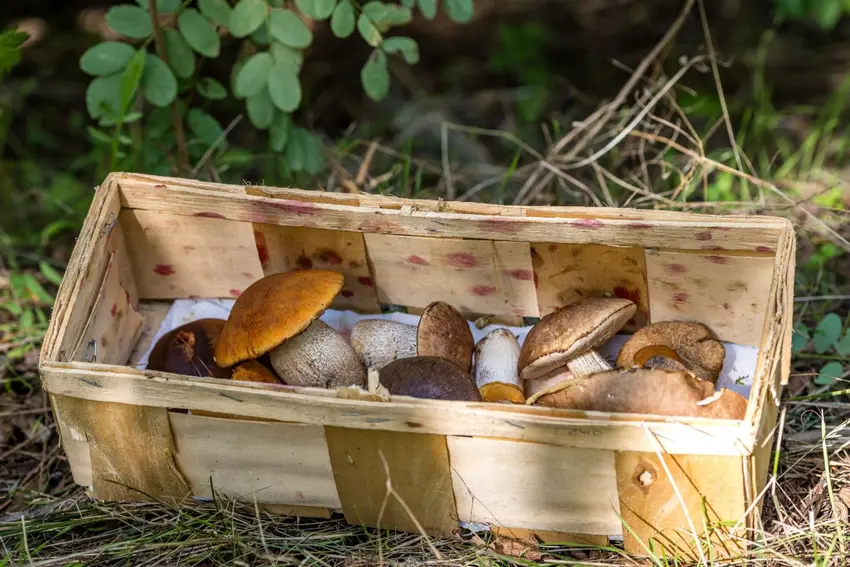
Collectors should use airy bags or baskets so that the mushrooms can breathe. In addition, avoid picking mushrooms that are too old, worm-eaten, or too small.
Don’t over harvest
In Germany, mushrooms can only be picked for personal use. By law, protected species like porcini, birch mushrooms, red caps, chanterelles, and all morels may only be collected in “small quantities” per person.
The allowed amount depends on the region, and breaking the rules can result in heavy fines.
Comments