
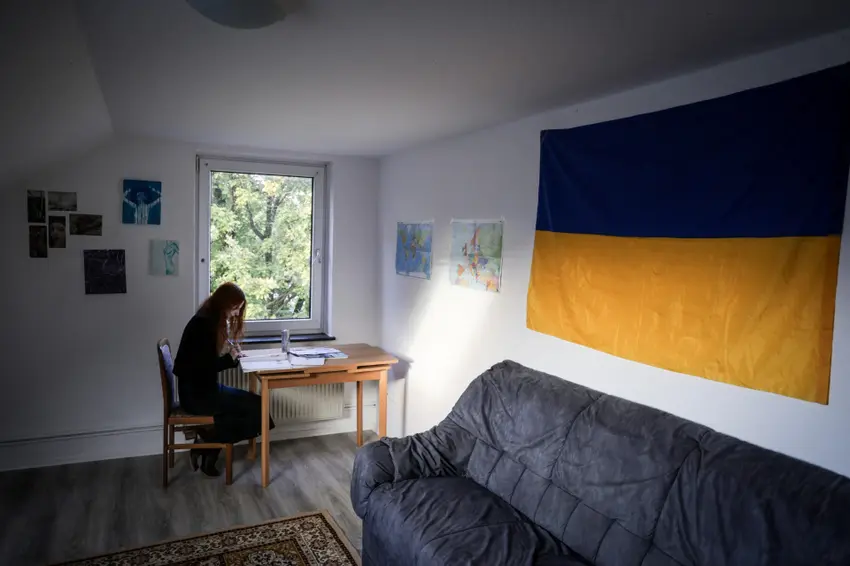
Markus Söder, Bavaria's Prime Minister and chair of the conservative Christian Social Union party (CSU), is stirring the pot again.
This week he has made headlines, and ruffled feathers among his own government coalition, by calling for the end of Bürgergeld (citizen's allowance) benefits for ALL Ukrainian refugees.
Germany’s federal government already has plans in place to withdraw access to Bürgergeld from Ukrainians who have arrived in the country since March this year. The current draft law, which they expect to have in place by the end of the year, would see Ukranians who arrived after April 1st, 2025 ineligible for Bürgergeld. Where necessary, they would be eligible for asylum seekers' benefits instead.
But Söder, along with some of his conservative colleagues in the CSU and CDU parties, also wants Bürgergeld withdrawn from all Ukrainians in Germany, regardless of when they arrived.
In a televised interview with ZDF he claimed that Ukrainian refugees – regardless of when they arrived – should no longer be eligible for Bürgergeld.
According to Söder, Germany's social benefits act as a pull-factor for Ukrainian refugees, and encourages passivity and ultimately a low employment rate among the group.
His claim was echoed by Thorsten Frei, Chief of the Chancellor’s Office, who told NTV that Germany “provides benefits like no other country in the world,” adding that this leads to poor labour market integration.
Arguments like these, and similar arguments by far-right leaders, are often made to justify the cutting of welfare benefits, or the exclusion of certain foreign groups from those benefits. But are these arguments actually aligned with labour market data?
What the evidence shows about refugee motivations
The actual evidence on why Ukrainian refugees come to Germany and their relationship to social welfare paints a very different picture.
A recent survey of refugees, by Germany’s Institute for Employment Research (IAB), the Federal Office for Migration and Refugees (BAMF), and the German Socio-Economic Panel (SOEP), specifically looked at Ukrainian refugees in Germany.
The research is notable for its scale and detail, surveying over 11,000 Ukrainian refugees. According to the study, the vast majority of respondents did not base their decision to come to Germany on the country’s welfare benefits. Instead, motivations were overwhelmingly linked to the need for safety and protection after being uprooted by the Russian war of aggression.
READ ALSO: Two years later, two Berlin residents from Ukraine on how war affects their lives
The findings were highlighted by the Frankfurter Rundschau, which concluded that refugees repeatedly cited seeking protection and the presence of family or personal networks, not economic advantages provided by the German welfare state.
This pattern aligns with other research from BAMF. In fact, when refugees were asked directly about the role of benefits, social assistance was seen as insignificant in influencing their destination or in their subsequent search for work.
“The prospect of a job that matches their qualifications and a higher wage level have a much stronger effect on refugees' decision about which country to go to than social assistance,” Panu Poutvaara, head of the Ifo Center for Migration and Development Economics told Frankfurter Rundschau.
Rather than acting as a spur to finding employment, there is also a danger that withdrawing access to Bürgergeld for Ukrainians would actually make the situation worse by removing job centre support.
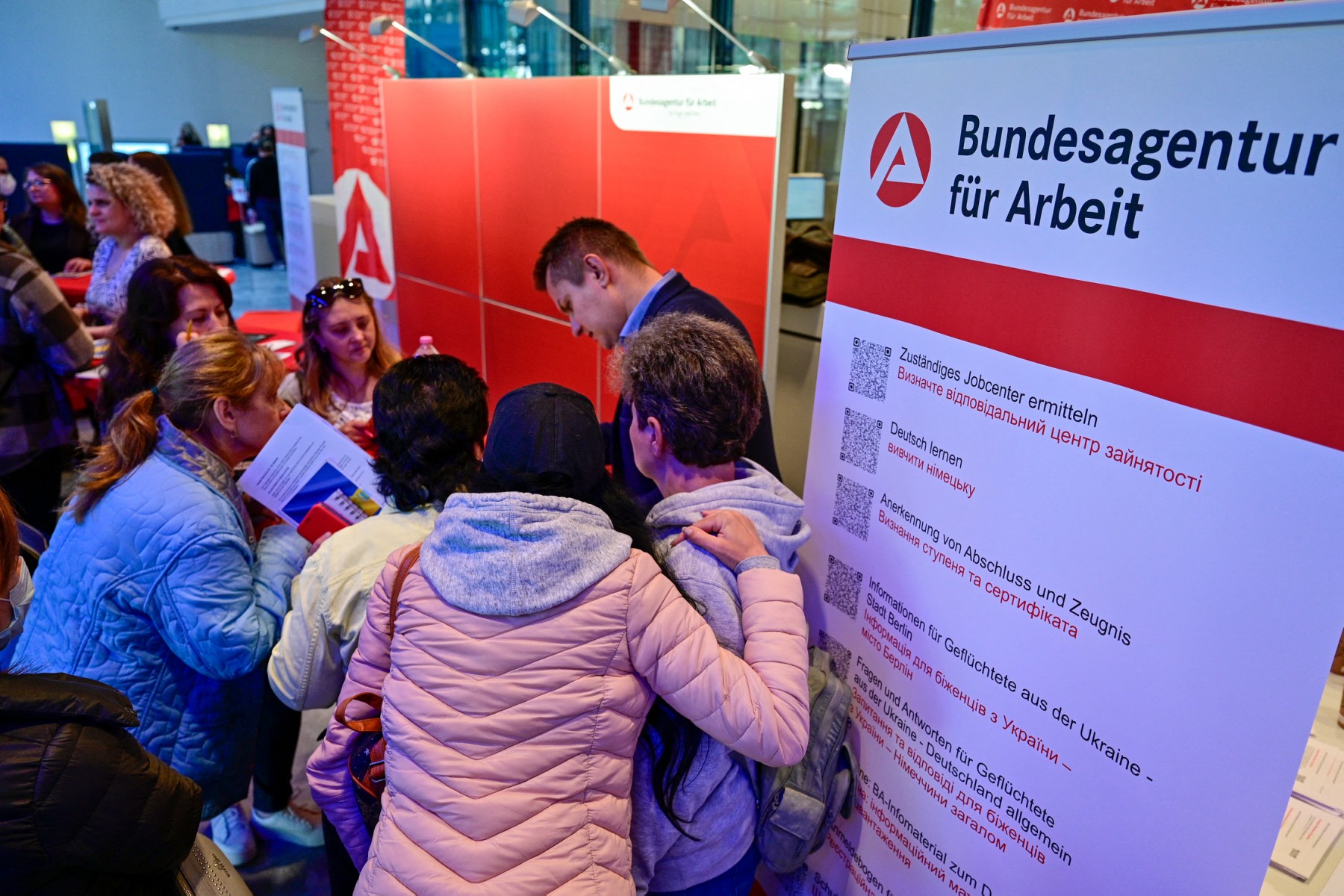
The IAB-BAMF-SOEP survey showed that motivation to work is high among Ukrainians, but that many face obstacles to entering the workforce. Among the main barriers to employment were: a lack of German language skills, delayed recognition of professional qualifications, and a lack of access to childcare.
Contributions versus benefits: the numbers
Beyond just Ukrainian refugees, arguments about immigrants as a “drain” on social benefits tend to be debunked by fiscal research.
FACT CHECK: Are immigrants in Germany taking advantage of the welfare state?
A comprehensive study by economists from Leiden University in the Netherlands examined the relative net fiscal position of immigrants and native-born citizens across 15 EU countries, including Germany.
Looking at data from 2007 to 2018, the study compares taxes and social security contributions paid by individuals against the public benefits and services they receive, in order to measure their net fiscal contribution to government budgets.
The findings are clear: immigrants as a whole contribute positively to public finances.
At the EU level, intra-EU migrants - that is immigrants coming from other EU countries - contributed €5,900 per year on average, while immigrants from outside of the EU, including refugees, contributed €4,527 per year on average.
For Germany, the analysis showed that immigrants, whether arriving from inside or outside the EU, contributed an average of €5,375 annually over the period studied.
Importantly, while some migrants initially receive higher levels of contributory benefits during their settling-in period, their net fiscal contribution increases as their employment rates rise.
Also, because immigrants tend to be younger than native German citizens on average, they tend to work for longer and are less like to draw on pensions and healthcare benefits for some time. This trend was observed even as Germany accommodated large numbers of Syrian refugees.
In an accompanying statement, Dr. Giacomo Boffi, one of the study authors, explicitly rejected the idea that migrants are a burden to the state: “This study debunks the populist myth that migrants are more of a burden on social security and the treasury than the native-born population. The opposite proves to be true in several countries.”
Rather than restricting access to benefits and support, these reports suggest that if state leaders really wanted to boost employment they should focus instead on measures to improve integration such as opportunities for language learning, recognizing qualifications, and facilitating childcare.
Comments