
New figures from Germany's statistical office (Destatis) show that the number of people living alone in the country has shot up recently - to a rate far higher than is seen in most other European countries.
Around 17 million people in Germany live alone, according to a 2024 survey by Destatis, which corresponds to just over one in five people in the country (20.6 percent).
The number of people living by themselves has risen steeply in the past two decades – by 21.8 percent compared to 2004. At that time, 14 million people lived alone, representing around 17 percent of the population.
Proportionately, Germany has far more solo-inhabitants than are seen in most other European Union (EU) countries. In 2024, the share of people living alone across the EU was 16.2 percent.
Figures from the European statistical office (Eurostat) show that just five European countries have greater proportions of people living alone. These include the northern and north-eastern countries of Lithuania, Finland, Denmark, Estonia and Sweden.
Among the countries with the lowest proportion of people living alone were Slovakia, Ireland and Germany's neighbour Poland.
READ ALSO: German housing co-ops - What are they and how do I sign up?
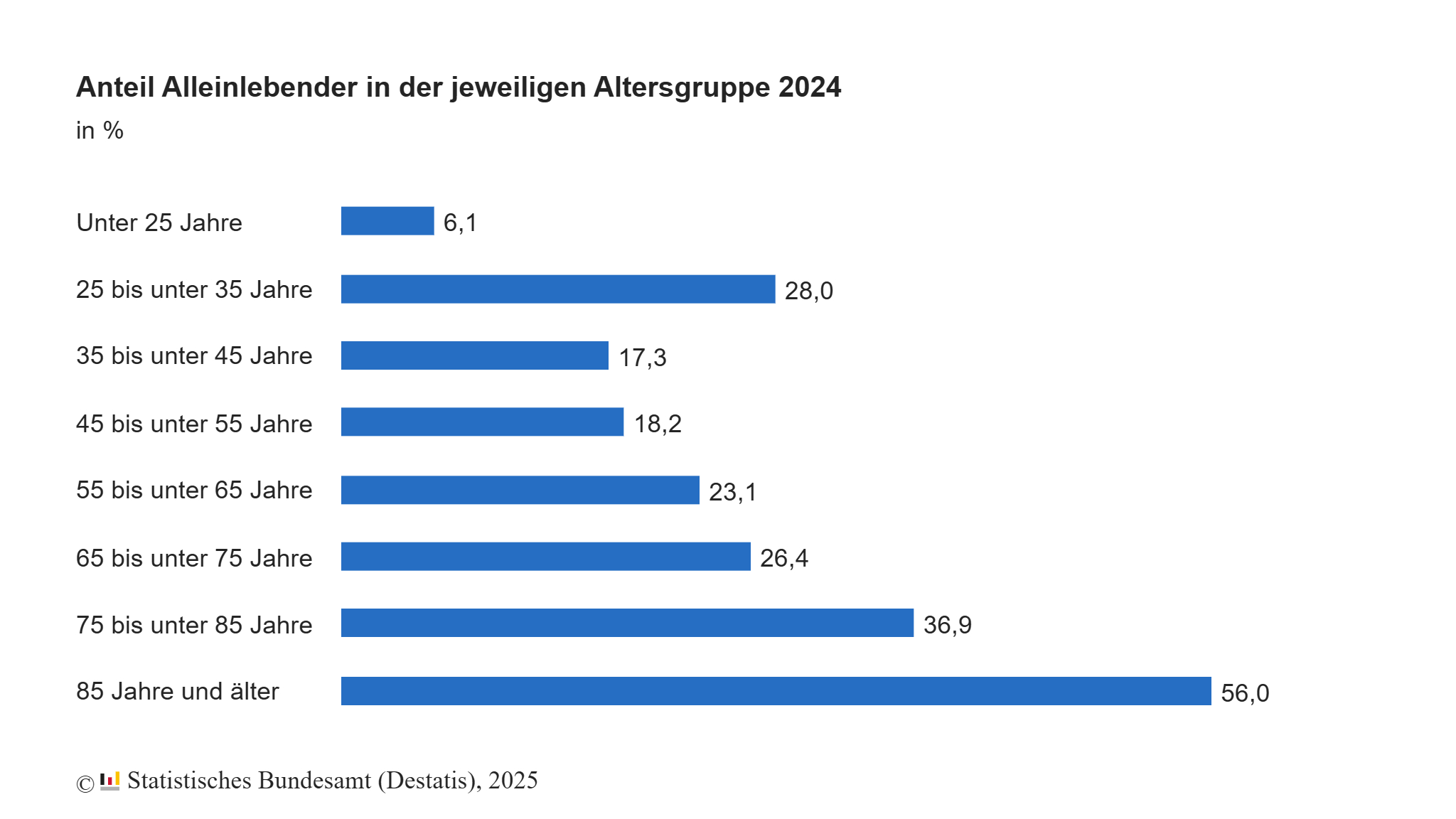
Elderly people are the most likely to live alone, with the proportion of people doing so increasing in their later years. Among the 65-plus age group, just over one in three people lived alone (34.0 percent), and among those aged 85 and over, the figure was more than one in two (56.0 percent).
The next most likely age group to live by themselves were young adults aged 25 to 35.
The downsides of solo living
An obvious downside to living by yourself is a heightened risk of loneliness. Whereas around 16 percent of people aged ten or higher in Germany reported feeling lonely, according to a Destatis survey in 2022, around 26 percent of people who live alone say that they do.
Younger people - under the age of 30 - were about twice as likely to be affected by loneliness than people aged 65 or more.
Another negative side-effect of living alone is an increased risk of poverty.
The rate of people considered at risk of poverty was almost twice as high among people living by themselves compared to the population as a whole (29 percent compared to 15.5 percent).
The proportion of people at risk of poverty has also risen since 2023 - both among people living alone and the total population.
READ ALSO: Germans taking on personal debt at 'nearly twice the European average'
"At risk of poverty" here means people whose take home income is less than 60 percent of the median for the total population - or €1,381 per month in 2024 (after taxes and social security contributions).
Comments