
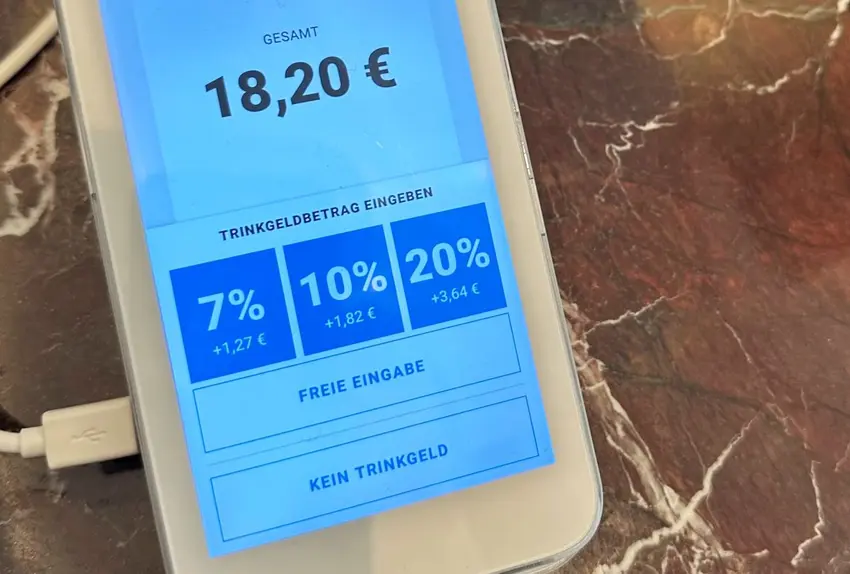
When paying by card, customers are increasingly encountering a ‘tip button’, or Trinkgeld button, on the card reader – and not only in bars and restaurants.
The development has led directly to people tipping more and more frequently, but not everyone is happy.
What is the ‘tip button’?
With the spread of digital payment options, card readers increasingly feature a screen that suggests three or four tip options – usually pre-set at ten, 15 or 20 percent of the bill.
Ten percent is actually well above the average tip in Germany. A study by the Stiftung für Zukunftsfragen found that the average tip on a bill of €50 was €4.50 in 2024 (up from €3.50 in 2014). Presented alongside options for 15 and 20 percent, however, a tip of just ten percent looks reasonable.
Another frequent complaint about the tip button is the relative invisibility of the “no tip” option. This isn’t always the case, but on some card readers the option is hidden in small text or even on another page behind a series of clicks.
According to an article in the Rheinische Post, the tip button was introduced in the wake of the transition to digital payments. As cash use fell, staff feared (and initially saw) declining tips, leading restauranteurs to introduce tip prompts.
How does tipping traditionally work in Germany?
In Germany, tipping has traditionally been voluntary and dependent on good service, friendly staff or special attention.
READ ALSO: Polite but not mandatory - The dos and don'ts of tipping in Germany
In restaurants, cafes, bars, taxis and even at the hairdressers, traditionally it was not uncommon for German customers to simply round up their payments.
To do so, you can say, "Stimmt so" (in this case meaning "keep the change") when handing over the cash – assuming the difference is somewhere between five and ten percent. Alternatively you might say something like, "Macht es bitte Zwanzig" ("make it twenty") when paying an €18 bill with a €50 note, for example.
Experts: The tip button is changing everything
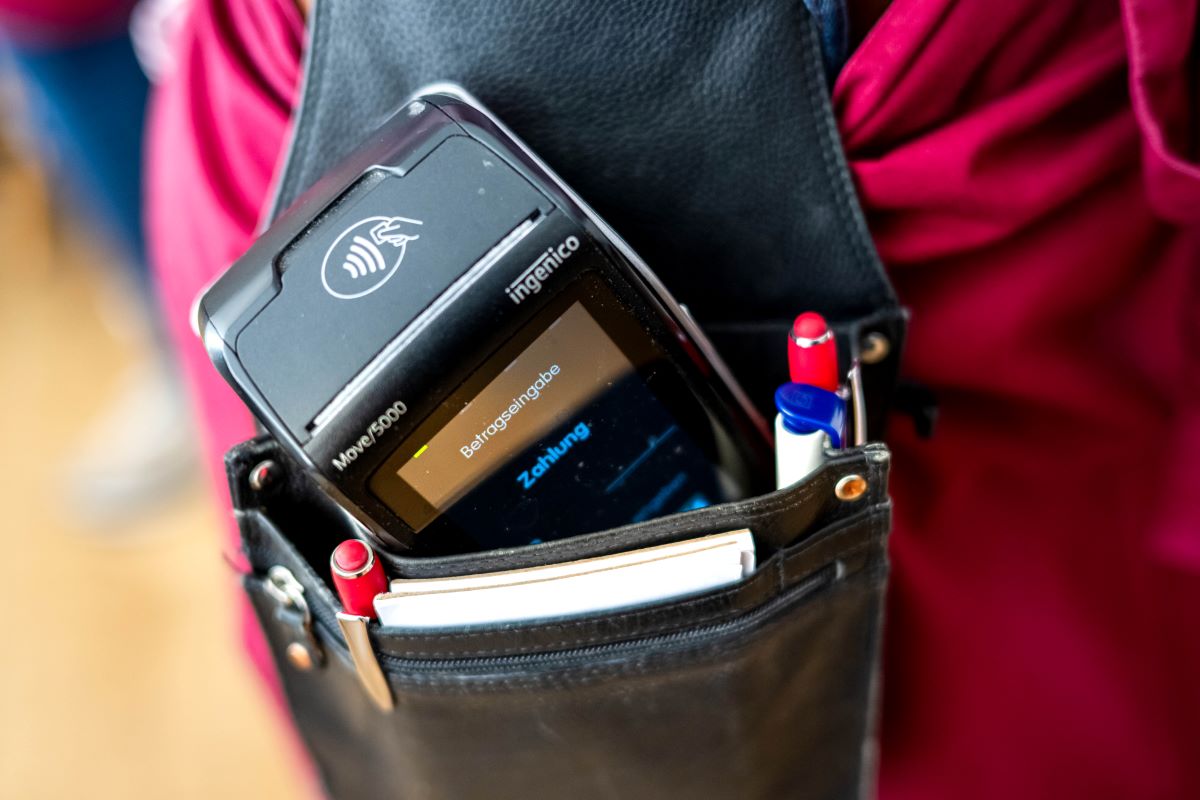
According to experts, the introduction of the tip button is having a clear impact on tipping behaviour in Germany.
"Many retailers say that guests tend to tip more than before when paying by card via the terminal," the Rheinische Post reported.
The new systems act as a standard from which you have to consciously deviate. Industry experts refer to this as the ‘decoy effect’: as soon as one option is set particularly high, the others seem appropriate.
Christian Traxler, professor of economics at the Hertie School in Berlin, told Die Zeit that some guests feel pressured by digital cash register systems to tip more than they had originally planned.
In addition, the tip button isn’t just causing consumers to tip in larger sums. It’s also having a clear effect on the number of situations in which they're expected to tip.
READ ALSO: Card over cash? Why Germany is seeing a new payment preference
Whereas in the past only waiters, taxi drivers and hairdressers expected a tip, the tip button is now appearing as standard in coffee shops, bakery chains, fast food outlets, and even hotel receptions.
Rebelling against tipping culture
A study by the financial technology platform Adyen revealed that 75 percent of respondents don’t like being told how much to tip, with Gen Z (people aged 18 to 29) in particular reportedly finding the new practices annoying, intrusive and against the original spirit of tipping.
While older generations in Germany tip between ten and 14 percent on average, this figure is significantly lower among the under-30s. Nearly a quarter of Gen Z consumers don’t tip at all, according to the study.
Unlike in the USA, where service staff often rely on tips, German labour law clearly states that employers are not permitted to use tips as a substitute for wages.
READ ALSO: How much should tourists really tip in Germany?
Section 107 (3) of Germany's Trade Regulation Act states that tips may not be offset against wages – minimum wages and collectively agreed wage floors apply independently of, and in addition to, tips received.
In theory, therefore, no one should feel compelled to tip in Germany.
Previously, customers had to make a conscious decision about whether, and how much, they wanted to tip waiting staff. Now the situation has been reversed. The easiest and most convenient option is to click ten percent, or more.
Useful vocabulary:
tip - das Trinkgeld
tip button - die Trinkgeldtaste / der Trinkgeld button
bill - die Rechnung
Would you like to give a tip? - Möchten Sie ein Trinkgeld geben?
Comments (1)