
Monday's top story: Merz vows to 'do better' after court row shakes government
German Chancellor Friedrich Merz admitted Sunday his coalition had to "do better" as it reeled from a row over a nomination to the country's highest court.
On Friday, MPs from Merz's conservative CDU/CSU alliance refused to back a candidate for the constitutional court proposed by their junior coalition partners, the centre-left Social Democrats (SPD).
The nomination of Frauke Brosius-Gersdorf to the 16-member Constitutional Court should have been a formality, but it was pulled at last minute when it became clear she didn't have the necessary support.
Opposition to Brosius-Gersdorf among CDU/CSU lawmakers initially focused on her perceived liberal views on issues including abortion. It was sharpened by allegations she plagiarised parts of a university dissertation.
Merz, whose government has been in office for less than three months, said the party leadership "could have picked up earlier on the fact that there was a lot of discontent" among its own lawmakers.
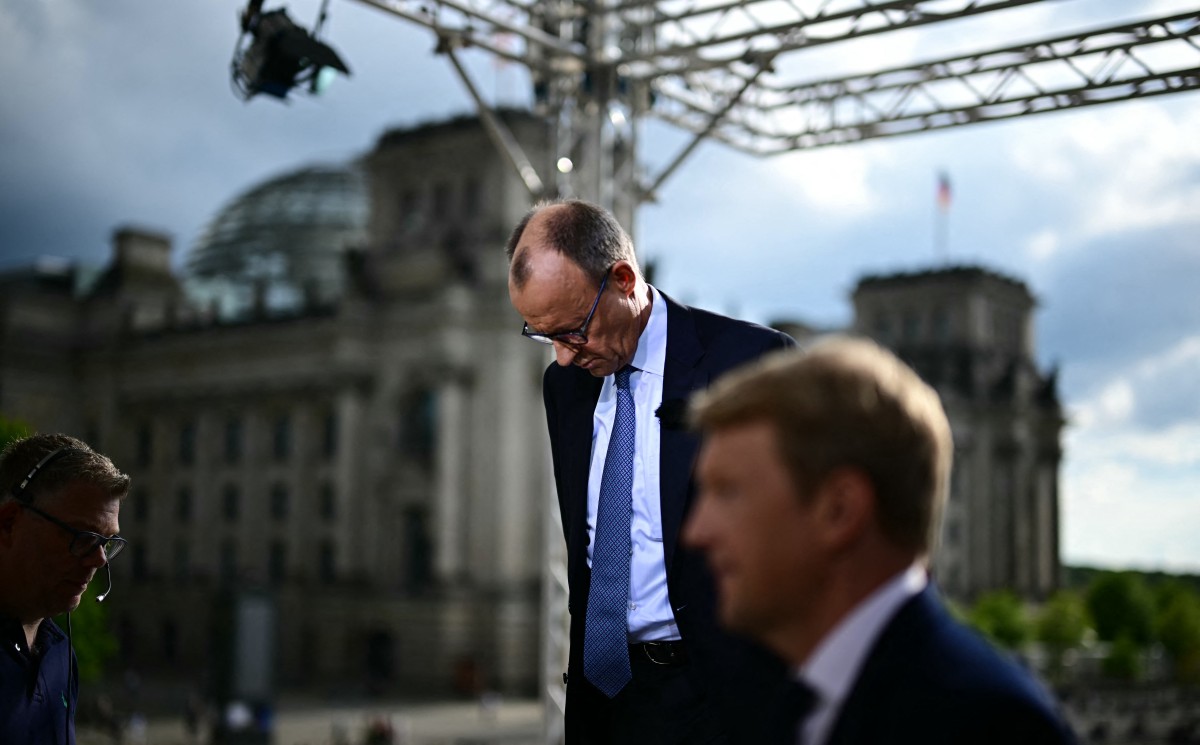
Speaking to the ZDF TV channel, President Frank-Walter Steinmeier said in an unusually direct intervention that the government had "damaged itself" with the failed nomination.
EU needs 'decisive' measures if no 'fair' US tariff deal, Berlin says
The European Union will need to take "decisive" action to counter US tariffs if no "fair" deal is reached with Washington to avert threatened levies, Germany's finance minister said on Sunday.
Lars Klingbeil told the Sueddeutsche Zeitung newspaper that "serious and solution-oriented negotiations" with the US were still necessary, but added that if they fail, the EU would need "decisive counter-measures to protect jobs and businesses in Europe".
On Saturday US President Donald Trump announced that the EU and Mexico would be targeted with steep 30 percent tariffs as of August 1st. In the case of the EU, he cited the US's trade imbalance with the bloc as justification for the new levies.
READ ALSO: Impact of US tariffs varies across European Union
Klingbeil said the tariffs would have "only losers" and "threaten the American economy at least as much as businesses in Europe".
He said that "Europe remains determined and united: we want a fair deal."
"Our hand remains outstretched but we won't accept just anything," Klingbeil said, and added that contingency measures in the case of no deal "must continue to be prepared".
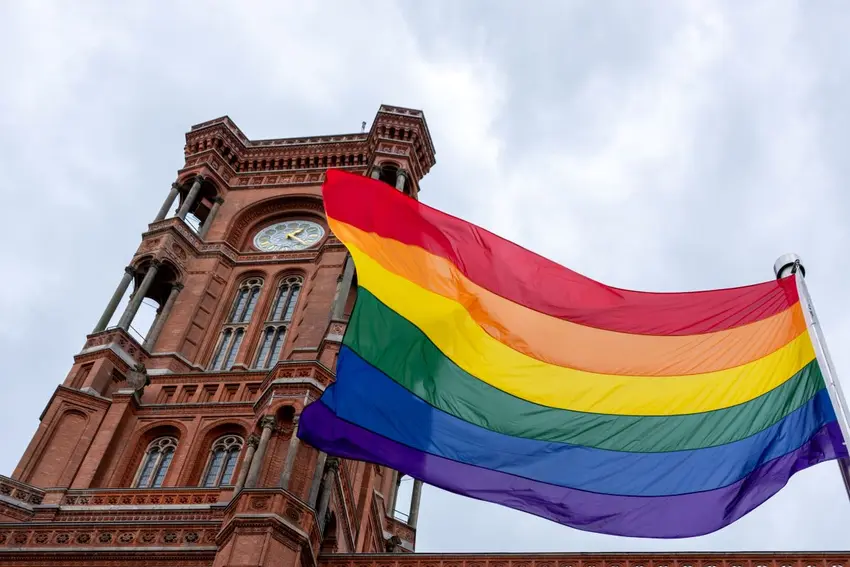
Bundestag President calls for Pride flags to be taken down from parliamentary offices
Julia Klöckner of the CDU has had "fiery debates with deputies from the opposition Left and Green parties" as to whether "political and cultural symbols" should be permitted in the German legislature, ordering MPs to take the rainbow flags down.
In the Bundestag's house rules it notes that "posting notices, in particular posters, signs, and stickers on doors, walls, or windows in generally accessible buildings of the German Bundestag, as well as on windows and facades of these buildings visible from the outside, is not permitted."
North Rhine-Westphalia calls for change to school break schedules
The state of North Rhine-Westphalia NRW would like to have a later start to the holidays, said Minister of Education Dorothee Feller to the Westdeutsche Allgemeine Zeitung.
The CDU politician stressed that the previous justification that schoolchildren in Bavaria had to help with the harvest during the holidays no longer holds.
Should would prefer to see an equal holiday regulation for all countries.
READ ALSO: Key dates: When do school holidays begin across Germany this summer?
No schedule changes will take place until 2030 at the earliest, until then the holiday regulations have already been determined.
'Fairytale' Neuschwanstein castle becomes UNESCO heritage site
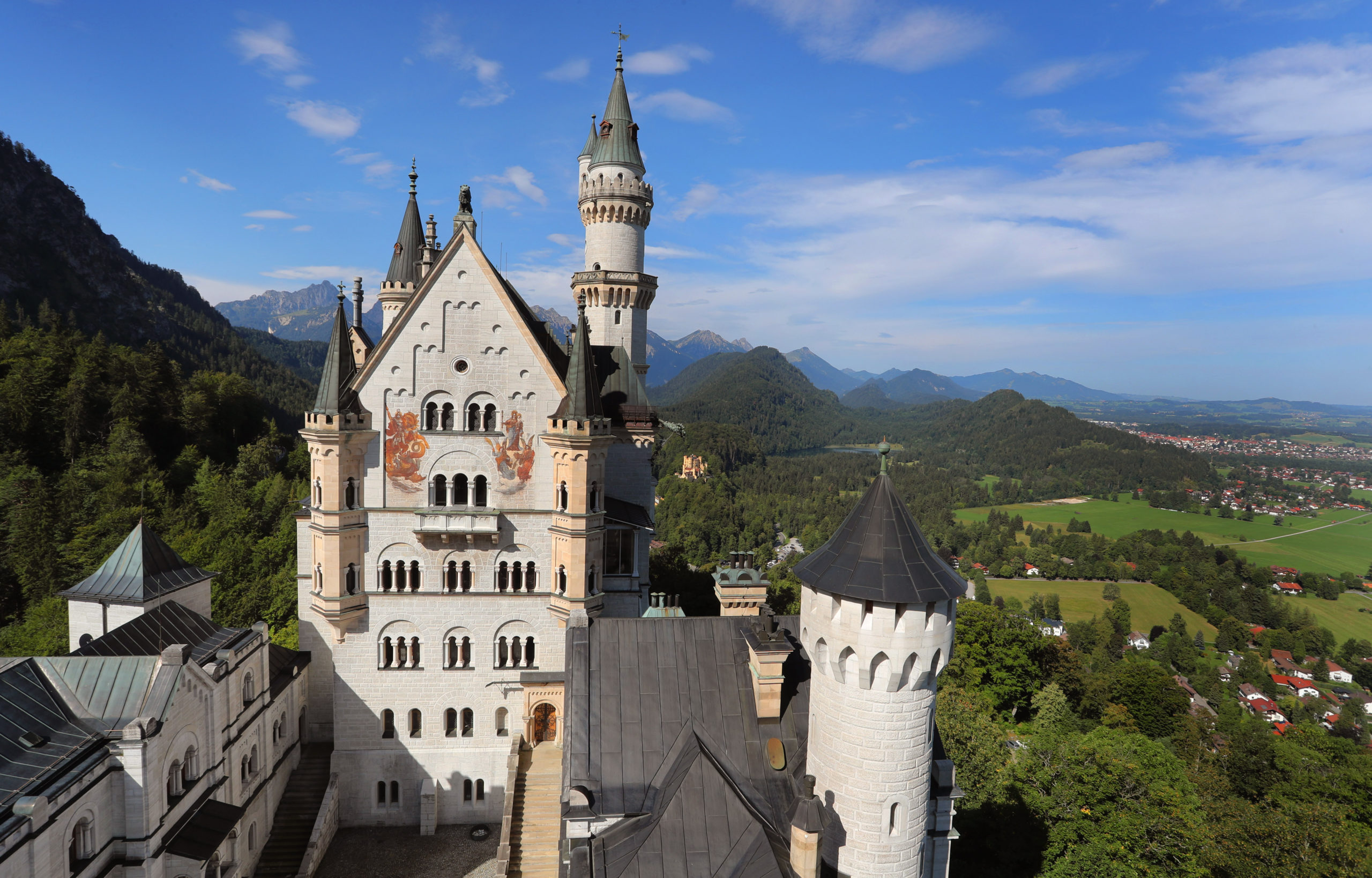
Neuschwanstein castle in Germany's Bavaria has been named a World Heritage site, the UN cultural agency announced on Saturday.
Three other royal residences, also constructed in the late 19th Century under the famously arts-obsessed King Ludwig II of Bavaria, were also added to the coveted list: Herrenchiemsee, Linderhof and Schachen.
Neuschwanstein, perched on a rocky, 200m-high Alpine crag, is Germany's most visited castle, with almost 1.5 million people flocking there every year.
READ ALSO: 'Fairytale' Neuschwanstein castle becomes UNESCO heritage site
Herrenchiemsee meanwhile evokes a Versailles in miniature on a lake between Munich and Salzburg, an homage to absolute monarch Louis XIV of France, whom Ludwig admired.
The third site in the UNESCO listing is the small castle of Linderhof, completed in 1878, the only one to have been finished in Ludwig's lifetime.
With reporting by DPA and AFP and Connor Faulkner.
Comments