
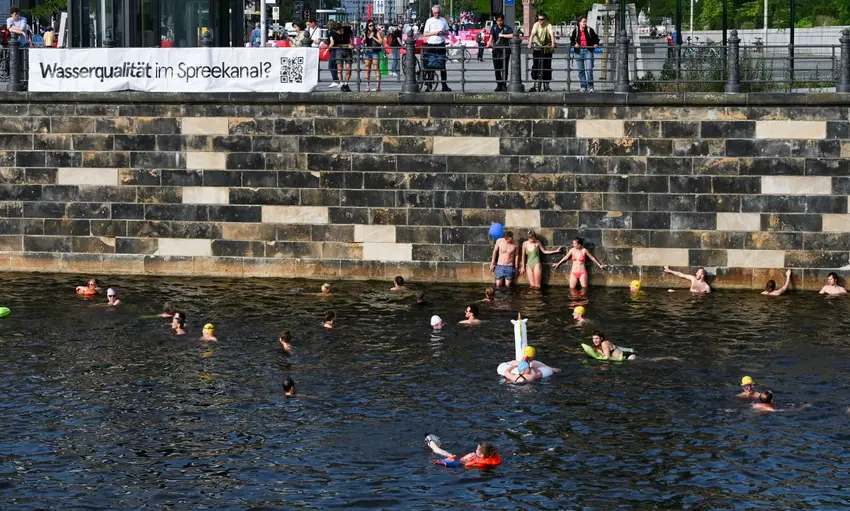
A group of eager swimmers in Berlin have planned the second swim demo - to take place from 4:30 pm on Tuesday - with a rally at Schinkelplatz near Museum Island beforehand.
The event marks the second time swimmers have planned to enter the Spree in the centre of the German capital in protest of the city's ban on swimming, and to demand that the city move forward with a plan to create a designated swim zone in the Mitte district.
Swimming in the centre of Berlin is generally verboten, but in this case a group called Fluss Bad Berlin had organised the event as a registered protest. The group, which has around 500 members, is a non-profit that has advocated for cleaning up the Spree and making it swimmable since 2012.
“For 100 years now, people have not been allowed to swim in the inner-city Spree and we no longer think this is justified…” Jan Edler, a board member of the group told AP.
Their chief goal, of reclaiming a central section of the Spree for recreational swimming, is closer to being realised than ever before, as city leaders have voiced enthusiasm for doing so as early as summer 2026.
What's the plan?
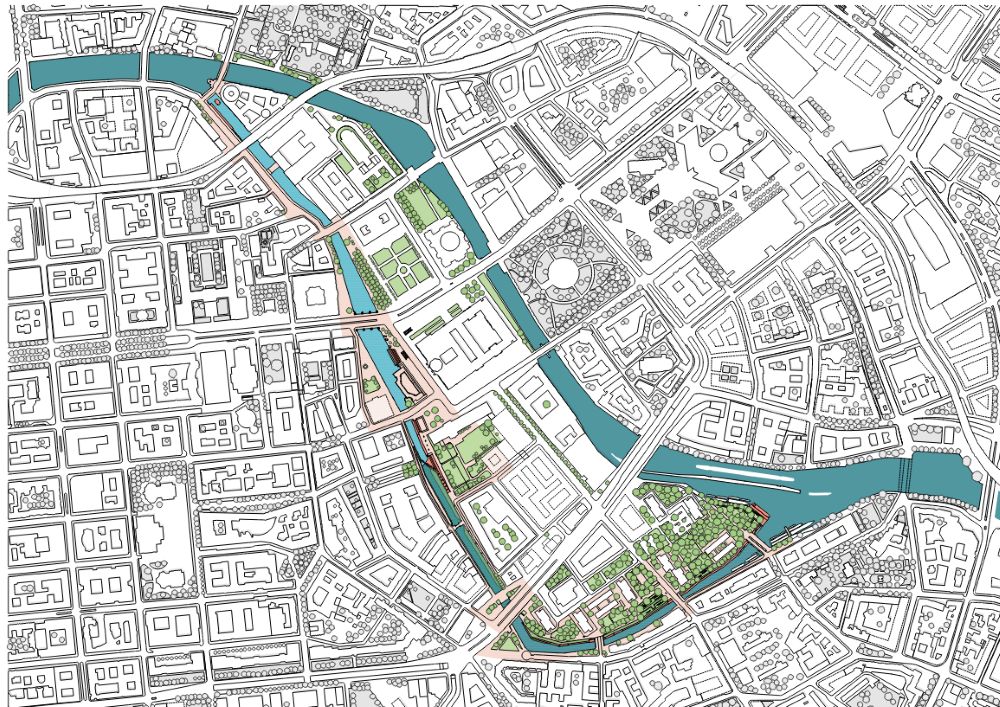
According to the initiative brought by Fluss Bad Berlin, the plan is to open up an 840-meter-long section of the Spree Canal between Schloßplatz and the Bode Museum for recreational swimming.
This central section of the river makes sense as an initial bathing location because it’s closed off to boat traffic. And, believe it or not, there is a history of Spree swimming specifically in this area. Up until around 100 years ago, there were river bathing locations established around the Humboldt Forum.
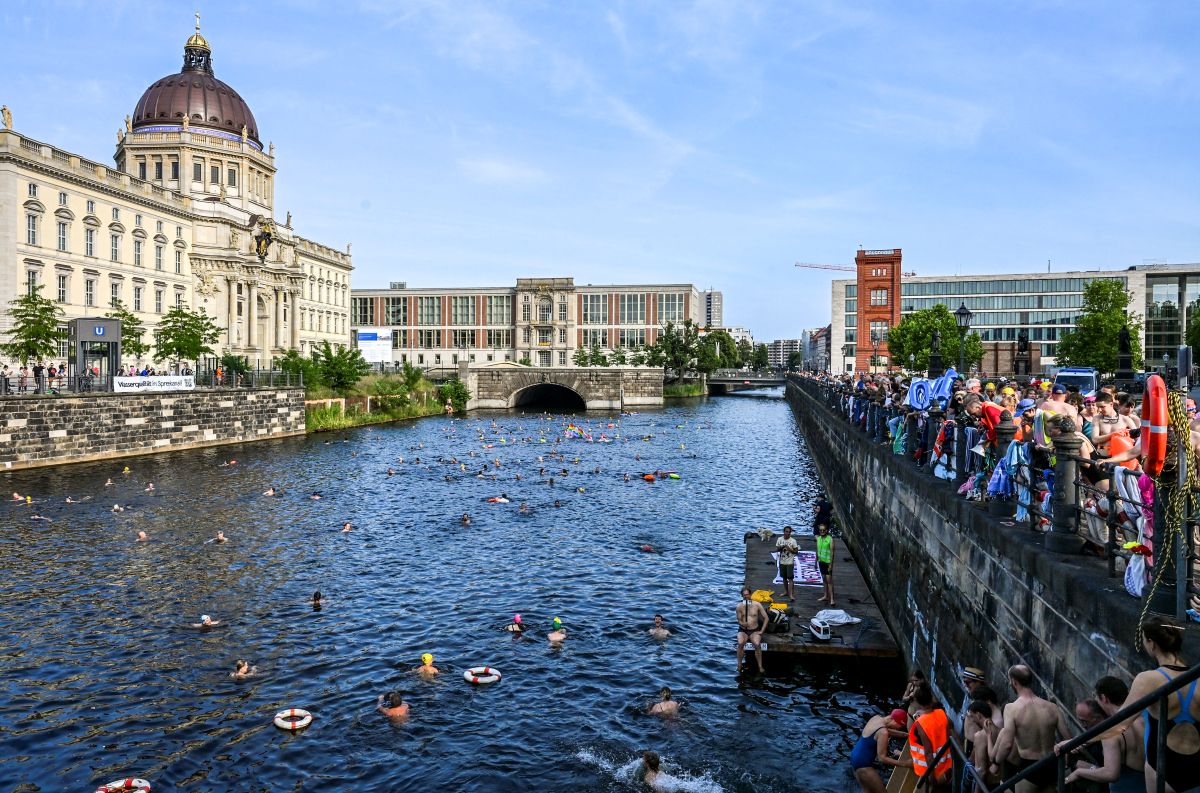
The initiative faces two primary challenges: ensuring swimmable water quality and the need to restructure historical monuments.
To keep the water clean, the use of plants that remove pollutants from water has been proposed, as well as a disinfection system with UV radiation that kicks in to sterilise waste water overflows that can happen during heavy rain. Initial tests suggest that a combination of these measures can keep water in the Spree sufficiently safe for swimming.
A point of contention, however, is that the canal in this area is surrounded by protected historical monuments, including UNESCO World Heritage Sites. Parts of these monuments would need to be altered in places to allow swimmers better access to the Spree.
Current plans - drawn up with the interests of monument protection in mind - would include outdoor stairs into the water at the Humboldt Forum and at the ESMT University of Applied Sciences, located on Schlossplatz.
The responsible district councillor, Ephraim Gothe (SPD), recently told German media outlets that he could imagine opening the Spree Canal to swimmers as early as summer 2026.
READ ALSO: The ultimate guide to looking and sounding like a local in Berlin
What are the current rules?
According to Berlin's Bathing Water Ordinance, swimming in the centre of the city is outlawed.
Bathing here was banned a century ago after it became known that the water quality had deteriorated to the point that people were getting sick. (The swimming protest on Tuesday marked the 100th anniversary of the swim ban.)
But the Spree River swim ban doesn’t apply everywhere in the city.
The press office of the Berlin police told Tip Berlin that the Spree swim ban applies "in the lock area", "in the boat traffic areas" and in places with a “no swimming” sign.
Put simply, swimming in the canals and the central part of the city are not allowed, as well as marked locations.
Also swimmers need to be mindful that the Spree does see a fair share of boat traffic.
There are places not far from the city where swimmers are seen semi-regularly in the summer months – such as near the Funkhaus, across from Planterwald. Swimming is not technically allowed here, and the Berlin Water Police have been known to issue citations from time to time. Some cheeky bathers in the area have objected to the citations on the grounds that, while swimming is prohibited, falling off a dock into the river is merely an unfortunate accident.
How dirty is it?
The water in Berlin's officially permitted bathing areas is tested biweekly during the swimming season.
While the Spree itself is tested less regularly, there is still ample evidence that its water quality has improved significantly in recent years.
"The water quality in the suburban Spree is generally good from a hygienic point of view," Andreas Matzinger of the Berlin Water Competence Centre (KWB) told TipBerlin.
However, the quality can fluctuate. The city’s sewer system is designed to overflow into the river in places during heavy rain, so pollution levels generally rise for a few days following a heavy storm. Levels of bacteria like E. coli and chemical pollutants are found in higher concentrations during these times.
READ ALSO: Hotels, transport and food - How the cost of travel in Germany is rising this summer
Because the river flows to the west through the city, water quality tends to be a bit better in the eastern districts.
Some residents in Berlin maintain a degree of scepticism about the Spree’s cleanliness, but for the 200 or so people who swam in the canal this week – as well as plenty more who regularly swim and paddle on the river during the summer months – the water seems inviting.
Comments