

Thursday's top story: MP removed from Bundestag over 'Palestine' t-shirt
Bundestag President Julia Klöckner (CDU) expelled Left Party MP Cansin Köktürk from the plenary chamber because she wore a shirt that had the word "Palestine" on Wednesday.
Members of the Bundestag are not allowed to wear clothing, stickers or buttons with political slogans on them.
Klöckner reiterated the rule in the plenary and said that she had already asked Köktürk privately to change the garment - which the delegate from North Rhine-Westphalia had refused - before asking her to leave the meeting.
The incident came before Foreign Minister Johann Wadephul (CDU) pledged support for Israel and promised that Germany would continue delivering weapons to the country.
A non-MP activist interrupted Wadephul's speech to yell "Free Palestine" and "blood on your hands".
Last week, Wadephul had said that Germany was assessing "whether what is happening in Gaza is in line with international law" and that arms sales to Israel would be evaluated on this basis.
Commenting on the skirmish over her t-shirt after the event, Köktürk wrote on X, "...Not a word about over 50,000 dead and injured children. I am asked to leave the chamber because my shirt says "Palestine". You have all failed so badly."
READ ALSO: Germany and Israel mark 60 years of ties as Gaza war casts shadow
Merz prepares for delicate talks with Trump
German Chancellor Friedrich Merz is set to meet US President Donald Trump Thursday, hoping to build a personal relationship despite discord over Ukraine and the threat of a trade war.
A month into his job, conservative Merz, 69, is a staunch transatlanticist at pains to maintain good ties with what he considers post-war Germany's "indispensable" ally, despite Trump's unyielding "America First" stance.
Merz will hope his pledges to massively boost Germany's NATO defence spending will please Trump, and that he can find common ground on confronting Russia after the mercurial US president voiced growing frustration with President Vladimir Putin.
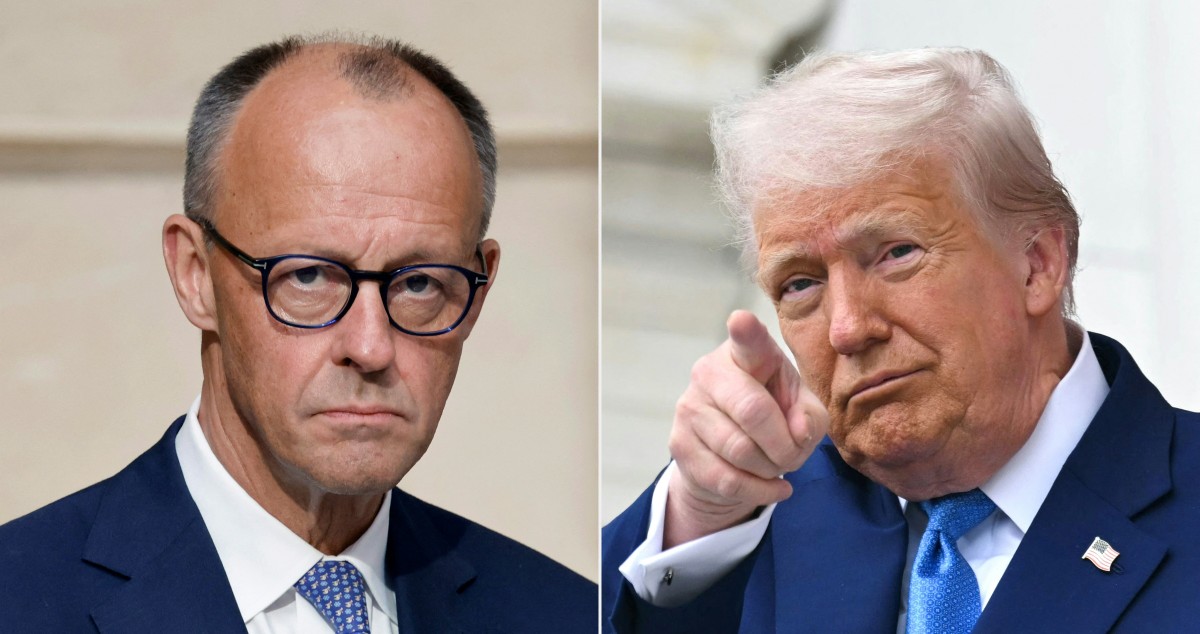
On Trump's threat to hammer the European Union with sharply higher tariffs, Merz as leader of its biggest economy has argued that the 27-nation bloc must be self-confident in its negotiations with Washington, declaring that "we're not supplicants".
Despite the dangers, his office has voiced confidence Merz will be spared the kind of public dressing down Trump delivered in the Oval Office to Ukrainian President Volodymyr Zelensky and South Africa's Cyril Ramaphosa.
World War II bombs successfully defused in Cologne after large-scale evacuation
Over 20,000 people were evacuated from central Cologne Wednesday after three unexploded World War II bombs were found, the biggest such operation in the German city since the end of the war.
Bomb squad technicians defused the three American explosives, two weighing 1,000 kilograms and one 500 kg, at 7:19 pm on Wednesday, having earlier set up an evacuation zone of about 10,000 square metres for 12 hours.
Road and train lines were closed throughout the day and city officials went door to door, sending about 20,500 people out of their homes and closing 58 hotels as well as numerous restaurants and businesses.
The heart of the city was left deserted, with a hospital, two old people's homes, nine schools and a TV studio evacuated.
Weddings had to be relocated from Cologne's townhall and a man was taken into custody after trying to break through a barrier and enter the zone, local authorities said.
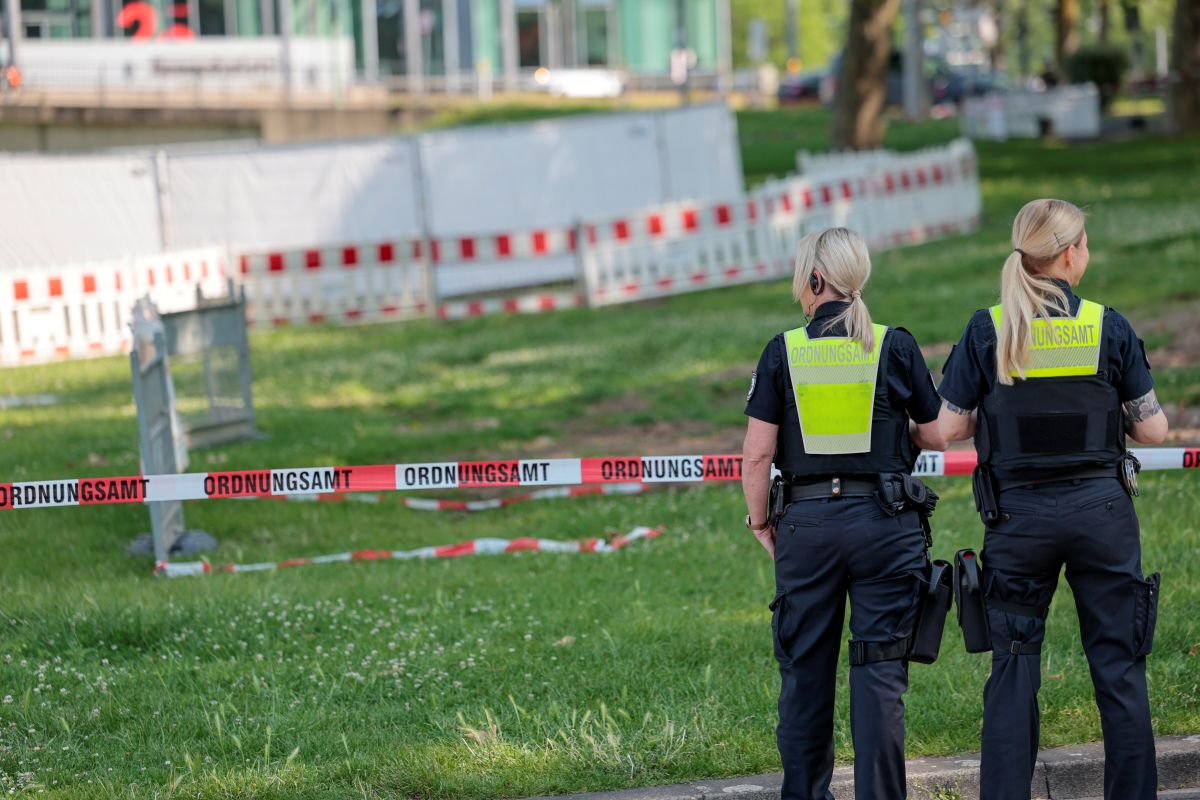
The bombs had been found during building work Monday in the Deutz area on the east bank of the River Rhine.
German construction sites have regularly unearthed unexploded World War II ordnance.
In Frankfurt, the discovery of a 1.4-tonne bomb in 2017 led to the removal of 65,000 people. In 2021 four people were injured when a World War II bomb exploded at a building site near Munich's main railway station, scattering debris over hundreds of metres.
Germany’s labour minister announces a crackdown on welfare fraud.
Federal Labor Minister Bärbel Bas (SPD) told Stern magazine that reforms need to be made to Germany's Bürgergeld system in order to prevent the organized abuse of social benefits.
Bürgergeld (Citizen's Benefit) is a state welfare benefit, paid when people have no income or don’t earn enough money to support themselves and their dependents.
“There are exploitative structures that lure people from other European countries to Germany and offer them mini-employment contracts,” added Bas, saying that organised criminals exploited people as day labourers at the same time as they applied for Bürgergeld on their behalf and expropriated the payments.
“These are mafia-like structures that we must dismantle,” she said.
Better data exchange between tax offices, job centres, family benefits offices, and security authorities would be necessary to achieve this, she added.
Bas said she wanted to see the reforms introduced in 2025. Bürgergeld will be renamed. Most of the essential elements will remain in place, explained the minister. In additional to introducing faster sanctions, however, changes will also be made to the way in which payments are adjusted to price developments.
Bas added that she is drawing a red line when it comes to households with children.
“You can't just sanction them to zero, as some people dream of doing,” she concluded. “But everyone who receives benefits has an obligation to cooperate.”
KEY POINTS: How Germany's new coalition will affect your bank balance
With reporting by AFP, DPA and Tom Pugh.
Comments