
Record number of natualisations
In 2024, Germany recorded its highest number of naturalisations ever, with at least 249,901 people granted citizenship, up nearly 50,000 on the year before.
These were mostly Syrians and people of Turkish origin, according to data reported by Welt am Sonntag, as non-EU citizens are allowed to keep their previous citizenships since the previous SPD-led government reformed naturalisation laws.
Some 13 states provided data to the paper, while three said their figures would be published in the coming weeks.
So-called “turbo” naturalisations remained rare, however, with most new citizens having lived in Germany far longer than required.
The new CDU-SPD government plans to scrap the fast-track option, calling for a return to “realism” in integration policy.
But the Association of German Cities warns that immigration laws are changing too frequently, overburdening local authorities and causing long processing delays.
State investment bank: investors looking to rebalance away from the US
The head of the state-owned KfW development bank says institutional investors now see they are over-invested in the US and are looking to invest more in Europe.
“In my more than 30 years of professional experience, I have never witnessed such a rapid shift in sentiment,” Stefan Wintels told Handelsblatt.
He says Germany’s political stability is proving attractive for investors when compared to the political chaos in the US, which have spooked bond markets and caused stocks to dip.
But he adds that Germany needs a convincing plan for growth that includes investment in infrastructure, reduced bureaucracy, and a commitment to skilled immigration.
The defence industry is becoming more important to Germany’s economy, Wintels says.
KfW’s venture capital arm is now allowed to invest in defence, while discussions on a European defence fund are ongoing.
Germany has a gap of about €30bn in spending compared to the US, according to Wintels.
German president congratulates Polish nationalist on win
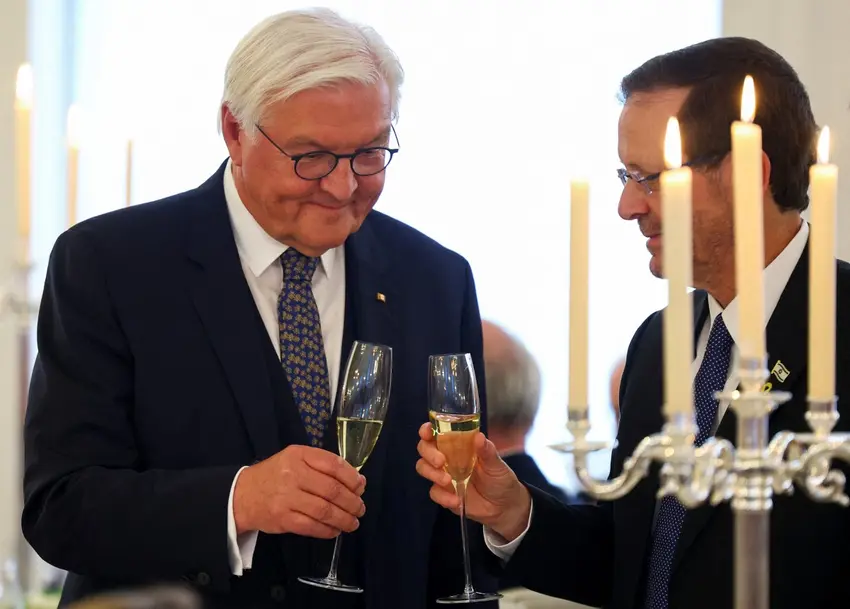
German President Frank-Walter Steinmeier on Monday congratulated nationalist Karol Nawrocki on winning Poland's presidential election, calling for the two countries to "cooperate closely based on democracy and the rule of law".
Poland and Germany are key to "ensure a future of security, freedom and prosperity for Europe", Steinmeier said in a statement, after Nawrocki defeated pro-EU Warsaw Mayor Rafal Trzaskowski in a runoff Sunday.
German research group sees flood of US job applicants
The numb er of applications from the US to the Max Planck Society, one of Europe's leading research bodies has risen threefold, according to Reuters.
The rise comes amid uncertainty over the future of US universities under Donald Trump's presidency.
Trump has moved to ban leading university Harvard from accepting international students and there is ongoing uncertainty around funding for US science institutions.
The Max Planck Society, a German state-backed network of research centres, received 81 applications from the US this spring compared to 25 last year.
"What's interesting is the number of applications from other parts of the world remained constant," Patrick Cramer, president of the Max Planck Society told Reuters.
"If you look at which institutions these applications are coming from, you see almost half are concentrated at five (U.S.) institutions: Harvard, Stanford, MIT, the National Institutes of Health and the University of California."
European central bank set to cut rate
The European Central Bank is expected to deliver its seventh-straight interest rate cut this week as US President Donald Trump's volatile trade policies add to headwinds for the sluggish eurozone.
Even before Trump unleashed his on-off tariff onslaught on the world, the ECB had been bringing borrowing costs down as inflation eased.
Worries about sluggish performance in the 20 countries that use the euro have increasingly overshadowed inflation concerns as higher rates have pinched businesses and households.
Trump's tariffs have added to the sense of urgency. Europe is in the president's crosshairs over its hefty surplus in traded goods with United States, stoking fears about a heavy hit to the continent's exporters.
Predicting a cut when the ECB's governing council meets Thursday, HSBC said the eurozone's "near-term outlook has deteriorated on the recent US tariffs announcements and related uncertainty".
With reporting from Ben McPartland and AFP
Comments