
Maternity protection in the event of miscarriage
Starting from the beginning of June, women who suffer a miscarriage from the 13th week of pregnancy are entitled to maternity protection, or Mutterschutz.
Affected women are set to receive paid maternity leave from work to recover from the physical and mental stress caused by the event.
The duration of the leave entitlement depends on the timing of the miscarriage.
For instance, someone who loses a pregnancy from the 13th week would be entitled to two weeks of Mutterschutz, while a loss from the 17th week would give six weeks of protection. Women who suffer a miscarriage from the 20th week would be entitled to eight weeks of paid time away from work.
Prior to June 1st, 2025, those affected by pregnancy loss had to request sick leave with a doctor's approval to take time away from work.
READ ALSO: Mutterschutz - Germany's plans to extend maternity paid leave following miscarriage
Changing electricity providers to happen within 24 hours
Starting June 6th, if you change electricity providers in Germany the switch is to take place within 24 hours.
This comes as the result of an EU directive that is intended to increase competition, according to the Lower Saxony Consumer Advice Centre.
However, the notice period of your current contract remains in place.
Going forward, retroactive registrations, as may be the case in the event of a move, will no longer be possible.
READ ALSO: How to reduce your household electricity bill in Germany this year
Germany marks Whit Monday
June 9th is a national public holiday this year, as Germany marks Pfingstmontag, or Whit Monday.
Whit Monday immediately follows Whit Sunday, or Pentecost, which comes 50 days after Easter.
Many Christians attend a special church service on this weekend, and the holiday is also celebrated with spring fun fairs. You can also expect to see large wreaths (Pfingstenkranz) on display in some regions.
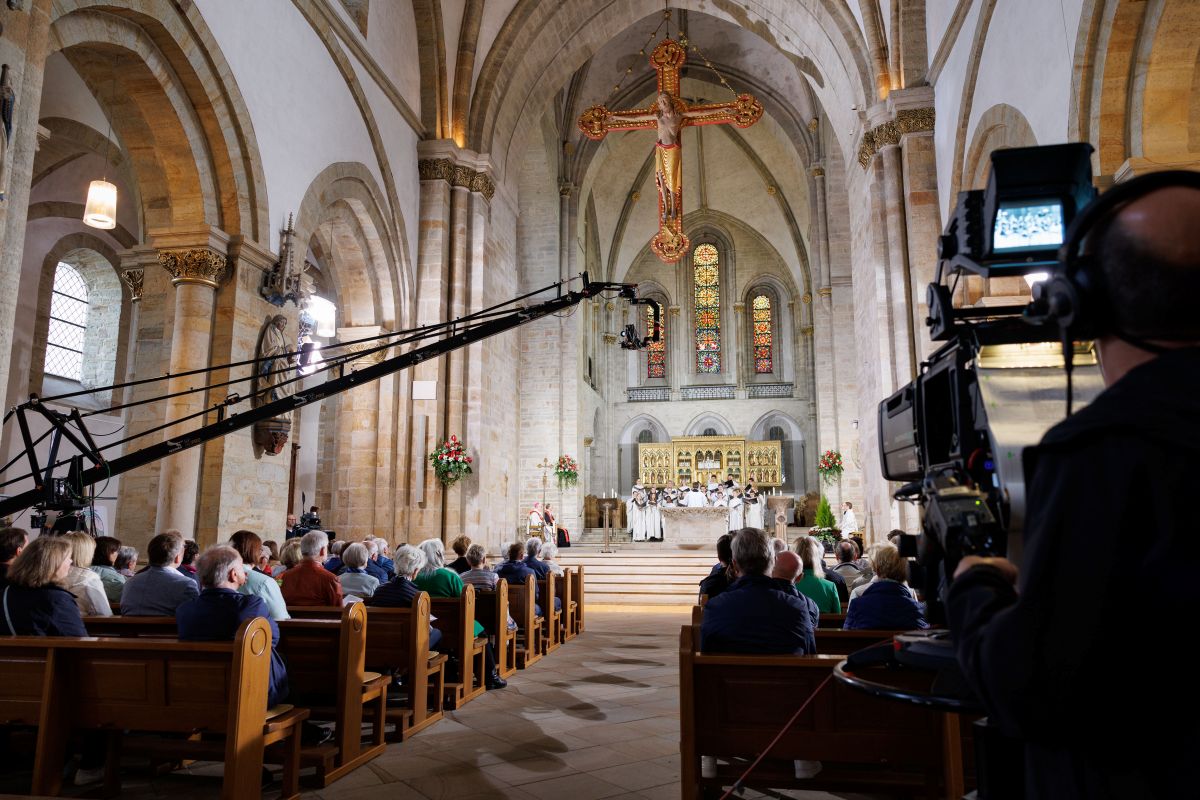
As with all national holidays, most workers have the day off and you should expect most businesses to be closed.
READ ALSO: How employees in Germany can make the most of public holidays in 2025
Germany honours members of the Bundeswehr on National Veterans' Day
On June 15th, the veterans of the Bundeswehr are to be honoured for the first time at a national Veterans' Day service.
The central celebration is set to take place in front of the Reichstag in Berlin, and there are other events in other cities.
Germany's Veterans' Day was formally introduced last year, but this year marks the first time service members will be honoured on the day.
A veteran of the Bundeswehr is considered to be someone who is in active service as a soldier of the German Army or has honourably retired from duty.
Mandatory gas checks for caravans and motorhomes
Anyone who owns a motorhome or caravan with a liquefied gas system must provide proof of an up-to-date expert check starting June 19th.
The new requirement comes as an amendment to the Road Traffic Licensing Regulations (StVZO) and is intended to ensure fewer accidents related to heating, cooling and cooking in camper vans.
New EU rules for smartphones
From June 20th, new EU-level design requirements for smartphones and other cordless phones come into force.
New phones on the market in Europe will need to meet a minimum level of durability, their batteries should still have a capacity of 80 percent after at least 800 charging cycles, and manufacturers must provide spare parts up to seven years after sales have stopped, according to the new regulations.
The EU directive aims to decrease the waste involved with smartphone use, by ensuring that the devices last longer and are more easily repairable.
This follows a previous EU law which required new phones on the European market to be compatible with a standard USB-C charger.
Summer break begins in some German states
For millions of students, the school year is comes to an end in June.
Children and students in Saxony, Saxony-Anhalt and Thuringia are the first to start their summer holidays – their last day of school is June 27th. As always, Bavaria will be the last federal state to start the summer break, as last as August 1st.

Summer break for German schools usually lasts about six weeks, with pupils in the states of Saxony, Saxony-Anhalt and Thuringia returning to class on August 11th this year.
More accessibility in online retail
From June 28th, online retailers are required to offer their portals barrier-free for people with disabilities.
This requirement is brought by the Accessibility Strengthening Act, and it applies to banking services or the apps and websites of transport companies, among others.
Did we miss anything? Let us know in the comments section below.
Comments