

Thousands march in Germany against the far right
Thousands of people protested against the far right across Germany on Sunday, as the AfD party appeals a decision to label it an "extremist" group.
Germany's domestic intelligence service last week labelled the anti-immigration Alternative for Germany (AfD) party a "right-wing extremist" group, accusing it of seeking to undermine the country's democracy.
It suspended the classification while AfD's appeal of the measure moves through the courts.
On Sunday anti-AfD demonstrators marched in 60 localities across Germany, following a call by the "Together against the Right" group. In Berlin 3,000 protesters gathered in front of the famed Brandenburg gate, according to the police. Organisers put the turnout at 7,000.
"Together against fascism," they chanted. "AfD is not a normal party and should not be treated as such," the organiser group said on its website. "It is now time to seriously examine banning the party."
Following a spate of high-profile terror attacks across Germany - some of which were committed by asylum seekers - the anti-migrant party achieved its best-ever result in February's federal election, coming second only to the CDU and CSU.
READ ALSO: "The truth is out about Germany's far-right AfD - now ban the party"
Since the election, the party has even led some polls on 26 percent, overtaking Friedrich Merz's conservatives.
It says the intelligence service decision against it is politically motivated.
Labour Minister wants self-employed people to pay into pension pot
Germany’s new Labour and Social Affairs Minister, Bärbel Bas (SPD), wants to reform the country’s pension system by requiring self-employed individuals, civil servants, and members of parliament to pay into the statutory pension scheme.
Promoting her plans over the weekend, Bas said the move was required to ensure the stability of the system as the population ages. The more people contribute to the pension scheme, the less dramatic hikes in contributions there will be.
Her proposal triggered an immediate backlash from the party's CDU/CSU coalition partners and the German Civil Servants’ Federation (dbb). However, the Left Party and the social advocacy group VdK have come out in support of the move.
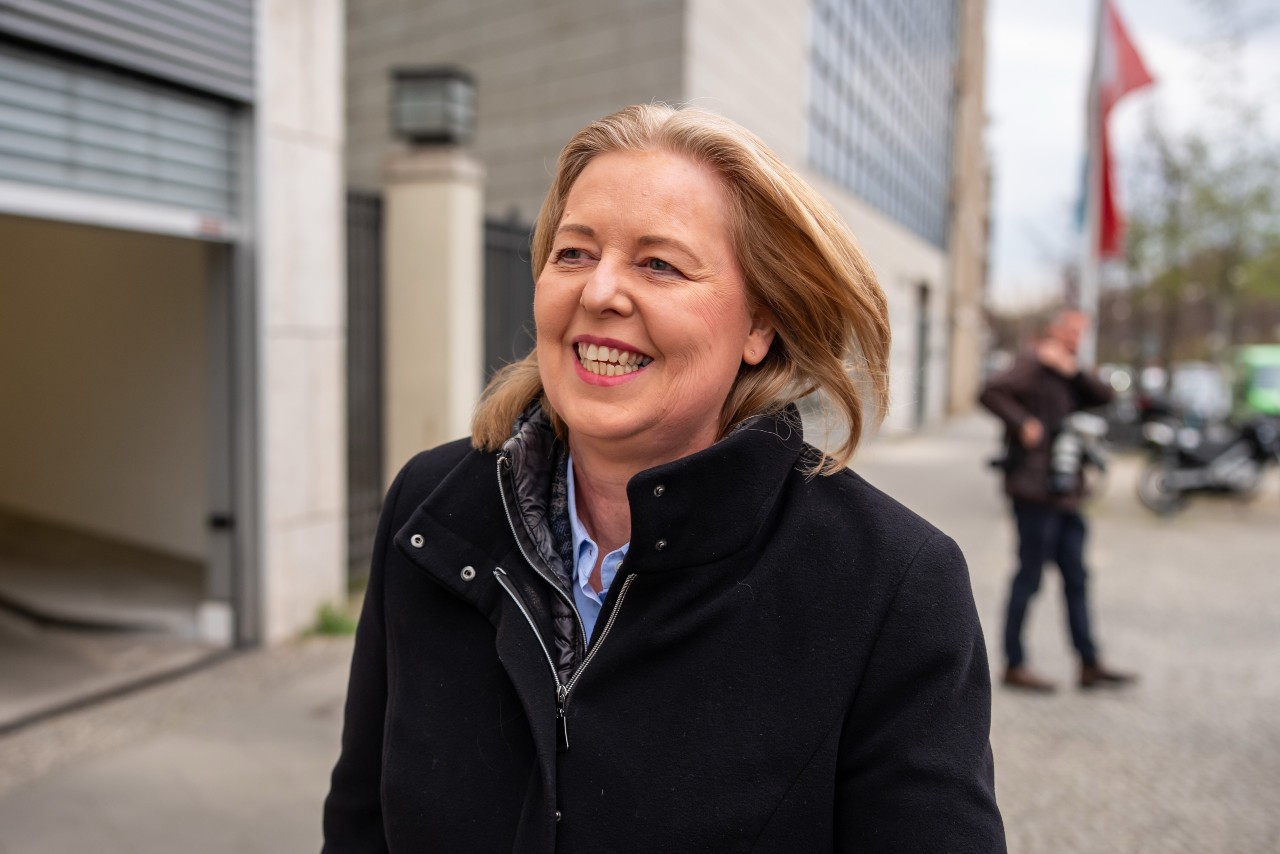
SPD social policy expert Bernd Rützel also backed Bas’s plan, pointing out that it aligns with the long-standing policies of the party. Rützel, formerly chair of the Bundestag’s Labour and Social Affairs Committee, told the Augsburger Allgemeine that the reform would promote fairness by ensuring everyone contributes to the system.
“What’s fair is that all make a solidarity-based contribution,” he said.
Nevertheless, Rützel cautioned that incorporating new groups like civil servants and the self-employed would be complex and require a lengthy transition period.
“It’s no small task,” he added.
READ ALSO: How Germany needs to improve its pensions system
Germany warns Russia of harder sanctions if it refuses Ukraine ceasefire
Russia will face much tougher sanctions if it refuses a 30-day ceasefire demanded by the West, German Chancellor Friedrich Merz said in an interview over the weekend.
If President Vladimir Putin does not agree to the truce, "there will be a massive hardening of sanctions and the massive aid to Ukraine will continue -- politically, of course, but also financially and militarily," Merz told the Bild daily.
He was visiting Kyiv on Saturday with the leaders of France, Britain and Poland.
"We agree with the US government, with Donald Trump. We are demanding a 30-day ceasefire so that peace negotiations can be prepared during this period," he said.
"The ball is now in Putin's court. Putin must respond to this offer."
According to recent media reports, the Russian President has agreed to resume direct negoations with Ukraine following a recent three-day ceasefire to mark the end of the anniversary of the Second World War. Turkey has agreed to host the talks.
Though Putin has not confirmed his presence at the negotiations, Ukrainian President Vlodimir Zelensky said he expected to speak with the dictator directly.
"I will be waiting for Putin in Turkey on Thursday, in person," Zelensky wrote on X. Shortly before, US President Donald Trump had urged Zelensky to take part in the talks.
READ ALSO: European leaders arrive in Kyiv in show of solidarity against Russia
Berlin calls for an end to 'unbearable' situation in Gaza
Germany's new top diplomat Johann Wadephul called on Saturday for "serious discussions for a ceasefire" in Gaza, where the humanitarian situation "is now unbearable".
Ahead of a visit to Israel, Wadephul said it was "imperative to start" talks "to free all hostages and to ensure that supplies reach the population of Gaza", according to comments reported by his ministry.
While reaffirming Germany's unwavering support for Israel, the official said he would "inquire about the strategic objective of the fighting that has intensified since March".
In Israel, Wadephul is expected to meet his counterpart Gideon Saar and Prime Minister Benjamin Netanyahu on Sunday. Netanyahu is currently facing trial at the Hague for alleged war crimes committed in Gaza, including collective punishment and using starvation as a weapon of war.

Israel's military resumed its offensive on the Gaza Strip on March 18th, ending a two-month truce that saw a surge in aid into the war-ravaged territory and the release of Israeli hostages in exchange for Palestinian prisoners.
On Tuesday, new German Chancellor Friedrich Merz voiced "considerable concern" about the Gaza conflict and demanded that Israel "respect its humanitarian obligations".
Israel has been blocking the supply of humanitarian aid into Gaza and has recently set out plans to annex large swathes of the terrority.
READ ALSO: German Chancellor Merz has first phone call with Netanyahu
Germany's SAP software giant to abandon diversity measures
German software giant SAP will cut several of its diversity programmes to abide by new requirements of the US administration, a spokesman told AFP on Sunday, confirming reports in the local press.
Since assuming office in January, US President Donald Trump has declared "woke" programmes promoting diversity and inclusion illegal, threatening legal action against US and foreign businesses who enforce them.
Germany's chamber of commerce and industry, the DIHK, has said that several German businesses have received letters from the US embassy on the matter.
US embassies in Berlin and Paris have said they would not verify if companies were following the rules, but needed certain companies to self-certify compliance.
Designed to provide opportunities for people of colour, women and other historically excluded groups, DEI programmes have drawn the wrath of Trump and his followers, who say they are discriminatory and incompatible with meritocracy.
Germany's SAP, which offers both traditional software and cloud-based computing services, will abandon its goal of having women account for 40 percent of its employee pool, according to an internal email first reported by the Handelsblatt newspaper and confirmed by a SAP spokesman.
With reporting by Conor Faulkner, AFP and DPA
Comments