
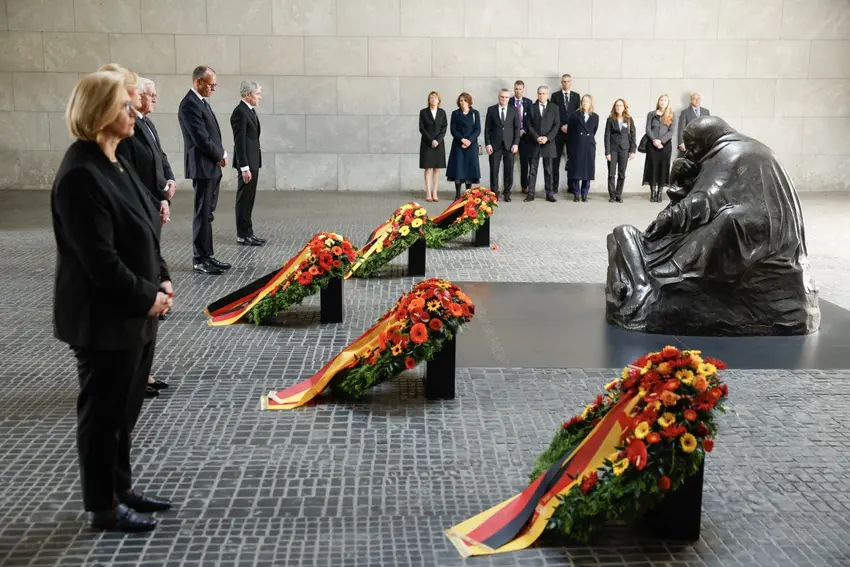
Germany slams Russian 'lies' on Ukraine in WWII commemoration
President Frank-Walter Steinmeier criticised Russia's "historical lies" over the Ukraine war on Thursday as he marked the Nazi defeat that ended World War II in Europe 80 years ago.
In a speech to parliament in Berlin, Steinmeier expressed gratitude to the Allied soldiers and resistance movements that defeated Nazi Germany "with all their strength and at great sacrifice".
He also praised the Soviet Red Army -- in which Russian and Ukrainian troops fought side-by-side -- for their role in the Nazis' defeat, noting it had liberated the Auschwitz concentration camp in Nazi-occupied Poland.
"We do not forget this," Steinmeier told the Bundestag, during a sombre commemoration on the May 8th anniversary of Nazi Germany's unconditional surrender to the Allies.
"But precisely because of this, we firmly oppose the Kremlin's historical lies today."
Russia has cast its three-year offensive against Ukraine as a fight against "neo-Nazis" and has channelled its own wartime legacy to justify the war.
But Steinmeier went on: "The war against Ukraine is not a continuation of the fight against fascism.
"(President Vladimir) Putin's war of aggression, his campaign against a free, democratic country, has nothing in common with the fight against Nazi tyranny in World War II."
READ ALSO: How Berlin's 'German-Russian' museum is navigating the war in Ukraine
Others in the West and Kyiv, including independent experts, have also rejected Moscow's narratives.
Germany has been a key backer of Kyiv in its fight against Moscow. Russia's ambassador to Berlin was not invited to Thursday's commemoration, which was being marked with a public holiday in the capital.
Frankfurt approves 'masterplan' for eco-friendly mobility
City counsellors in Frankfurt have approved a new plan to drastically boost cycling, walking and public transport in the city over the next ten years.
Originally drafted in 2023, the 'Mobility Master Plan' is in line with the EU's mandate that all major cities present a plan for the mobility transition by 2027.
The aim is to make transport in the banking capital far more environmentally friendly in the future, with 80 percent of journeys being made by foot, bicycle or public transport.
Around 3,000 citizens took part in consultations to help draft the new plan.
READ ALSO: Far fewer delays on the 'Riedbahn' after renovations, says Deutsche Bahn
It includes eleven key measures - some of which are already being implemented - including higher parking charges, the designation of low-car zones, and the expansion of the city's cycle lanes.
Praise for the project came from the ADFC cycling association, who welcomed the fact that "more people can be protected from noise, exhaust fumes and accidents in the future". However, interest groups such as the taxi association and the ADAC motorists' club slammed the plans as a "one-sided anti-car policy".
Merz tells Trump US remains 'indispensable' friend
Germany's new Chancellor Friedrich Merz discussed the Ukraine war and trade rows with US President Donald Trump on Thursday and said the United States remained Berlin's "indispensable" partner, using their first phone call to attempt to heal frayed ties.
Since Trump returned to the White House, he has rattled Europe with head-pinning changes in security and trade policy, while his top administration officials have strongly supported Germany's far-right AfD party.
Merz, despite being an avowed transatlanticist, has called for Europe to become more independent of its traditional NATO ally and said after his February election win that he had "no illusions" about the new tone from Washington.
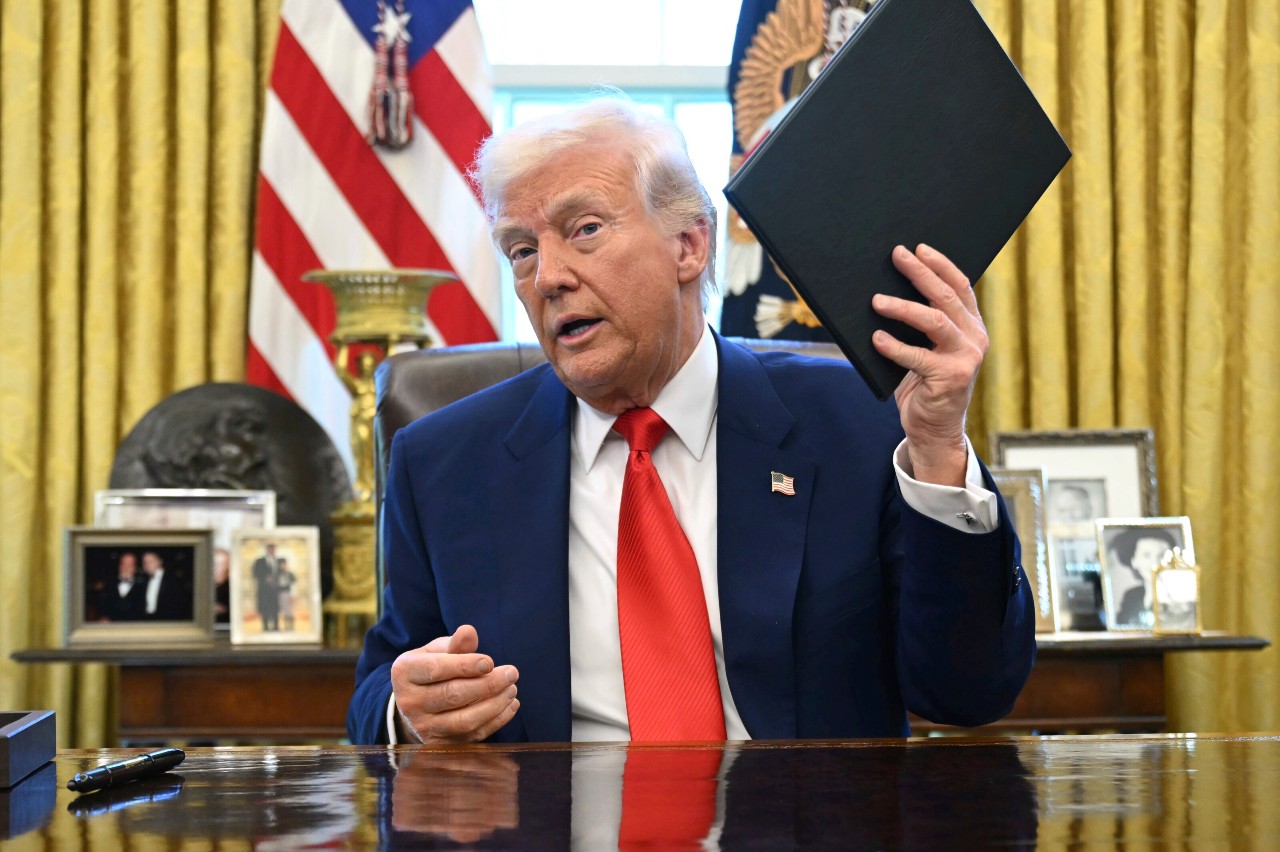
But in their talk on Thursday, the conservative Merz "assured the American President that, 80 years after the end of the Second World War, the USA remains an indispensable friend and partner of Germany," said a statement from Berlin.
"Both agreed to a close exchange and announced mutual visits to the USA and Germany," it added without giving dates.
Merz's spokesman Stefan Kornelius highlighted broad agreement to jointly resolve major crises, from the Ukraine war to the escalating US-EU trade row sparked by Trump's blizzard of tariffs.
READ ALSO: Germany's new government orders border police to reject most asylum seekers
The new chancellor "shared the President's call for a swift end to the killing in Ukraine" and said that "Russia must now agree to a ceasefire to create space for negotiations".
The statement added that "Trump said he would strongly support Germany's efforts, together with France, Great Britain, Poland and other European partners, to achieve lasting peace."
One in five companies has abolished 'home office'
One in five companies in Germany has scrapped the option to work from home, according to a survey published on Thursday by digital industry association Bitkom.
While 58 percent of companies still allow remote work for at least part of their workforce following the Covid pandemic, 15 percent are looking to reduce it and a further five percent are looking to scrap it entirely.
Working from home remains most common in larger companies, with almost three quarters (74 percent) of companies with more than 500 employees offering a remote option.
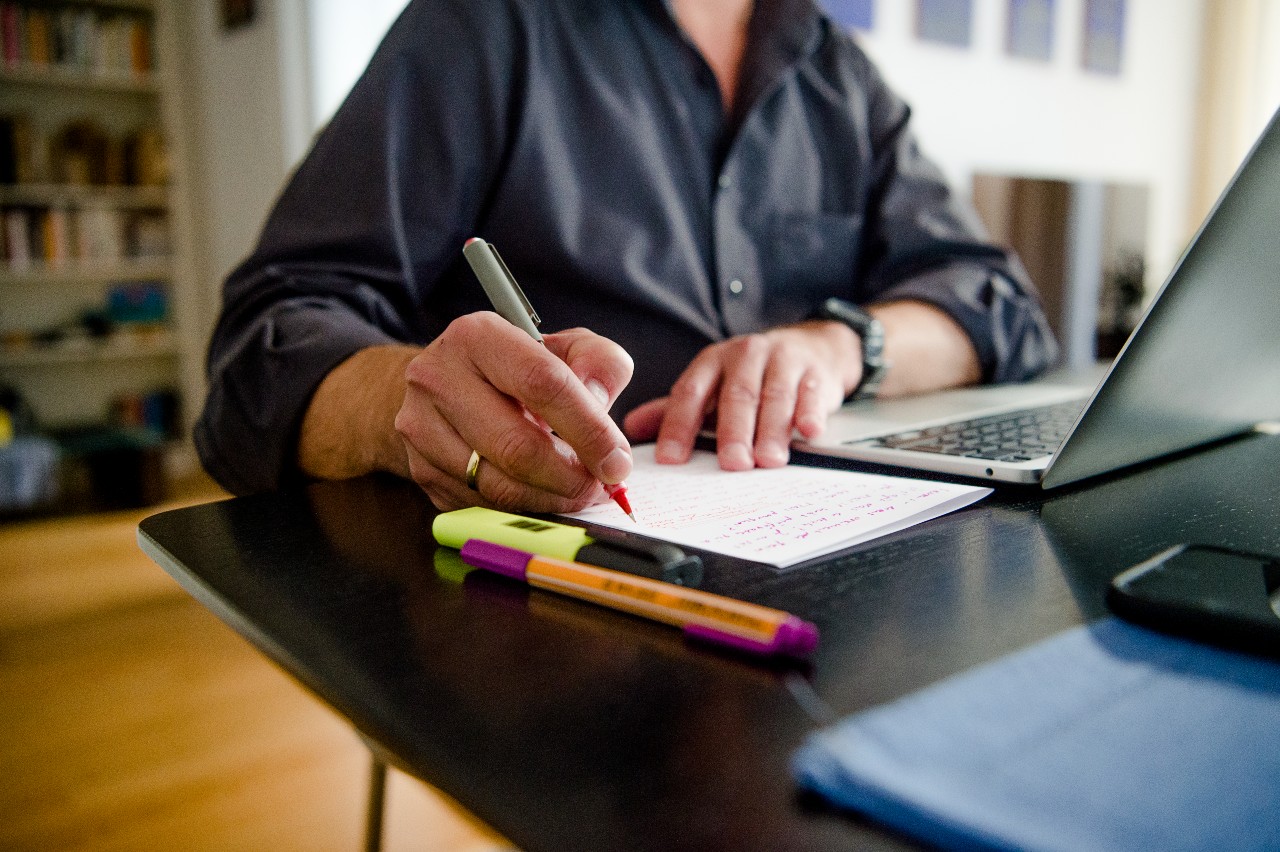
“Both companies and employees can benefit from flexible home office policies,” said Bitkom President Ralf Wintergerst, adding that offering hybrid work options could help companies attract top talent in a tight labour market.
The survey supports this view: 57 percent of companies surveyed believe that employers who do not offer remote work will struggle to hire qualified staff in the future.
Despite moves to roll back home office in some areas, Germany still remains a prominent destination for remote work in international comparison. According to a recent survey by Indeed, around 15 percent of current job ads are for hybrid or remote work - three times higher than before the pandemic.
READ ALSO: Germany among top countries for remote and hybrid work
Merz pledges support to Ukraine against Russian 'aggression'
Germany's new conservative Chancellor Friedrich Merz on Friday spoke with President Volodymyr Zelensky by phone and pledged continued support for Ukraine's war against Russian "aggression", a spokesman said.
"The chancellor reaffirmed Germany's solidarity with Ukraine, which can rely on the support of the new German government," said government spokesman Stefan Kornelius.
Zelensky congratulated Merz on his inauguration Tuesday.
"Both agreed that Russia must agree to a ceasefire," said the statement. "They appreciated the mediation efforts of the American president", Donald Trump.
"The chancellor emphasised that Germany supports these efforts in close cooperation with France, the United Kingdom and European partners.
"This includes helping Ukraine effectively defend itself against Russian aggression and exerting pressure on Russia."
Both leaders "agreed to maintain close contact," added Kornelius.
With reporting by AFP
Comments (2)