

Friedrich Merz takes the helm as Germany's next Chancellor
Conservative party leader Friedrich Merz was due to travel to Paris and Warsaw on Wednesday after winning a nail-biting second parliamentary vote to become chancellor following a first-round setback.
Merz, 69, scored an absolute majority of 325 to 289 in the second secret vote in the lower house of parliament to become Germany's new leader.
His win was bittersweet after the initial defeat, in the first round of votes, which pointed to rumblings of discontent within his coalition.
Merz's bumpy victory caps a long ambition to lead Germany, which was first foiled decades ago by party rival Angela Merkel who went on to serve as chancellor for 16 years. He takes over at the helm of a coalition between his CDU/CSU alliance and the centre-left Social Democrats (SPD) of outgoing chancellor Olaf Scholz.
READ ALSO: Germany's Merz elected Chancellor in second Bundestag vote
President Frank-Walter Steinmeier appointed Merz as post-war Germany's 10th chancellor on Tuesday afternoon.
"It is good that Germany now has a federal government with a parliamentary majority again," Merz said according to reporting by AFP.
In an interview with news channel NTV, he vowed to be a "very European" leader -- hence his immediate trips to France and then Poland, where he aims to present a united front as US President Donald Trump upends long-standing security and diplomatic ties, and in the face of a hostile Russia.
Merz also had initial comments for leaders in the US, saying he "would like to encourage the American government... to largely stay out of" German domestic politics.
The comment followed US Secretary of State Marco Rubio's response to the designation of the AfD as a "right-wing extremist" party last week by the BfV. The US Secretary had criticised the move as "tyranny in disguise".
READ ALSO: Germany's Merz to launch new government in times of turbulence
Germany's next leaders sworn in to the cabinet
With the swearing-in of the entire cabinet in the Bundestag, the formation of Germany's new government has been completed ten weeks after the Bundestag elections.
The first cabinet meeting on Tuesday evening included its first decision: the elimination of 25 commissioners and coordinators of the federal government as a signal that the coalition is serious about reducing bureaucracy.
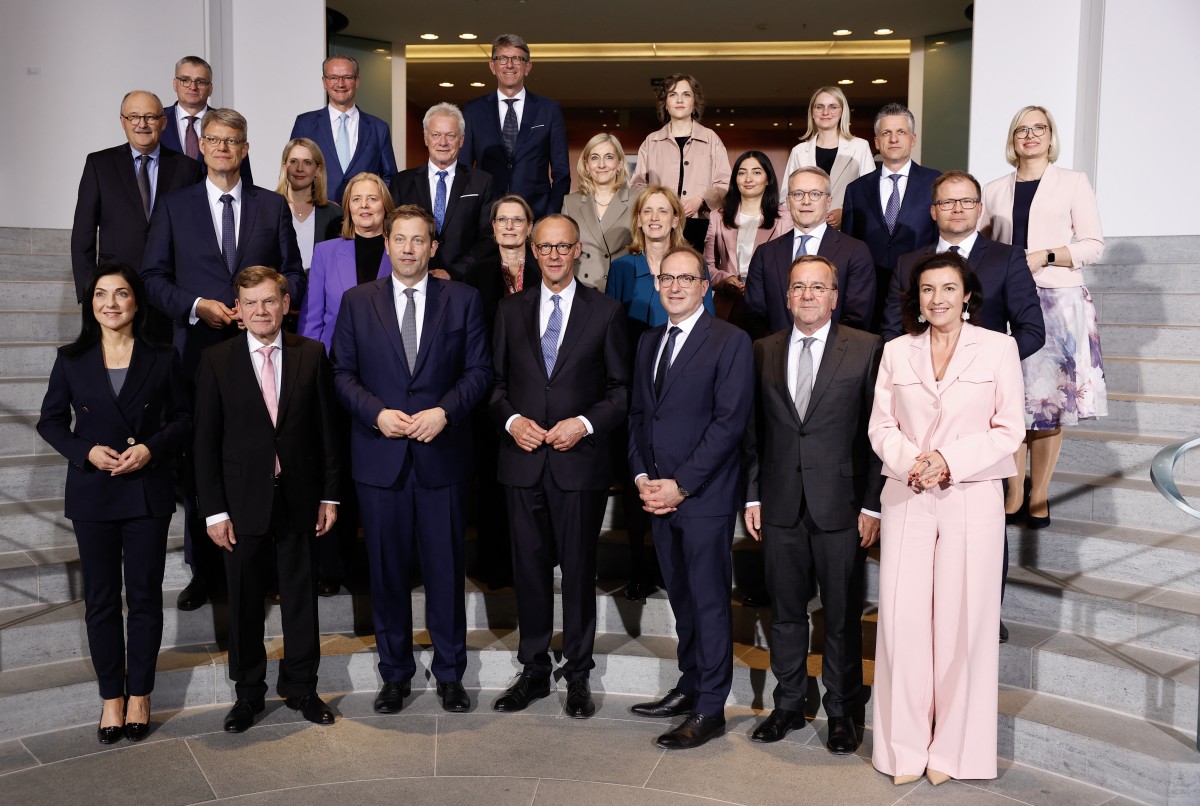
Along with Chancellor Friedrich Merz at the helm, 17 ministers from the CDU, CSU and SPD parties make up the federal cabinet.
The cabinet consists of ten men and eight women, the CDU and SPD each have seven ministers, the CSU has three.
Vice-Chancellor and thus the second most powerful man in the cabinet after Merz is the future Finance Minister Lars Klingbeil (SPD).
Other high ranking positions include Johann Wadephul as Foriegn Minister, Boris Pistorius as Defence Minister, Katherina Reiche who heads the Economy and Energy Ministry and Alexander Dobrindt as Interior Minister.
Germany 'main driver of insolvencies' as bankruptcies rise in Western Europe
Western Europe hasn't seen as many bankruptcies in a year since 2013, according to the credit agency Creditreform which counted 190,449 cases -- 12.2 percent more than a year prior.
"Three years of stagnation and economic slump have not only Germany in their grip. Europe as a whole is suffering from weak economic development," Patrik-Ludwig Hantzsch, Head of Creditreform Economic Research told DPA.
In Germany, 22,070 companies filed for insolvency last year, an increase of 22.5 percent compared to 2023, according to Creditreform, which added: "This made Germany one of the main drivers of insolvency in Western Europe."
The figures published by the Federal Statistical Office are somewhat lower due to a different counting method.
According to Creditreform's report, only Denmark and Great Britain recorded fewer business insolvencies compared to the previous year.
'German Travel Guy' from Mönchengladbach has visited every country in the world
With three million followers on Tiktok and a quarter of a million on Instagram, 23-year-old Luca Pferdmenges from Mönchengladbach has returned home after visiting every country.
A few days ago, upon his return from the Pacific state of Palau he announced, "I have travelled to all 195 countries in the world."
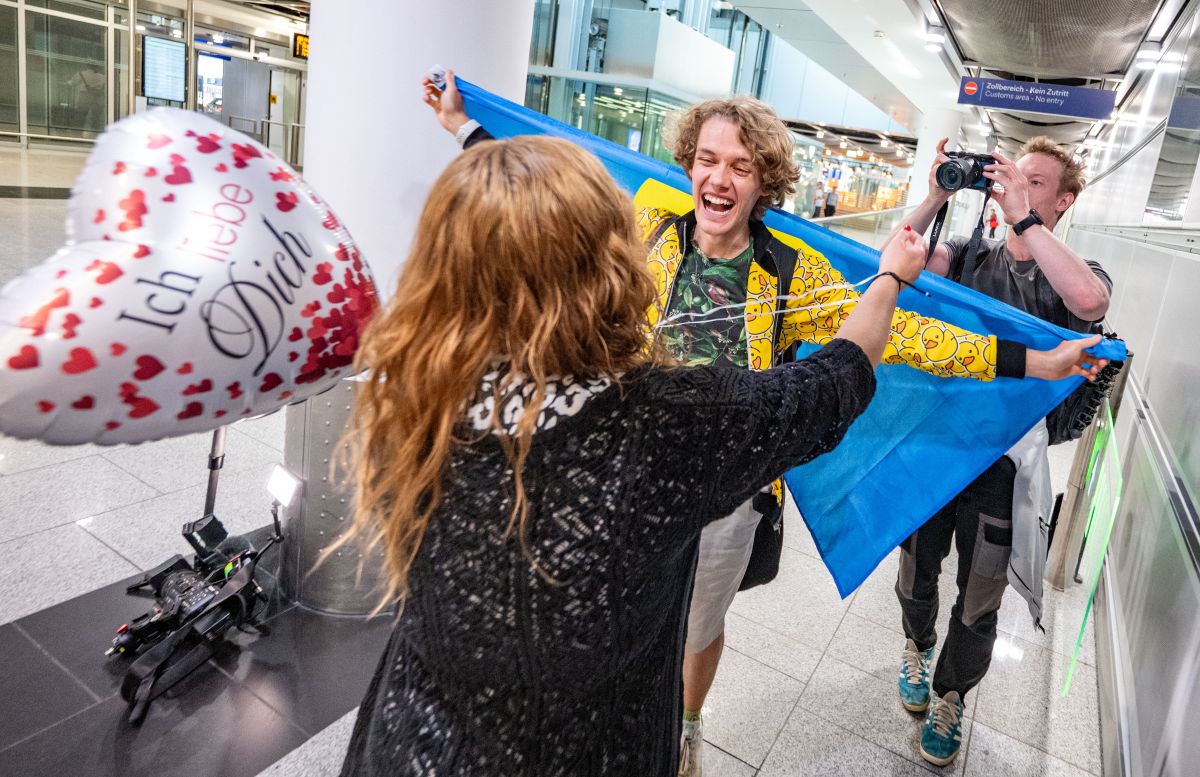
Luca began travelling in 2017 as a teenager, he told DPA. He said he had already visited 76 countries when he came up with the idea of visiting the last 119 countries, during the beginning of the Covid pandemic in South Africa.
He then spent the next four and a half years filling five passports and shooting short videos from all corners of the world.
Pferdmenges listed Mexico and Bhutan as among his favourite countries. In all of his travels he says he was only robbed twice -- once in Buenos Aires and once at the airport in Düsseldorf.
Tesla sales fall again as German drivers steer clear of Musk
Tesla sales nosedived again in Germany last month even as electric vehicle (EV) sales rose strongly, data showed Tuesday, as German drivers voted with their wallets against billionaire owner Elon Musk.
Just 885 Tesla vehicles were registered in April, 45.9 percent fewer than the same month last year, the federal transport authority (KBA) said.
That was almost half as many as BYD, a Chinese competitor, managed: 1,556 BYDs were registered in April, a rise of 756 percent on the year.
At the same time, overall EV registrations rose 53.5 percent year-on-year and now account for almost 19 percent of the market, the highest share since the government removed a subsidy for electric vehicles in December 2023.
Tesla's sales have been slowing worldwide due to a combination of fierce Chinese competition as well as anger at Musk's outspoken political positions.
He has faced particular hostility in Germany for backing the far-right Alternative for Germany (AfD) before February's general election by appearing via video link at a rally and broadcasting a conversation with its co-leader, Alice Weidel, on his X platform.
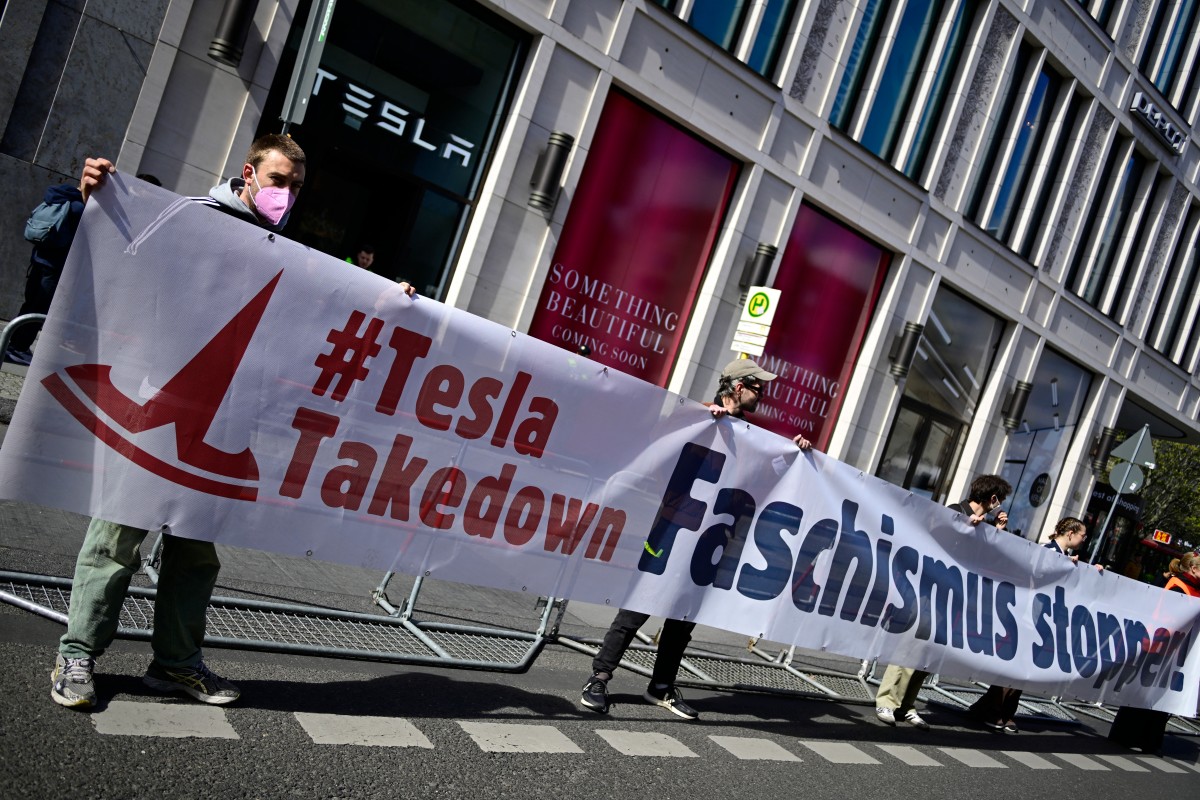
Tesla cars have been targeted in suspected arson attacks in Berlin and Dresden, and protesters have staged demonstrations against the carmaker.
Over the three months to April, Tesla registrations fell a whopping 60.4 percent from the same period a year ago.
READ ALSO: 'Unacceptable' - How Tesla is battling against German workers' sick pay claims
German company affected by EU plan to ban Russian gas imports
The EU Commission wants to completely ban the import of Russian gas into the European Union by the end of 2027.
The EU has import bans on Russian coal and oil, but not so far on gas. In 2024, gas supplies from Russia accounted for almost 19 percent of all imports, according to the EU Commission.
The German company Sefe (Securing Energy for Europe GmbH) actively imports of Russian liquid natural gas (LNG) into the EU. According to a report from the beginning of the year, Sefe imported more than six times as much LNG into the European Union last year as in 2023.
Sefe says there is currently no legal basis for terminating or suspending an existing legacy contract between a Russian supplier and the company, as Europe has not imposed sanctions on the import of Russian LNG to Europe.
With reporting by AFP and DPA.
Comments