
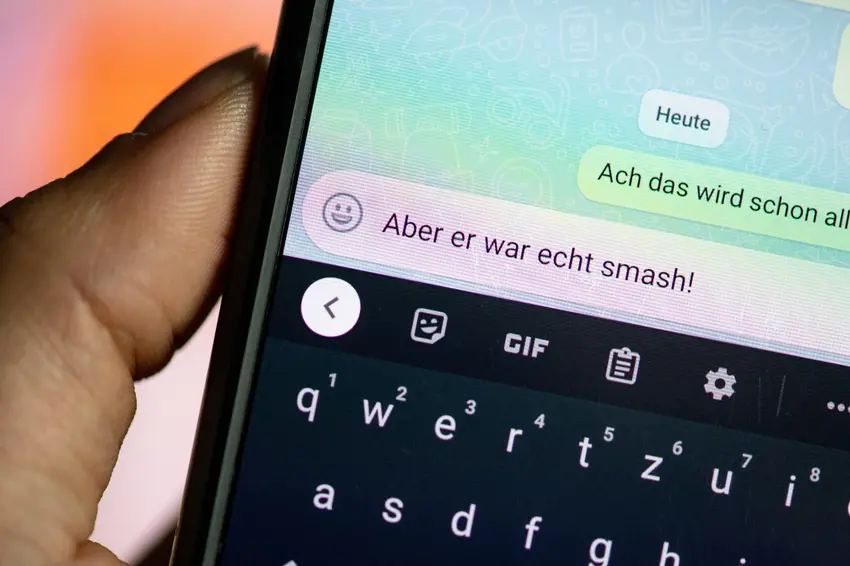
Fortunately, the kind people at Langenscheidt Publishing run a poll each year, designed to discover and crown Germany’s “Youth Word of the Year”.
The system is straightforward: tweens and teens between 11 and 20 are invited to submit their suggestions online. The suggestions are evaluated before rounds of voting take place to find a top ten, then a top three, and finally an overall winner.
READ ALSO: 10 ways of speaking German you'll only ever pick up on the street
The approach isn’t 100 percent scientific, but the results are surprisingly eye-opening for anyone trying to get to grips with German – or just trying to make sense of the country they’ve chosen to call home.
A brief guide to talking like a teen
Loan words: Aura
In each of the last five years, Germany’s “Youth Word of the Year” has been a loan word from English.
The winner in 2024 was aura, which refers to the vibes a person gives off or their status within a group. Infuriatingly, like so much of teen language, the term can flip from compliment to insult with a roll of the eyes.
How to use it:
Die hat so eine krasse Aura, alle mögen sie einfach.
She gives off such a great vibe, everyone likes her.
Einfach unangenehm, instant minus 1000 Aura.
Just nasty, crashes the vibe straight away.
Between 2023 and 2020, the winners were: goofy (to describe someone clumsy or silly), smash (to hook up or have sex), cringe (embarrassing), and lost (confused or clueless).
Du bist so cringe.
You’re so embarrassing.
Willst du smashen?
Do you want to hook up?
The only other languages which get a look in (apart from German, of course) are Turkish and Arabic. Loan words include:
Mashallah (Arabic)
Dein Auto ist Mashallah!
Your car is amazing!
Yalla (Arabic)
Yalla, brudi!
Let's go, bro!
Hayvan (Turkish) – this one comes with a warning. Hayvan literally means animal. Applied to people, it can be used as an insult or (as in the following example) as a compliment.
Er ist ein Hayvan, der so viel Gewicht hebt!
He's an animal, lifting so much weight!
The perennial – Digga(h)
German speakers of a certain vintage will be familiar with the expression Alter, meaning “mate” (as in: Wie geht’s dir, Alter?) or “man” (as in: Boa, was hast du dabei gedacht, Alter? – “Whoa, what were you thinking, man?”).
These days, Alter is officially altschool. In playgrounds and behind bike sheds across the country, it’s been replaced with Akh (another expression derived from Arabic), or more usually with Digga – the only word to appear on every single iteration of the list since 2020.
Despite its ubiquity, no one seems to know how to spell digga, which appears variously as Digger, Digga, and Diggah.
READ ALSO: This year's top 10 German 'youth words' and what they mean
Getting creative
The majority of words and phrases on the lists are German - or Germanised versions of other slang terms - bent creatively into new and unfamiliar shapes to suit new minds and times.
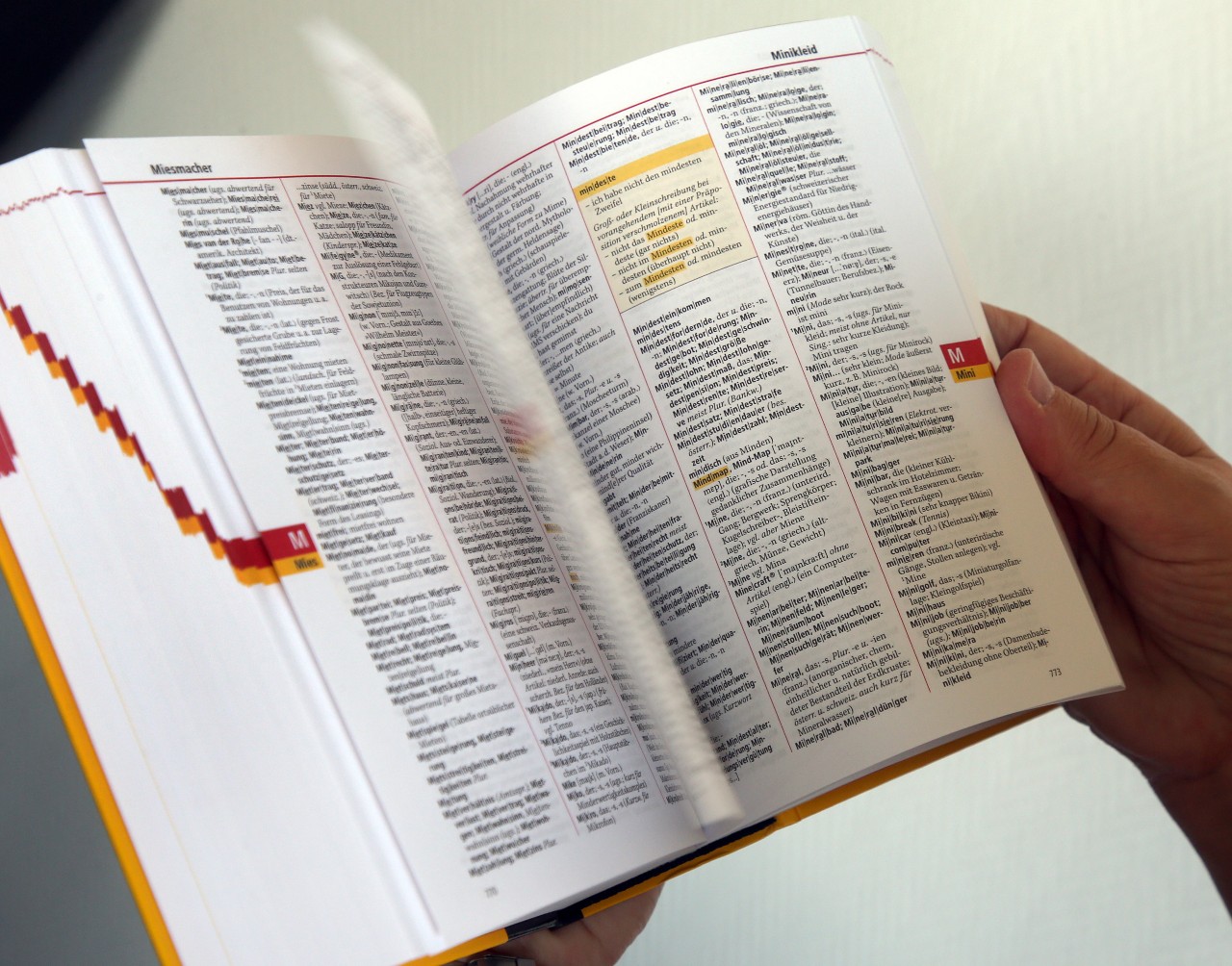
For example, there’s a lovely run of nouns which have found a new lease of life as verbs, including: flexen (to show off, or 'flex' in English slang), tindern (to use a dating app), and merkeln (to procrastinate).
Komm schon, willst du merkeln oder willst du endlich tindern?
Come on, do you want to procrastinate or finally start using a dating app?
Es ist mir unangenehm, wie alle da sich flexen.
I don’t like the way they all show off.
The influence of tech
Teenagers might be on their telephones all their time (allegedly), but it doesn’t seem to have a huge impact on the words and phrases they choose to adopt.
With the exception of tindern and NPC (non-playing character, to describe someone predictable or robotic) – there’s nothing too obviously techy in the lists until Verbuggt (meaning glitchy) in 2018 and Smombie (someone addicted to their smartphone to the extent that they are becoming a zombie), which was the overall winner in 2015.
Taken as a whole, the expressions reveal a lot more interest in partying and hooking up than phones and tablets, and particularly in inventing new and interesting ways to deliver compliments and insults.
READ ALSO: Denglisch: The English words which will make you sound German
My personal favourite
Personally, as the parent of a teenage daughter, I find it enormously reassuring to know that teen priorities remain so consistent across the generations. Unfortunately, this consistency extends to the attitude of bewildered disdain they adopt towards their elders.
Easily my least favourite word on any of the lists is the 2008 winner. Gammelfleischparty (rotten meat party) was apparently an expression widely used at the time to describe parties attended by people over 30.
On the other hand, I love the expression Bae (second place, 2016) – possibly because people I know have since adopted it, and possibly because I’ve just discovered it isn’t short for babe, as I’d always assumed, but is actually an acronym for “Before anyone else”.
But my absolute favourite has to be Nein, Pascale. Ich denke nicht (sixth place, 2024). The expression started life as a line of dialogue in a ZDF2 television programme, became a TikTok meme, and ended up being adopted by my daughter (along with many, many others) as an alternative way of saying “no”.
Hölle, nein (fourth place, 2024, a corruption of “Hell, no”) is another way of saying “no”. In my experience, teenagers love saying “no” to their parents and - of all the many and varied ways in which my daughter refuses to entertain even the most straightforward request - Nein, Pascale, Ich denke nicht is easily my favourite.
Feel free to add your favourite examples of teen slang here. Or, if you’re between 11 and 20, feel free to share them directly with Langenscheidt’s “Youth Word of the Year” pollsters. The race to find a winner for 2025 starts on May 29th.
Comments