
CDU to announce candidates for ministerial posts
Just over a week before the planned election of Friedrich Merz as Chancellor, the CDU and CSU want to present their picks for ministerial posts on Monday. The CDU are also set to approve the coalition agreement at a small party conference, after the CSU greenlit the document earlier this month.
According to the coalition agreement, the CDU and SPD both have seven of the 17 ministries, while the CSU has three.
According to unconfirmed media reports on Sunday, a number of candidates rumoured to be in the running are set to enter key ministerial posts.
According to the ‘Table Media’ portal, CDU politician Johann Wadephul is to become Foreign Minister. The experienced foreign affairs expert from Schleswig-Holstein accompanied Merz on his trip to Ukraine in December.
The same outlet reports that Merz also wants to bring former CDU MP Katherina Reiche into the cabinet as Economics Minister and Schleswig-Holstein's Education Minister Karin Prien as Education Minister.
Meanwhile, CSU politician Alexander Dobrindt is rumoured to take over from Nancy Faeser as Interior Minister, putting him in charge of immigration, citizenship and domestic security policy. Baden-Württemberg CDU politician Nina Warken is tipped for the Health Ministry, while Union parliamentary leader Thorsten Frei is likely to head up the Chancellory.
Speaking to ZDF's 'Berlin Direkt' programme on Sunday, CDU Secretrary General Carsten Linnemann refused to confirm or deny the rumours of ministerial picks. "You'll find out tomorrow morning," he said.
READ ALSO: What's first on the new government's to-do list ahead of summer?
Populist protestors take to streets across Germany
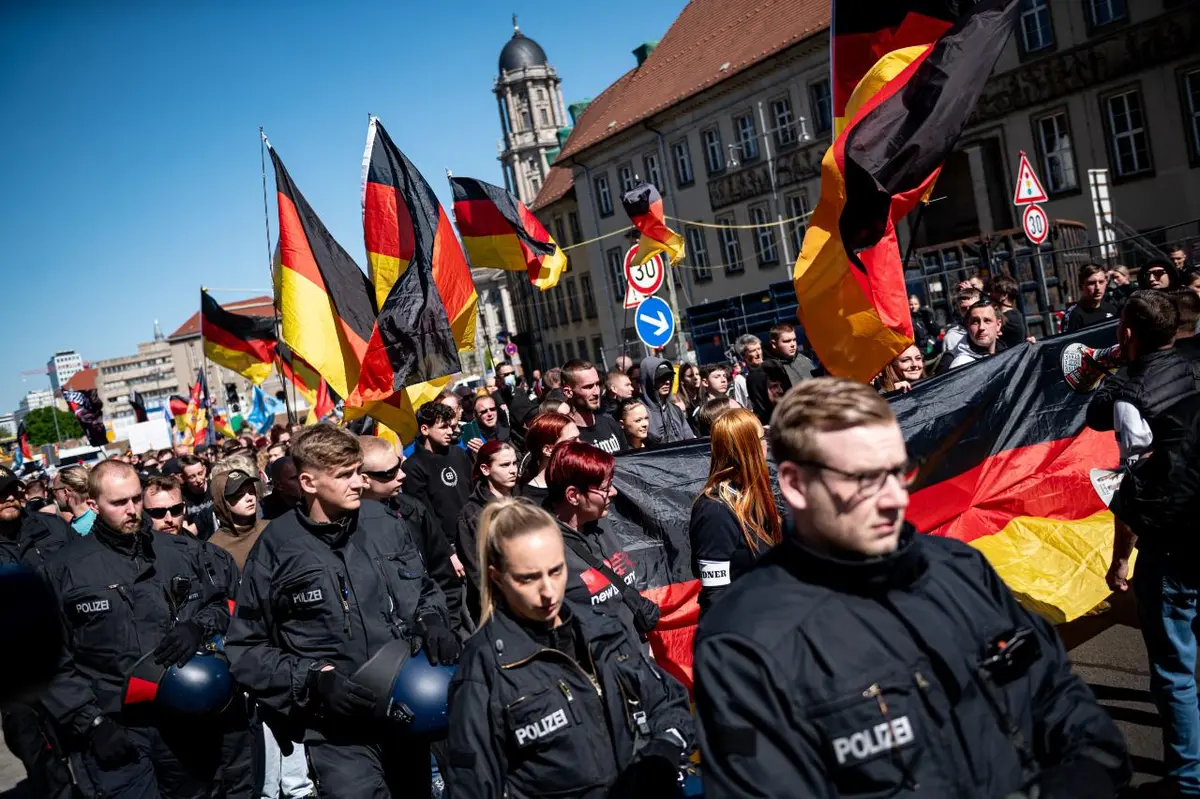
Thousands demonstrated in towns and cities across Germany over the weekend, calling for comprehensive border controls and an end to financial support for Ukraine. Counter-demonstrations and clashes with the police were seen in some regions, as well as arrests.
The protests were organised by a new group known as Gemeinsam für Deutschland (Together for Germany). Police estimate that over 1,000 demonstrators convened in Weimar, Thuringia - a stronghold of the far-right AfD - and speakers at the event included a well-known local extremist.
850 people attended counter-demonstrations organised by the Weimar Citizens' Alliance Against the Right.
In Dortmund, around 800 protestors appeared with police putting the number of counter-demonstrators at between 300-500. In the southwestern city of Karlsruhe, 200 showed up for the Together for Germany demonstration and were faced with over 1000 counter-demonstrators.
In more traditionally left-leaning cities like Hamburg and Berlin, demonstrators were “significantly outnumbered by counter protests”, according to media reports.
READ ALSO: Is Germany at risk of repeating its dark history?
Germany marks liberation of Bergen-Belsen Nazi camp
Holocaust survivors on Sunday urged the world to keep their memories alive as Germany marked 80 years since the liberation of the Bergen-Belsen Nazi concentration camp.
More than 50 former camp prisoners joined German officials and British Deputy Prime Minister Angela Rayner for a commemorative event in Lower Saxony state.
"My message for the future is that all of us must be alert and active in combating hatred," said Mala Tribich, 94, who was born in Poland and sent to Bergen-Belsen as a child.
"That includes anti-Semitism and racism towards any group of people," she said.
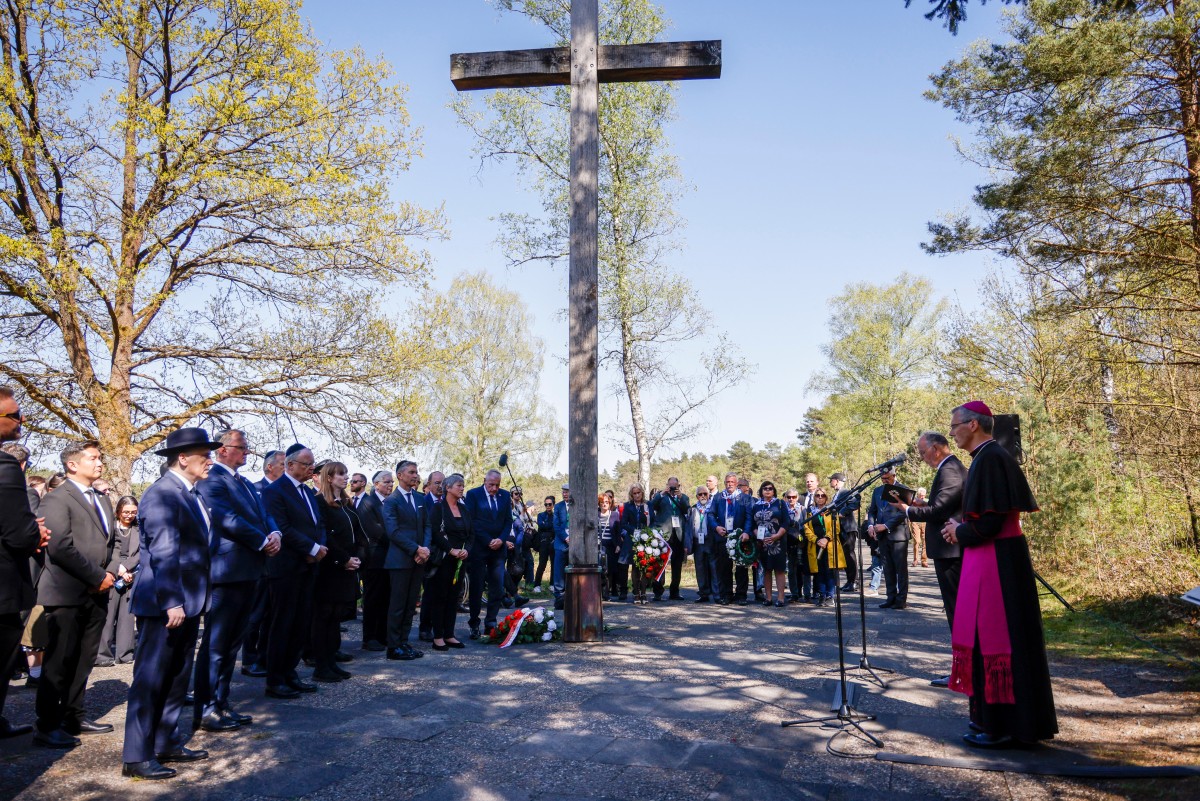
More than 50,000 people died at the Bergen-Belsen camp, including the diarist Anne Frank, whose accounts of the Holocaust have become a symbol of the suffering inflicted by the Nazis during World War II.
When the Allies arrived at Bergen-Belsen on April 15th, 1945, they found it riddled with disease and about 10,000 unburied corpses.
READ ALSO: The babies who survived the German concentration camp at Ravensbruck
Those held at the camp included Jews as well as prisoners of war, homosexuals and political opponents.
Tribich recalled how when she arrived at the camp, "the scene that met us was beyond description".
"There were many people that looked like skeletons, like zombies shuffling along. Then they would fall and just remain there where they fell with other people falling over them."
Pistorius voices doubt over US plan for Ukraine
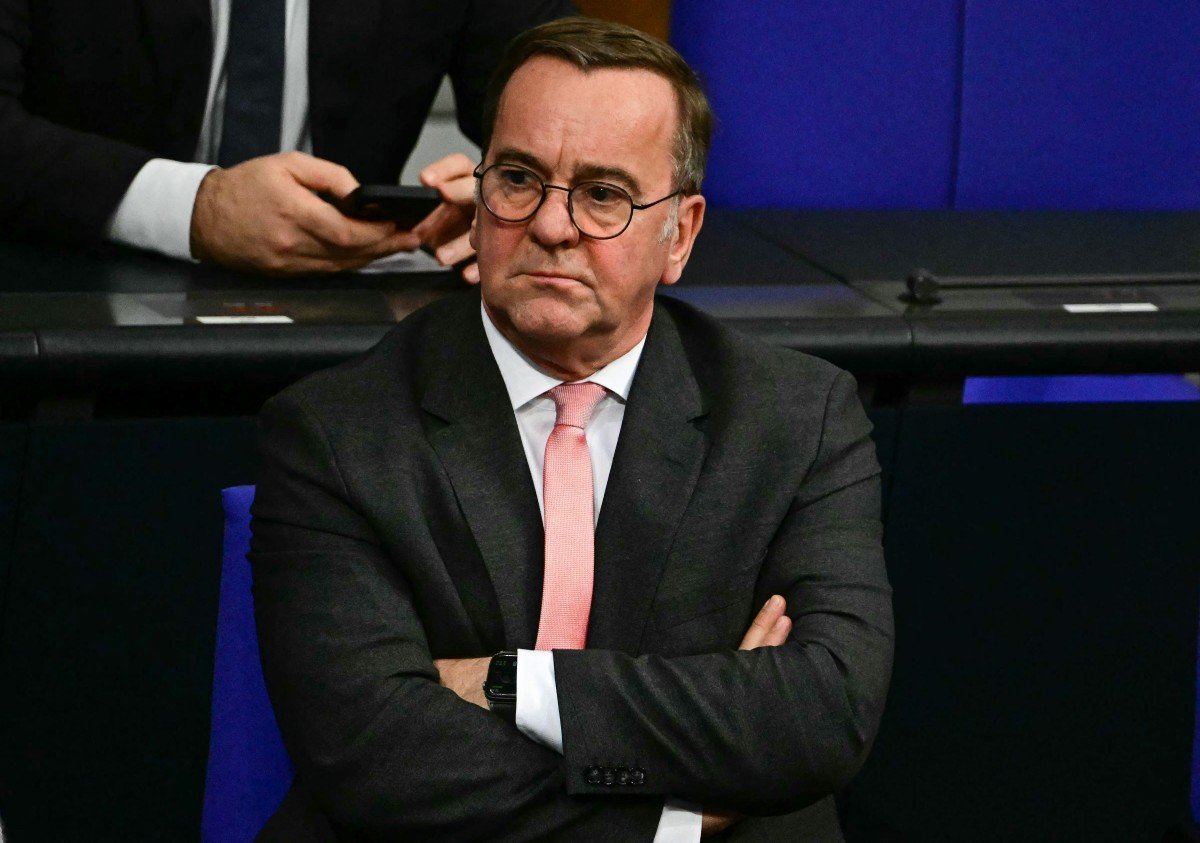
Germany's defence minister has said Ukraine should not cede all territory occupied by Russia in a peace deal proposed by Donald Trump, as the US president pressures Moscow and Kyiv to end fighting.
"Ukraine has, of course, known for some time that a sustainable, credible ceasefire or peace agreement may involve territorial concessions," Boris Pistorius said in an interview with the broadcaster ARD on Sunday.
"But these will certainly not go... as far as they do in the latest proposal from the US president," Pistorius said.
The United States has not revealed details of its peace plan, but has suggested freezing the front line and accepting Russian control of Crimea in exchange for peace.
After weeks of appearing to favour Vladimir Putin in negotiations, Trump on Saturday indicated a new approach to the Russian president.
"There was no reason for Putin to be shooting missiles into civilian areas, cities and towns, over the last few days," Trump said in a post on his Truth Social platform.
READ ALSO: Germany snubs Russian and Belarusian envoys at World War II memorial
"It makes me think that maybe he doesn't want to stop the war, he's just tapping me along, and has to be dealt with differently," Trump wrote, threatening Putin with sanctions.
Pistorius welcomed the meeting but said: "At the same time, things are changing on a daily basis, you could almost say."
He added: "The signals (from Trump) are highly contradictory -- sometimes very friendly, sometimes very unfriendly... I would say that actions speak for themselves in the end."
Bayer says legal woes could force it to pull weedkiller
German pharmaceuticals and agrichemicals firm Bayer has said it could be forced to pull its Roundup weedkiller from the market if it is not able to contain simmering legal troubles.
"We're nearing a point where the litigation industry could force us to even stop selling this vital product," CEO Bill Anderson said at Bayer's annual general meeting.
The group had "no specific plans" to discontinue sales in the United States, Anderson said in a question-and-answer session.
Bayer however "cannot continue to market the product in the way we have in the past... in a financially sustainable way because of the lawsuits", he added.
In Anderson's opinion it was "very important for US farmers, US consumers... to make changes in the law".
The stakes were also "really high" for Bayer, which has seen its share price tumble in the wake of its acquisition of Roundup-maker Monsanto in 2018.
With reporting by DPA and AFP
Comments