
Merz vows billions in extra debt for economy and defence
Germany's likely next chancellor Friedrich Merz said Tuesday that his centre-right CDU/CSU and the centre-left Social Democrats (SPD) would propose an unprecedented package of billions of euros in extra spending on defence and infrastructure.
The two parties, who are in talks to form a coalition, will bring a bill to parliament next week to exempt more defence spending from Germany's constitutionally enshrined "debt brake".
Merz vowed to do "whatever it takes" when it comes to defence "in light of threats to our freedom and peace on our continent".
It would be a dramatic departure for a country that has spent decades under the American security umbrella.
Merz's plans would see defence spending exempted from the country's debt brake when it exceeds one percent of GDP -- or €45 billion when applied to the current size of Germany's economy.
The CDU leader also said the two parties wanted to bring in "a special fund of €500 billion for the next 10 years" for investment in infrastructure, something the SPD has been pushing for.
The fund would be aimed at kick-starting Germany's moribund economy, which is threatened with a third straight year of recession.
The proposals would also mean that Germany's federal states, which are currently not allowed to run budget deficits, could take out debt equivalent to 0.35 percent of GDP.
READ MORE: Germany's Merz vows billions in new debt for economy and defence
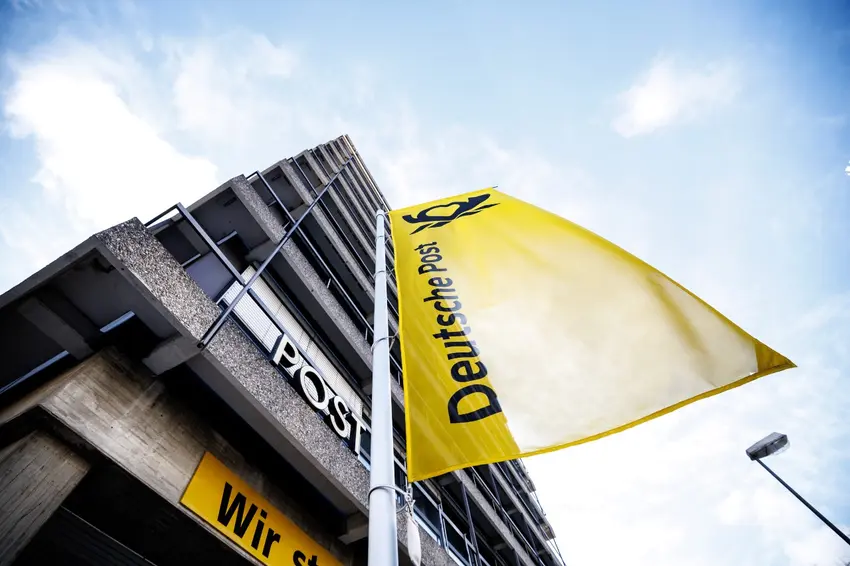
Deutsche Post workers reach pay deal to end strikes
Deutsche Post and trade union ver.di have agreed on a new pay deal, marking the end of strikes that have disrupted mail and parcel deliveries for weeks.
The agreement includes a 5 percent wage increase and at least one additional day of annual leave for around 170,000 postal workers, delivery staff, and logistics employees. From April 1st, workers will receive a two-percent pay rise, followed by a further two-percent increase from April 2026.
Additionally, all employees will gain an extra day of holiday starting in 2026, with those employed for 16 years or more receiving a second day.
The 24-month collective agreement will apply retroactively, with a starting date of January 1st, 2024. The deal, reached in the fourth round of negotiations, aims to improve working conditions and put an end to ongoing disputes.
READ ALSO: Germany to see nationwide strikes in hospitals and care homes this week
Prosecutors issue arrest warrant for Mannheim car-ramming suspect
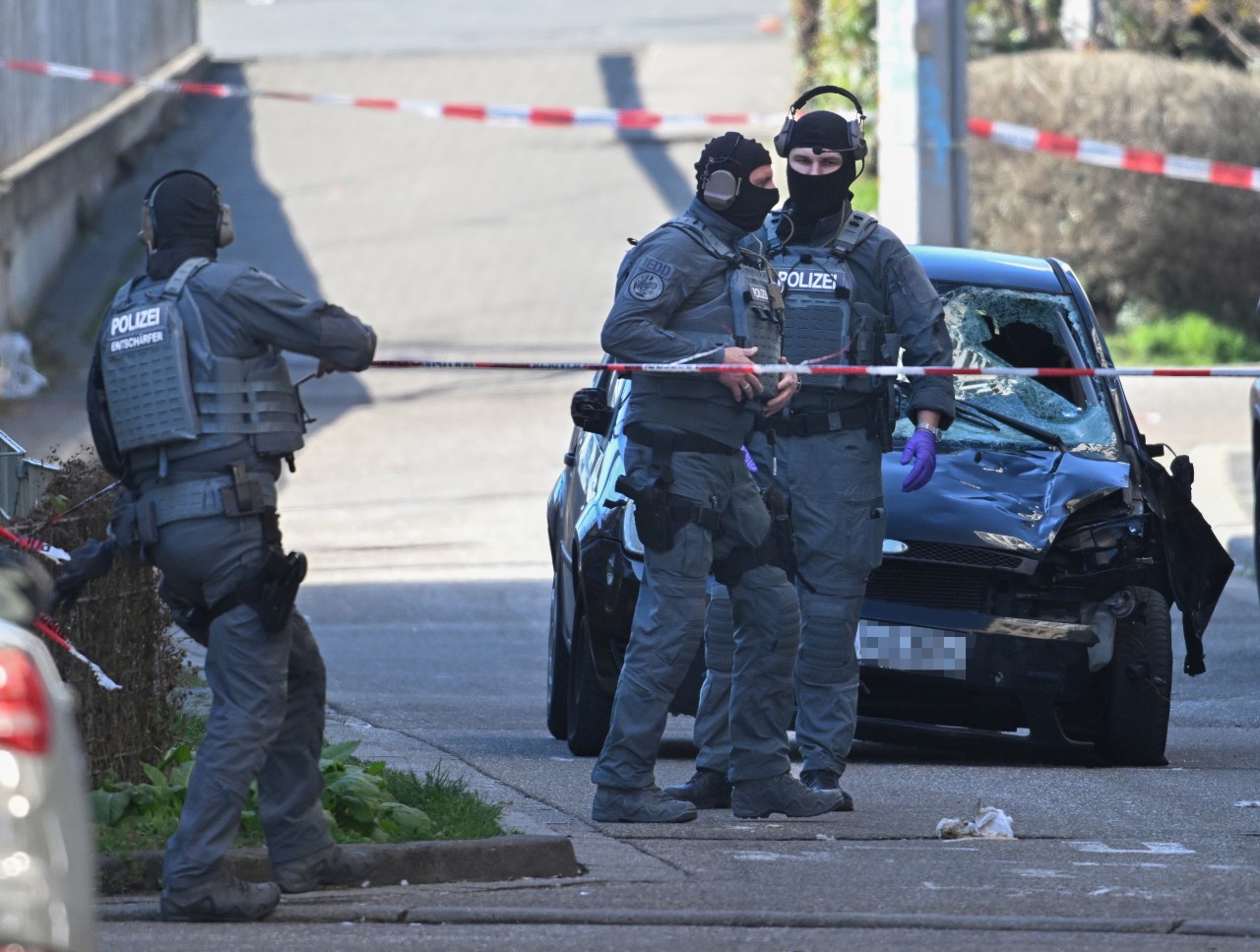
Following the fatal car incident Mannheim on Monday, an arrest warrant has been issued for two counts of murder and several counts of attempted murder against the 40-year-old driver.
According to the Mannheim public prosecutor's office, the suspect - a German citizen from nearby Ludwigshafen - had not provided any information at the time the warrant was issued. The motive remains unclear, but investigators believe it was a deliberate attack.
There is also evidence that the man, who has previous criminal convictions, was suffering from mental health problems.
An 83-year-old woman and a 54-year-old man were killed when a Ford Fiesta was driven at high speed through a crowded shopping street in Mannheim on Rose Monday. Eleven people were injured, five of them seriously.
The Mannheim public prosecutor's office issued an arrest warrant for murder in two cases, attempted murder in five cases, each in conjunction with dangerous bodily harm and bodily harm in eleven cases, according to the prosecution.
READ ALSO: What we know so far about the fatal car-ramming incident in Mannheim
German central bank urges reform of contested debt rules
Germany's central bank has put forward proposals on loosening strict debt rules, as the country's likely future leaders desperately look for ways to boost spending on defence and infrastructure.
The plan could allow the federal and state governments in Europe's ailing top economy to spend as much as an extra €220 billion by 2030, the Bundesbank said.
"Our reform proposal for the 'debt brake' preserves solid public finances while also facilitating urgently needed investments," said Bundesbank President Joachim Nagel.
While its supporters hail the constitutionally enshrined "debt brake" for promoting financial stability, critics blame it for chronic underinvestment that has led to woes from a threadbare army to crumbling bridges.
The CDU/CSU bloc, winners of last month's election, and the centre-left SPD are holding talks on forming a coalition.
How to boost spending is a key topic, particular on defence after US President Donald Trump's shock policy shift on Ukraine and overtures to Russia.
READ ALSO: What do Trump's steel and aluminium tariffs mean for Germany?
The central bank's main proposal is increasing the amount the government can borrow annually from the current level of 0.35 percent of GDP to 1.4 percent, a large chunk of which would be reserved exclusively for new investments.
To take advantage of this new higher level, the government's debt to GDP ratio would have to be under 60 percent, in line with European rules.
Berlin to suspend new aid to Rwanda over DR Congo conflict
Germany said on Tuesday that it will suspend new aid to Rwanda over an offensive by the M23 group in the eastern Democratic Republic of Congo that UN experts say is supported by Rwandan soldiers.
"Germany will further restrict bilateral cooperation with Rwanda," the development ministry said in a statement.
"In particular, we will suspend new financial commitments (and) review existing development cooperation with the Rwandan government."
The ministry said it "strongly condemns" the offensive, in particular the capture of the main cities of Goma and Bukavu, which it labelled "a violation of the territorial integrity and sovereignty of" the DRC.
German development ministry aid to Rwanda averages around €50 million a year, in areas such as economic development, production of vaccines and climate protection.
The offensive by the M23 has drawn widespread international condemnation.
The German move comes after Britain recently suspended most direct bilateral aid to Rwanda and Canada imposed sanctions on the country over the conflict.
Rwanda was informed in advance about the German decision, the ministry said.
The Rwanda-backed M23 armed group has seized large swathes of the mineral-rich eastern DRC, in the face of limited resistance from Congolese forces.
It now controls large tracts of the troubled region and its rapid advance has sent thousands fleeing.
Comments