
CDU and SPD to continue coalition talks on Monday
According to reports in Welt and DPA, the next round of exploratory talks between the centre-right and centre-left party is scheduled for Monday.
Negotiations for the formation of a so-called Grand Coalition started on Friday, less than a week after the federal elections on February 23rd, in which the CDU emerged as the largest party.
Following the first round of talks, the parties told journalists there had been an "open and constructive atmosphere" and said they would meet again the following week.
Speaking on ARD, SPD leader Lars Klingbeil also spoke of the initial talks in positive terms, describing them as "constructive and confidential". There appears to be a willingness to build something together, Klingbeil explained.
With Germany facing a number of significant challenges, from the economic downturn to global politics, CDU leader Friedrich Merz has said he is aiming to form a new government by Easter.
READ ALSO: Potential hurdles on road to new German government
SPD wins Hamburg state elections despite losses
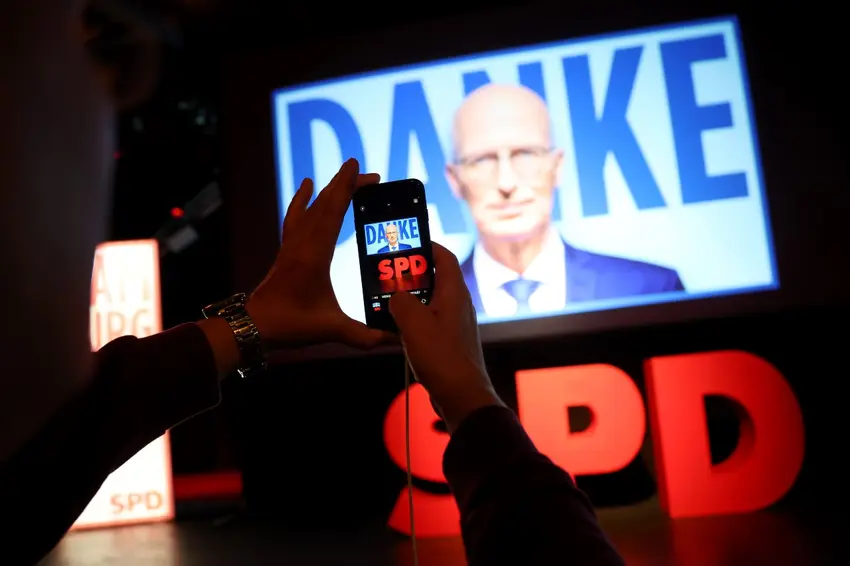
In state elections held on Sunday, the centre-left Social Democrats (SPD) remained the largest party in Hamburg, despite losing ground to both leftwing and rightwing parties.
The Greens, who currently govern in a coalition with the SPD, also lost votes and landed in third place, behind the centre-right CDU.
In the wake of the vote, Hamburg Mayor Peter Tschentsched signalled his intention to seek another coalition with the Green Party as his first preference. However, he will also hold talks with the CDU.
Meanwhile CDU candidate Dennis Thering, who oversaw a jump in the party's vote share from 11.2 to 20 percent, said he wanted to send the Greens "into the opposition".
"We are in favour of a stable government with positive changes, particularly in the areas of security, the economy and transport," he said.
Trump-Zelensky row shows 'new age of infamy has begun', says foreign minister
Germany's foreign minister said over the weekend that the "unspeakable" row between US President Donald Trump and his Ukrainian counterpart Volodymyr Zelensky in the White House resembled a "bad dream", as Kyiv's European allies rallied to its side.
"Yesterday evening underlined that a new age of infamy has begun," Foreign Minister Annalena Baerbock said in a televised statement.
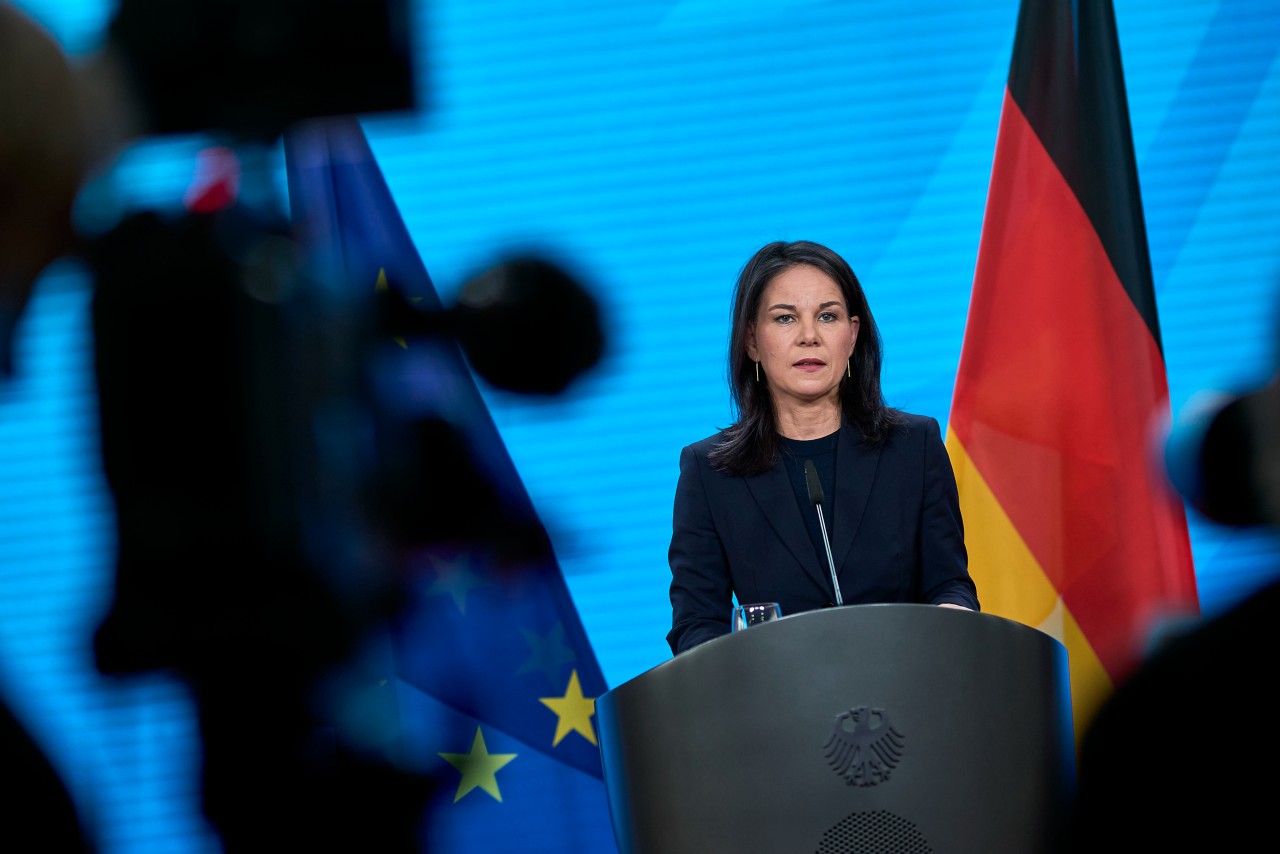
"Many of you will have slept uneasily after seeing the unspeakable videos from the White House," she said, adding: "Honestly, I did too."
"Sadly this was not a bad dream, but a heavy reality," she said.
She rejected "switching... the roles of victim and aggressor" in the conflict, an allusion to Trump's comments that Zelensky was "gambling with World War III".
READ ALSO: Trump-Zelensky row heaps pressure on Germany's politicians
ECB to cut rates again as debate heats up on pause
The European Central Bank is expected to cut interest rates again this week in a bid to boost the floundering eurozone economy, even as debate heats up about when to hit pause.
It will mark the central bank's sixth reduction since June last year, with its focus having shifted from tackling inflation to relieving pressure on the 20 nations that use the euro.
With "growth stuttering", a quarter-point cut at Thursday's meeting "is a near certainty", HSBC bank analysts said.
A reduction by a quarter percentage point would bring the bank's benchmark deposit rate to 2.50 percent.
The rate reached a record of four percent in late 2023 after the ECB launched an unprecedented hiking cycle to tame energy and food costs that surged after Russia's invasion of Ukraine.
But investors will be keeping an eye out for signals from ECB President Christine Lagarde that a pause might be on the horizon, after some officials said it was time to start discussing the matter.
Markets have indicated they expect the ECB to bring the deposit rate steadily down to two percent by the end of the year to support a eurozone economy that has showed increasing signs of weakness.
READ ALSO: German economy shrank more than expected at end of 2024
German government hopefuls 'planning billions for defence spending'
The two parties hoping to form Germany's next government are planning to plough hundreds of billions of euros into defence and infrastructure when in power, the Bild newspaper reported Sunday.
Both subjects have become all the more pressing for Berlin's prospective new leaders as Europe's largest economy stutters and the United States' apparent pivot toward Russia casts doubt over the continent's security.
Citing several sources close to the negotiations, Bild said the investment plan was brought up on Friday at coalition talks between the conservative CDU/CSU alliance, which came top in the recent elections, and the centre-left Social Democrats (SPD).
Both parties are considering the quick establishment of two special investment funds, one for the threadbare German army and another to renovate the country's creaking infrastructure.
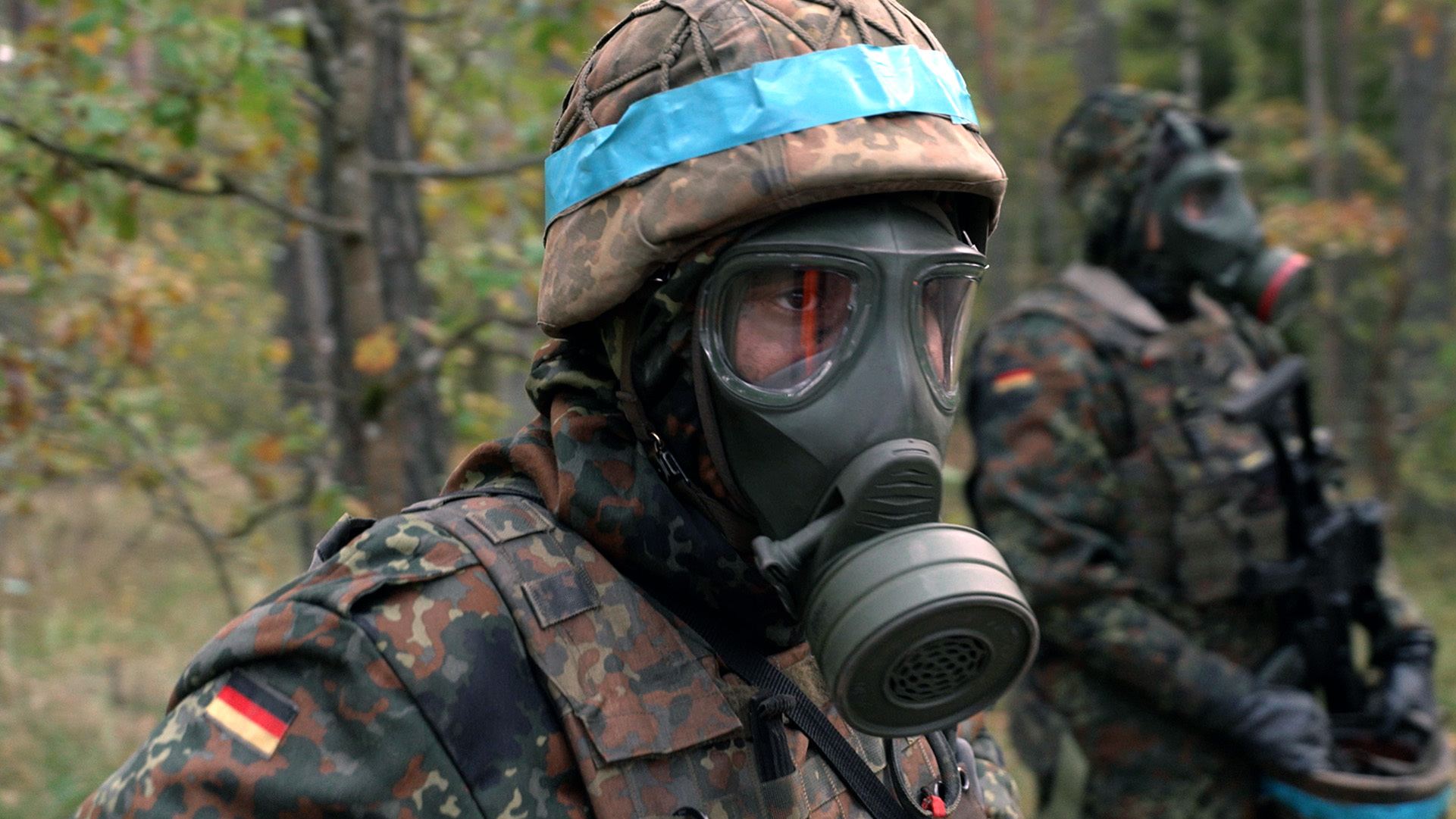
The amounts discussed for each of the funds are "significantly higher" than the fund of €100 billion already set aside for the German army in 2022 after the Russian invasion of Ukraine, according to the newspaper.
Both sides' negotiators looked at economist reports evaluating the needs of the German army at €400 billion and that of the country's infrastructure at half a trillion euros, Bild added.
READ ALSO: Can Germany’s next leaders reach a deal on immigration, benefits and the economy?
The two funds are conceived as emergency spending outside the federal budget and as such exempt from Germany's "debt brake", which places a strict constitutional limit on how much the state can borrow outside of crises.
According to Bild both parties are likewise considering relaxing that restriction, seen by a growing number of Germans as a straitjacket ill suited to the challenges facing the country.
But any such reform would require a two-thirds majority in parliament, which the proposed Conservative-Social Democrat coalition would not have in the new legislature.
With reporting by DPA and AFP
Comments