
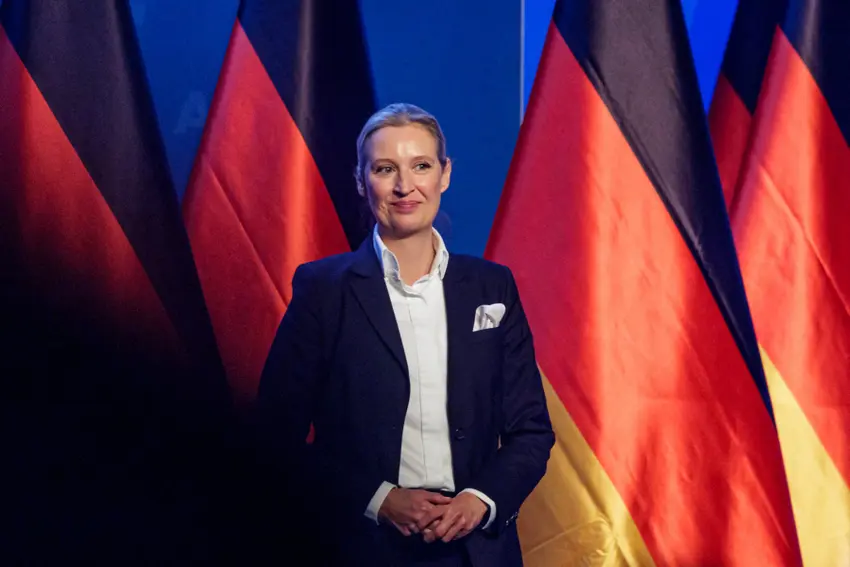
Alice Weidel – openly gay, in a relationship with a Sri Lankan-born woman and perhaps not even a German resident – could be a perfect poster child for modern German cosmopolitanism.
But despite her background, the leader of the Alternative for Germany (AfD) is no effete liberal. Weidel, all polls suggest, will make history in Sunday’s federal election, leading a far-right party to second place for the first time in German postwar history.
She has long railed against mass migration, expressed doubts about climate science and suggested Germany should rekindle relations with Vladimir Putin’s Russia.
While many of her counterparts on the European far right have become more moderate as their support has grown, Weidel has on the contrary radicalised. This election campaign, she has embraced “remigration”, a white nationalist term for mass deportations of ethnic minorities. She even called Hitler a “communist” and “socialist” during a discussion with Elon Musk, who has thrown his weight behind the party.
READ ALSO: Remigration - what is the AfD's mass deportation policy?
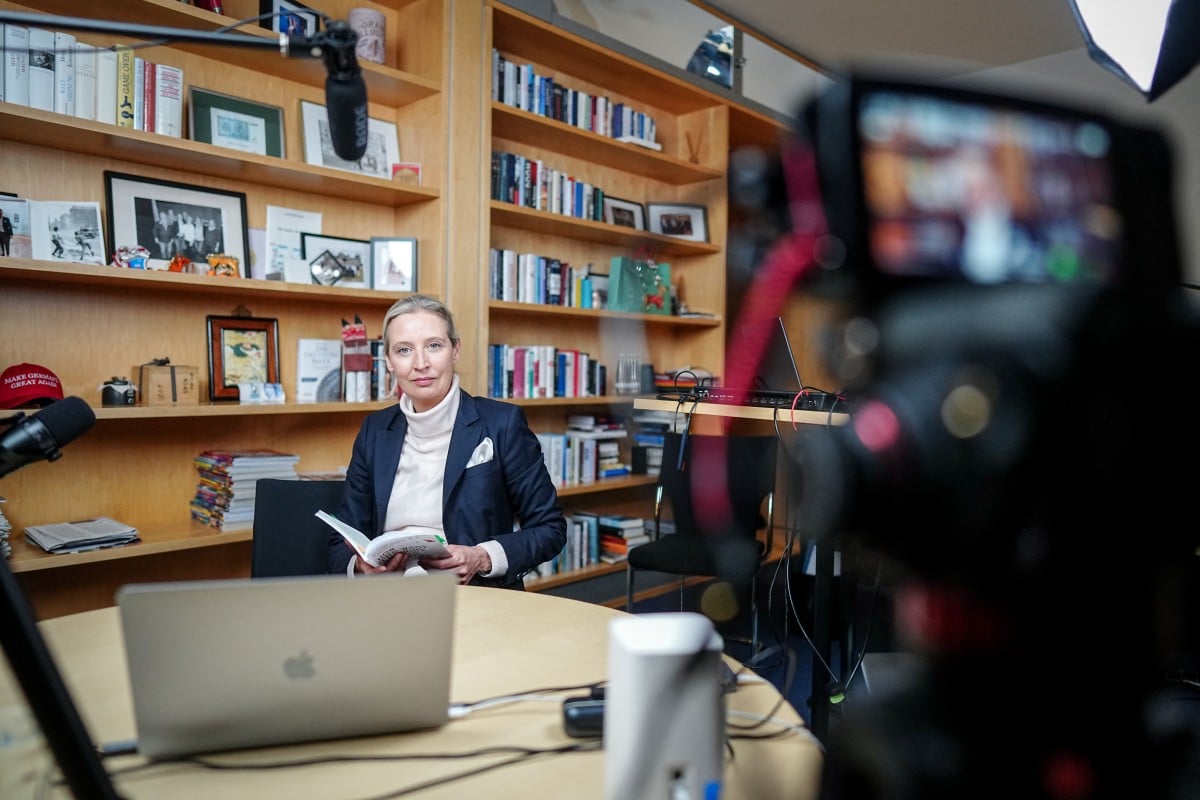
Shift to anti-immigration agenda
How did a gay woman who may not even live in Germany become the face of a new German nationalism?
Weidel was born in West Germany in 1979. After graduating from university, she worked for a time as an analyst for Goldman Sachs before moving to China to work for the Bank of China. Her background as an international banker is just one of the many surprising elements to her biography.
She joined the then-marginal AfD in 2013, by her own account because of economic issues when the focus of the so-called “professors’ party” was opposition to the single European currency. She quickly rose through the ranks of the party, which narrowly failed to enter parliament in the 2013 election.
In 2015, she was elected to the AfD’s federal executive committee; two years later she was named the party’s co-leader. She entered parliament after the AfD, campaigning against then-Chancellor Angela Merkel’s decision to allow more than a million refugees to enter Germany, won nearly 13 percent of the vote in the 2017 election.
In parliament, Weidel embraced the party’s shift away from economic issues and towards anti-immigrant nationalism. In 2018, she told the Bundestag that “burkas, headscarf girls and subsidised knifemen and other good-for-nothings will not secure our prosperity, economic growth and, above all, the welfare state”.
Even so, she remained for a long time associated with the party’s relatively moderate wing. In 2017, she supported an attempt by the party’s executive to expel Thuringian politician Björn Höcke – widely seen as the leader of the furthest right faction of the party – in response to his calls for a “180-degree turn” on remembrance of the Nazi era.
All the while, she became increasingly open about her private life. In speeches, she referred to raising children with her partner, Sri Lankan-born Swiss film producer Sarah Bossard. She also gave interviews in which she discussed her love for Switzerland, where she is widely reported to live. (The AfD says Weidel’s main residence is on the German side of Lake Constance, on the German-Swiss border.)
Under Weidel’s leadership, the AfD has narrowed its definition of the family to mean a mother, a father and children – in stark contrast to the private life of its leader. The party also wants to incentivise Germans to have more children through tax changes.
Dr. Sarah Wagner, a politics professor at Queen's University Belfast told The Local, "Alice Weidel’s leadership of the radical right-wing AfD—a party that is, in parts, anti-constitutional—is nothing short of paradoxical, given that she is a gay woman married to a Sri Lankan partner...
"Yet, as Elon Musk’s article in Die Welt illustrates, such biographical details can be easily exploited to sanitise the party’s image, masking its deeply xenophobic and anti-democratic core."
This election campaign, Weidel’s rhetoric has hardened further. She has said she regrets attempting to expel “liberal-minded” Höcke, whom she now says would be suitable for a ministerial position. Having previously sought to remove references to the loaded term “remigration” from the party’s agenda, she has since embraced it.
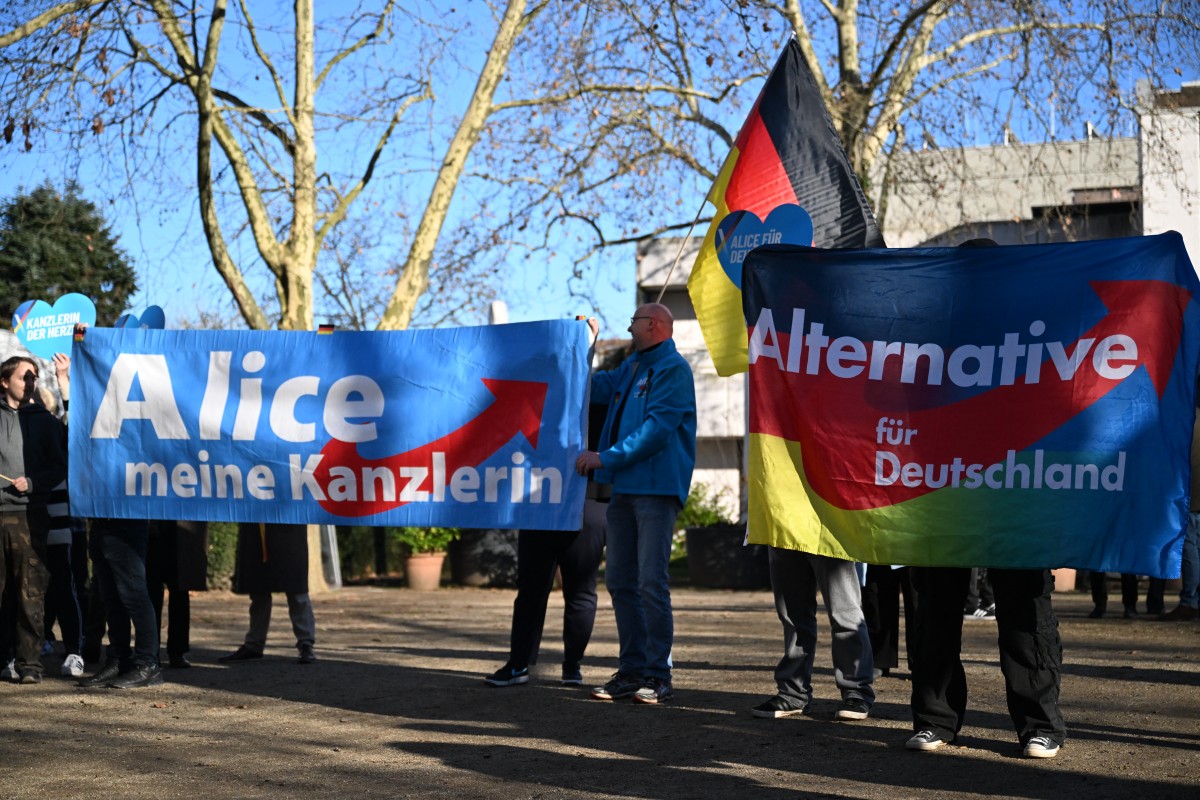
At the party’s congress in January, delegates shouted “Alice für Deutschland,” a pun on the banned Nazi-era slogan “Alles für Deutschland” – everything for Germany.
She has been unafraid to lean on her identity to argue her positions. At the same congress, she declared that she was against immigration because “these people come from a culture where homosexuals are killed”.
“That is the reason why I, as a woman who is in a relationship and raising children with another woman, am campaigning against it,” she added.
Weidel’s identity as a west German former banker lesbian makes her an anomaly in a party which prises much of its support from working class men in the former East Germany. But it has certainly helped her inexorable rise, or at least not hurt her.
Mainstream parties have ruled out cooperation with the AfD, so the party is all but certain to be shut out of government after the election. The question is whether Weidel will continue to be deft enough to bring what she herself admits is the ultimate prize – power by 2029 – into reach.
READ ALSO: How would a strong AfD election result impact foreigners in Germany?
by Ido Vock
Comments (1)