
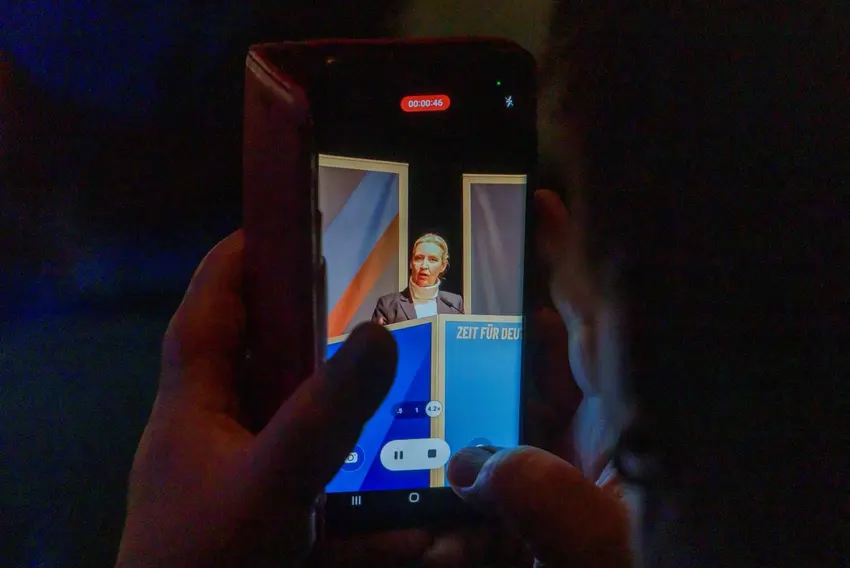
Disinformation and targeted propaganda campaigns are increasingly prevalent, and in the run up to the Bundestag election on February 23rd, Germany has become a target.
A new report suggests that over 1,000 fake social media accounts have been boosting engagement on posts by members of the far right Alternative for Germany (AfD) and also adding to criticism of their opponents.
This comes as another investigation, by the German nonprofit Correctiv and the US watchdog NewsGuard, revealed that a former Florida deputy sheriff who fled to Russia to avoid extortion charges is behind hundreds of fake news sites spreading disinformation.
Fake news disseminated on those sites promoted German political parties that the Kremlin sees as friendly, such as the AfD and the far-left Alliance Sahra Wagenknecht (BSW), while attacking leaders of the parties that are critical of the Kremlin, or voice support for NATO, Ukraine or the EU, like the Greens, the Social Democrats (SPD) and the Christian Democrats (CDU).
Between disinformation posted on fake news sites, and comments by bots on social media, multiple campaigns promoting the AfD and attacking their critics have been identified.
Over one thousand fake accounts targeting Germany’s 2025 election
Cyabra, which works with businesses to identify disinformation campaigns online, shared a new report with The Local that identified more than 1,000 fake accounts operated by bots designed to engage in Germany’s election discourse and boost AfD narratives.
The research analysed online profiles from three German parties – AfD, SPD and the Greens – and found that a surge of fake profiles were strategically promoting pro-AfD narratives and undermining their opponents.
An analysis of comments on posts by AfD co-leader and the party's top candidate Alice Weidel found that 23 percent of them were made by fake accounts, artificially boosting her digital presence and creating an illusion of broader support. On one key post, which gained 126 million views, Cyabra noted 33 percent of interactions were from fake profiles.
Meanwhile, 15 percent of posts discussing The Greens came from fake profiles and 14 percent of those commenting on the SPD.
In one post from Chancellor Olaf Scholz, 22 percent of comments came from fake accounts. Many of the fake account interactions reinforced criticism by real users, artificially enlarging SPD opposition online.
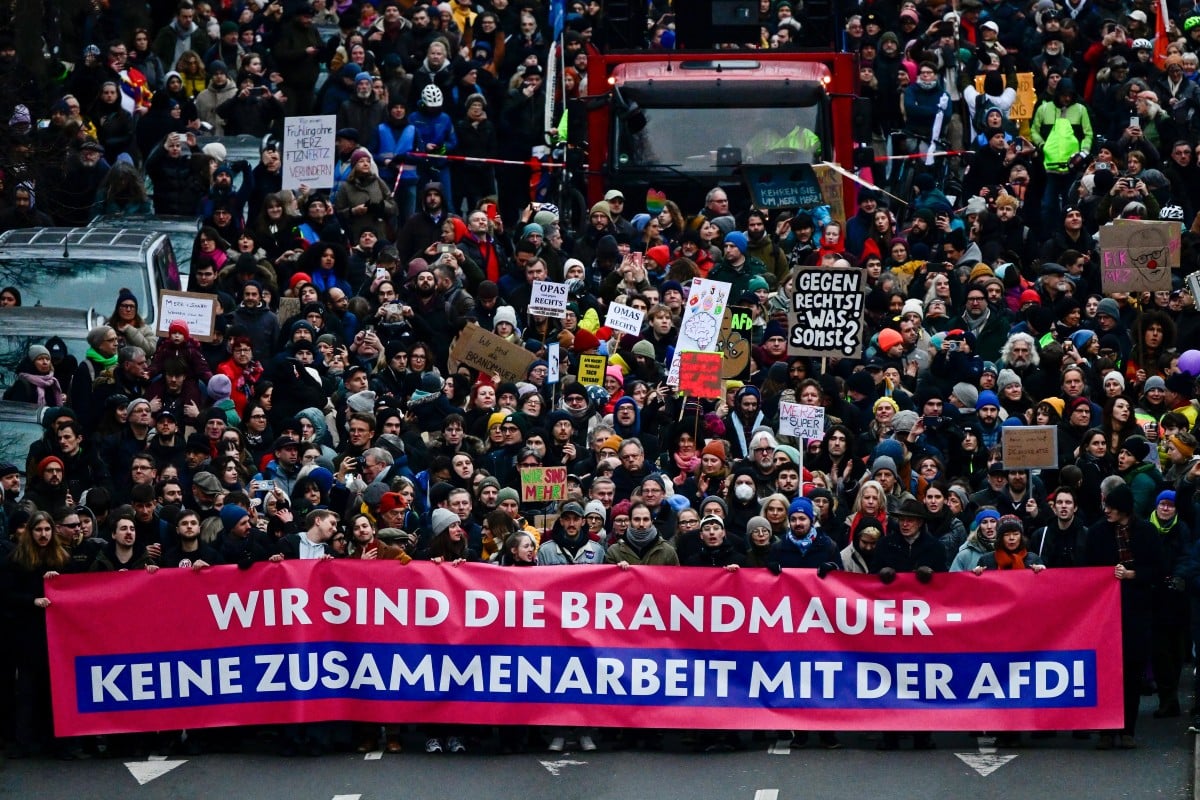
Comments from fake accounts were focused on targeted narratives, such as attacking support for the 'firewall' (the word that mainstream parties use to show they are unwilling to work with the AfD) and suggesting that the Greens' and SPD's stance against the far right would “destroy Germany”.
Of the 1,000+ fake accounts that Cyabra identified, nearly half were created more than a year ago, suggesting the long-term scope of the disinformation campaign. But more and more bots are continuously brought online, with the other half having been created within the past year and about 13 percent launched in the past 30 days.
How were fake accounts identified?
Asked about their research methods, Cyabra CEO Dan Brahmy told The Local that the company uses AI technology “to analyse online conversations, detect fake accounts, and measure the authenticity of engagements".
“Our detection methods … leverage behavioural analysis, network mapping, and content verification to minimise false positives,” he added.
Cyabra’s report suggests that the German election is being actively manipulated.
“The scale and coordination of this disinformation reveals a dangerous effort to reshape public perception, influence undecided voters, and push a specific political agenda,” the report’s authors wrote.
Not new tactics
Coordinated disinformation campaigns, including those targeting election campaigns, are not new to Germany.
From the beginning of the current election, investigations led by Der Spiegel and other investigative news outlets have identified a flood of fake news and fake videos shared online.
The Greens in particular have long been the target of disinformation campaigns online - at least since the 2021 Bundestag election.
Meanwhile the AfD party has proven adept at using popular social media channels to their advantage for years.
READ ALSO: 'Disinformation campaign' - Kremlin propagandist sets sights on German election
How vulnerable are German elections?
So far German voters overall appear to be a bit harder to sway than those in other major democracies.
Regarding the aforementioned fake news sites allegedly created by the former US sheriff, for instance, AFP reported that they have struggled to achieve the same traction in Germany compared to similar campaigns in the US, which got tens of millions of views.
This is perhaps partially explained by the fact that the creator behind that campaign is not German, and is not intimately familiar with German political dialogue.
It may also help that at least 63 percent of German voters still rely primarily on traditional media (TV, radio, newspapers etc) as their primary source of election information, according to a recent YouGov survey.
But the increasing intensity of online disinformation campaigns is worrying. With disinformation being actively disseminated at this scale, experts warn that we could be seeing the beginning of an era in which social media has more sway over elections than the political campaigns themselves.
Experts suggest that democracies need to make efforts to safeguard against disinformation. Researchers at Stanford University have identified effective tactics for combating disinformation such as promoting civic, democratic and media education, among others.
Comments