
Why are Americans abroad ditching their US citizenship?
Between three and six thousand Americans have cut ties with the US each year since 2013, with many pointing to tax burdens for citizens abroad as the reason.
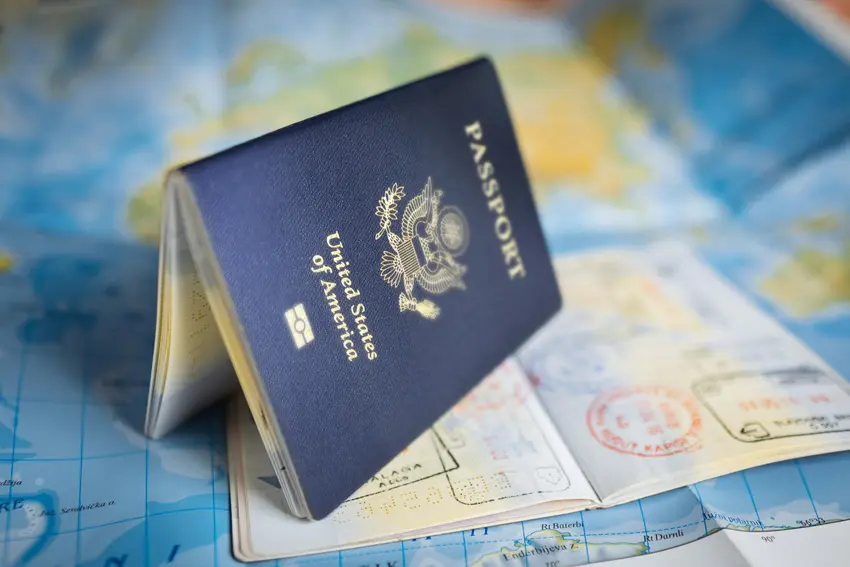
With an estimated three to nine million US citizens living abroad, this figure might not stand out. However, compared to most other developed countries, renouncing US citizenship is surprisingly common.
While the number of relinquishments is only three times higher than in the 1970s, it’s still up sharply from lows in the 1990s and 2000s. So, what’s driving this upward trend? It might, in part, be due to many US citizens feeling that their government doesn't truly represent them.
However, Olivier Wagner, founder of 1040 Abroad, a tax firm helping US expats become tax compliant, believes the real driving factors are frustrations over tax burdens, complex reporting requirements, and the long reach of US financial regulations. “It can get very complicated, very quickly,” says Wagner.
US taxes: they’re taxing
While tax season can be stressful for many, it’s even more complicated for Americans living abroad. Surveys suggest that nearly a quarter have considered giving up their US citizenship. Among those looking to renounce, more than four in 10 cite US tax filing requirements as the main reason.
Schedule a consultation with a 1040 Abroad expert to get on track with your US taxes
The United States is one of only two countries requiring citizens to file taxes regardless of where they live. Each year, expats are tasked with reporting their worldwide income, including wages, benefits, rental income, and business profits. The rule means expats may have to file and pay taxes in two countries.
Even though the IRS offers help, such as foreign income exemptions and tax credits, a lot of expats still find the reporting requirements too much to handle.
“Many expats just want to live a normal financial life,” says Wagner. “It’s safe to say the vast majority of Americans living abroad are what we consider ‘middle class’. We’re not talking about billionaires living on yachts.”

“Accidental Americans”
Tax liabilities are often unclear, even for US citizens living abroad, with around two-thirds unaware they need to file US tax returns. However, lawyers say that many of the citizenship relinquishments are driven by so-called “accidental Americans” – people who grew up abroad and had no idea their US citizenship came with tax responsibilities.
Between 2010 and 2015, getting a CLN (Certificate of Loss of Nationality) became increasingly difficult, with long waitlists, sky-high fees, and tricky tax rules. For many accidental Americans, this made it even harder to renounce citizenship.
Let a 1040 Abroad expert help you get on the path to tax compliance
Legal experts say these barriers could violate the US’s international law commitments. Lawmakers from other countries have also urged the US government to scrap the fees, taxes, and other requirements, especially for accidental Americans who don’t have much connection to the US.
Beyond the tax return
As a US expat, once your foreign bank account reaches $10,000 (€9,700), you’re required to file the FBAR (Foreign Bank Account Report) with the US Treasury Department.
Some expats also need to disclose other foreign financial accounts, like savings or investments. For example, if you have $5,000 (€4,650) in savings and $4,975 (€4,626) in investments, but your investments rise to $5,025 (€4,673) at any point during the year, you’ll need to report both accounts.
The FBAR deadline is 15 April, with an automatic extension until 15 October if it’s missed. Some expats with accounts above certain limits also need to file Form 8938. This form is designed to catch people hiding money in overseas accounts.
Single expats with foreign accounts over $200,000 (€186,000) at the end of the year – or over $300,000 (€279,000) during the year – need to file. For couples, the thresholds are $400,000 (€372,000) at year-end – or $600,000 (€558,000) during the year.
Help is at hand
If you’re finding it tough to file your US taxes each year, don’t worry – you’re not alone. Hiring a specialised US tax advisor can make all the difference. The experts at 1040 Abroad are here to guide you through your tax obligations, tailored to your unique situation. Book a call with them today and start your journey to tax compliance.
This content was paid for by an advertiser and produced by The Local's Creative Studio.
Join the conversation in our comments section below. Share your own views and experience and if you have a question or suggestion for our journalists then email us at news@thelocal.de.
Please keep comments civil, constructive and on topic – and make sure to read our terms of use before getting involved.
Please log in here to leave a comment.
Comments (1)