
Verdi Union calls BVG strike in Berlin next week
The Verdi trade union is calling for a one-day transportation strike in Berlin on Monday, January 27th,Tagesspiegel reported on Wednesday evening.
The strike is being raised in response to a pay dispute, with the union suggesting that Berlin's transportation company (BVG) has been unwilling to meet employees' demands.
Verdi negotiator Jeremy Arndt asked train and bus passengers in Berlin for patience, suggesting that the warning strike was the last option that union members had to enforce their demands.
The union is asking for salary increases of €750 per month for the BVG's nearly 14,000 employees as well as other bonuses and monetary benefits.
READ ALSO: 'No family life' - A Berlin bus driver explains why public transport workers are striking
BVG has said these demands are not financially viable.
If BVG and Verdi fail to reach an agreement it is likely that passengers will face further and longer transportation stoppages as further strikes are carried out.
In the early months of 2024 passengers were impacted by a series of transportation strikes across Germany.
Deutsches Museum removes Elon Musk from exhibit
A portrait of Space X CEO Elon Musk, which had been hanging in the Deutsches Museum in Munich, has been removed by museum curators.
The image of Musk had been on display in an exhibit on space, among "visionaries of past and present", since 2022.
Museum officials told various German media outlets that the decision to remove the installation from the exhibit had been made as early as November.
They added: "It can be problematic to celebrate living persons in a museum exhibit... because such a representation can be understood as an uncritical appreciation".
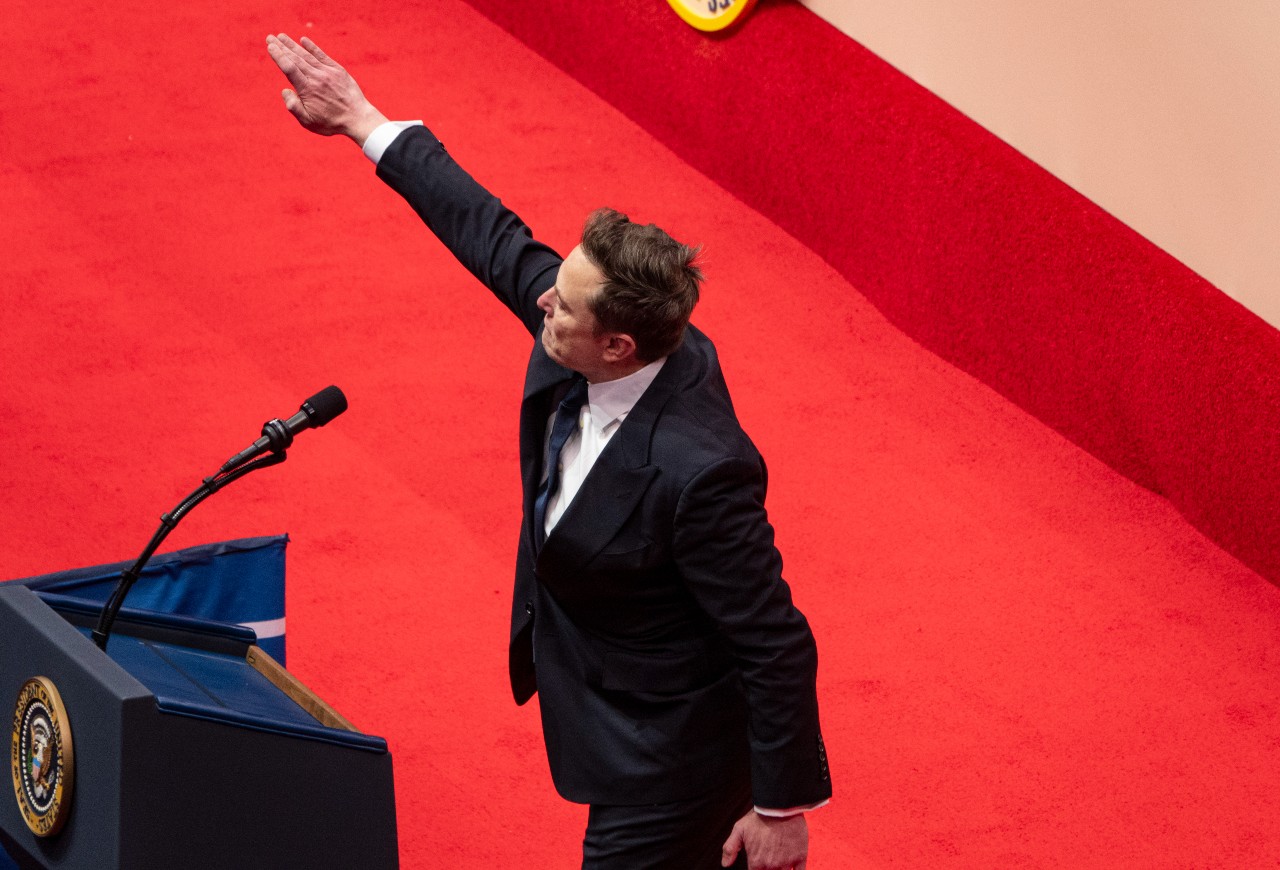
Musk, who initially gained notoriety for his success in leading tech companies like Tesla and Space X, has recently gotten more attention for his contentious political views and incursions into foreign elections.
He recently endorsed the far-right AfD party and hosted a live call with leader Alice Weidel. On Monday he was also seen making what many perceived to be a Nazi salute (Hitlergruß) on stage at the presidential inauguration in the US.
German and French leaders say countries must act for 'strong' Europe
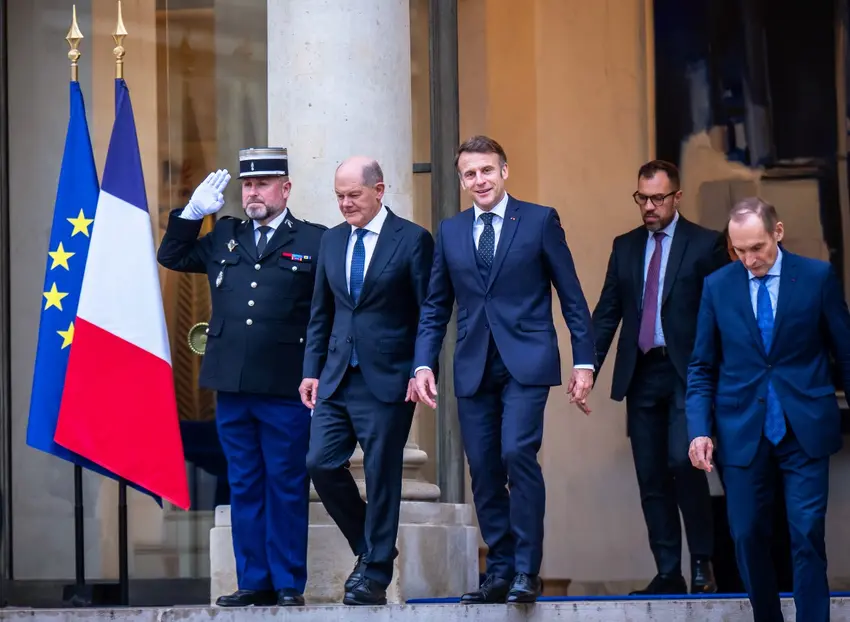
The leaders of France and Germany agree that both countries must act for a "strong" Europe, President Emmanuel Macron said after meeting Chancellor Olaf Scholz in Paris according to AFP.
At a joint news briefing with Macron at the Elysee palace two days after US President Donald Trump took office, Scholz said the new US leader "will be...a challenge".
He added: "Europe will not cower and hide, but instead be a constructive and assertive partner."
This stance, Scholz said, will be "the basis for good cooperation with the new American president".
Europe and US are linked by "a long history of friendship and partnership" which he called "a stable foundation" for future relations, he added.
Trump, had already announced a number of policy measures "which we will, of course, analyse in detail together with our European partners", Scholz said.
The meeting between both leaders came on the 62nd anniversary of the Elysee Treaty, a framework for French-German bilateral relations after World War II.
Scholz asks why Afghan knife attack suspect was still in Germany
Chancellor Olaf Scholz condemned a deadly knife attack Wednesday as "an unbelievable act of terror" and demanded to know why the Afghan suspect had been able to stay in the country.
Bavaria state interior minister Joachim Herrmann said the suspect had come to the attention of authorities for violent behaviour on three separate occasions.
"The authorities must explain as quickly as possible why the attacker was even still in Germany," Scholz said in a statement reacting to the killing of a man and a child in Aschaffenburg.
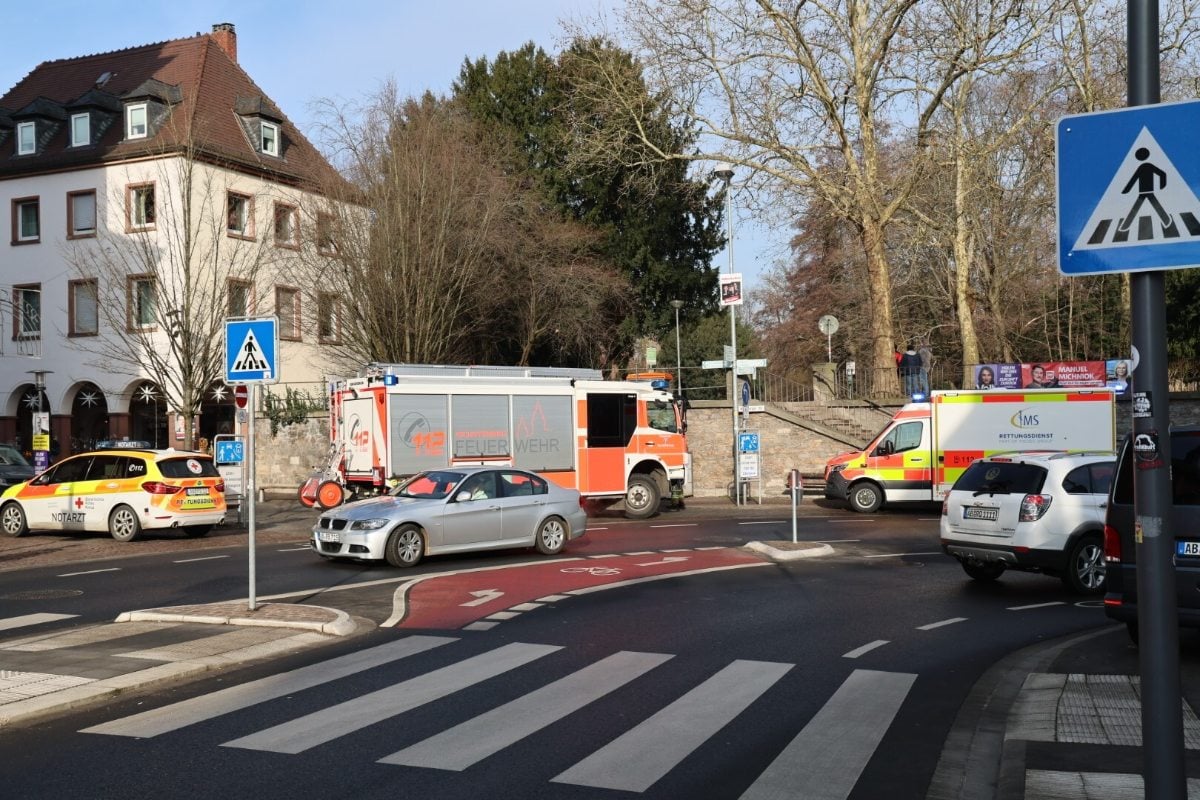
The unnamed suspect had entered Germany in 2022 and unsuccessfully sought asylum and was meant to have left late last year, Herrmann told a press conference.
Scholz, who faces elections a month from now, called the attack "an unbelievable act of terror" and offered his sympathies to the victims' families and two more people injured.
"But that is not enough: I am sick of seeing such acts of violence occurring in our country every few weeks, by perpetrators who have actually come here to find protection here," he added.
He said that "a false notion of tolerance is completely inappropriate here".
Once authorities had worked out how the man had been allowed to remain in Germany, "consequences must follow immediately from the findings -- words are not enough," he said.
READ ALSO: Knife attacker in Germany kills man and child in broad daylight
Germany's Bertelsmann strikes deal with OpenAI
German media and publishing giant Bertelsmann said Wednesday that it had struck a deal with US tech firm OpenAI to use ChatGPT and to collaborate on a range of other projects.
Bertelsmann, whose businesses include major European broadcasting group RTL and publisher Penguin Random House, said using the generative AI chatbot would help improve efficiency in "everyday work".
The group said in a statement it also aimed to work with OpenAI to develop new ways to create and distribute video, audio and text.
Other projects include improving marketing at the publishing business through such steps as personalised book recommendations, and boosting search functions in the media division's streaming services.
READ ALSO: Is Germany really planning to ban ChatGPT?
"We want to be a media company at the cutting edge of technology," a Bertelsmann spokesperson told AFP, adding that for this it needed "partners - and OpenAI is one of them".
It did not disclose the value of the deal, or mention the potential impact on jobs.
Major German media group Axel Springer, whose titles include top-selling tabloid Bild and daily Die Welt, has recently announced job cuts, pointing in part to the role of AI in rendering certain roles such as proofreading obsolete.
Far-right AfD hails Trump win ahead of German elections
A day after Donald Trump's inauguration as US president, the far-right Alternative for Germany (AfD) held a jubilant Berlin campaign event, despite the biting winter cold.
"Donald Trump... has of course given us a bit of a tailwind, and now it's our turn to step up," said Daniel Krueger, an AfD councillor greeting supporters at the door in his flat cap and hunting jacket.
Like Trump, the AfD opposes immigration, denies climate change, rails against gender politics and has declared war on a political establishment and mainstream media it condemns as censorious and "woke".
Ahead of Germany's February 23rd elections, it is polling at around 20 percent, a new record for a party that has already shattered a decades-old taboo against the far right in post-war Germany.
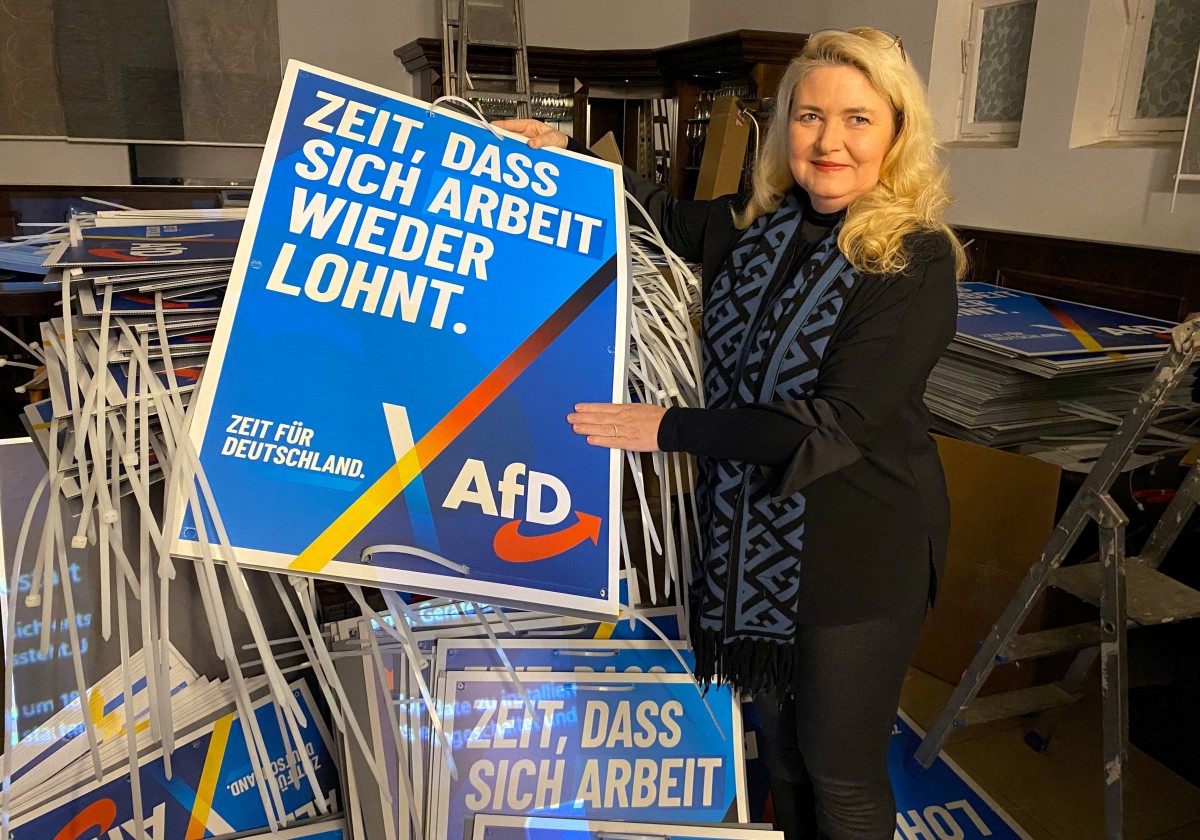
After Trump's inauguration ceremony, Alice Weidel, the AfD's top candidate, wrote on X that "all of this would also be possible in Germany -- you just have to want it. Choose AfD!"
Trump's comeback has been a huge boost for the party, with co-leader Tino Chrupalla among the guests at the inauguration, following right-wing populist gains in Italy, the Netherlands and Austria.
READ ALSO: How would a strong AfD election result impact foreigners in Germany?
Inside the Berlin meeting, around 100 supporters applauded as a video showed highlights from the AfD's latest party congress in the eastern town of Riesa.
"At the moment the mood is really, really good," said AfD Berlin chair Kristin Brinker at the event where a cardboard cut-out of Weidel was standing on the bar.
The AfD is not traditionally strong in Berlin, but Brinker said that lately she had been "approached on the street... with comments like 'Great, keep it up!'"
With reporting by Femke Colborne and AFP.
Comments