
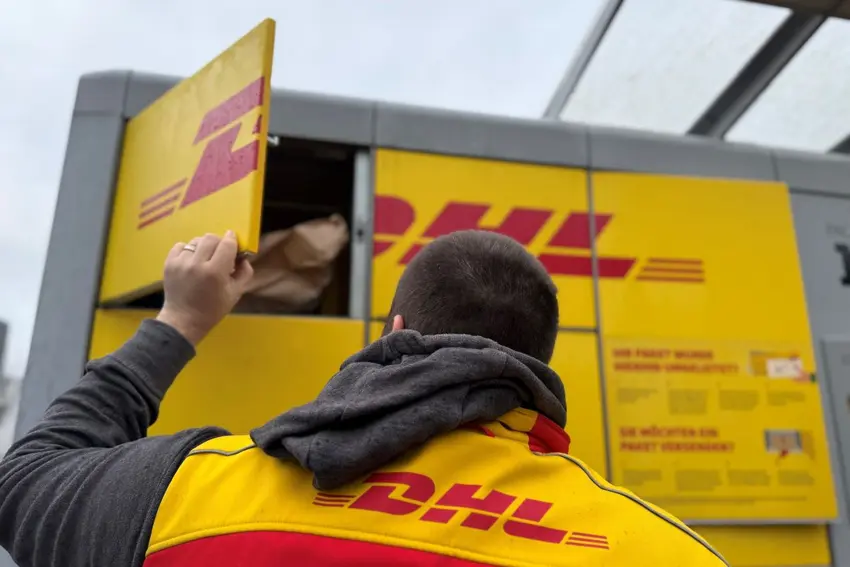
German residents can expect that they'll need to retrieve their packages from lockers and delivery hubs much more often in the coming years.
Market leader DHL announced plans to double the number of its pick-up and drop-off stations from the current 15,000 to 30,000 by 2030.
The competitors GLS and DPD also set a goal of operating 3,000 joint stations by 2027 - currently they have about 100.
The Austrian provider myflexbox, whose stations are used by several parcel companies, wants to go from the current 460 to at least 5,000 in Germany in 2030.
What are 'Packstations'?
DHL relies mainly on its own 'Packstations', which basically work like lockers where packages are placed and customers can come to claim their goods on their own time. They are located at supermarkets, train stations, gas stations or in public places.
The company currently has 14,200 Packstations for parcels and 800 "post stations" where consumers can drop off and pick up parcels with QR codes and buy stamps. Some "post stations" also have a video consultation.
Adding to the number of Packstations this year, a DHL subsidiary called DeinFach is building new white vending machines which will also store DHL packages and other goods for pick-up. DeinFach is scheduled to launch at least 60 of these machines in January and expects to have more than 1,000 of them by the end of the year.
The development of new vending machine pick-up points and the goals of delivery companies all point in one direction: there will be more customer pick-ups and fewer at home deliveries in Germany soon.
Why ditch doorstep deliveries?
The primary reason DHL prefers the use of drop-off and pick-up points comes down to cost. It's cheaper for logistics companies to drop off several parcels at one station than with each household individually.
Postal companies have felt the squeeze of rising costs recently, and have recently announced postage price increases and other cost-saving measures.
READ ALSO: Why sending post in Germany will get more expensive in 2025
On the customer side, however, there are also some cases when pick-up points make more sense. Such as when the customer isn't home to receive the delivery and would prefer it is stored in a secure place.
For now customers are often the given the choice between doorstep delivery or drop-off at a delivery hub or locker.
According to the German Association of Cities, parcel terminals are an improvement in urban areas.
It cuts down on traffic, Managing Director Helmut Dedy told DPA, but he added that parcel machines have to be located so that delivery vehicles don't block lanes when they park there.
How many parcel stations can Germany make space for?
Myflexbox, a Salzburg based company, also operates pick-up lockers in Germany. Within the last year the company's machines in Germany have grown from 135 to 460. By the end of the year, the company expects to have 1,000.
Myflexbox boss Lukas Wieser suggests that Germany has the demand to support at least 100,000 parcel stations.
Asked if all of these stations might crowd German streets, he dismisses the idea. He points to Poland which has more than 40,000 locations without issue, and the trend is growing.
In Poland, however, there are also less bureaucratic hurdles for installing such boxes on the streets.
"In Poland and Estonia, anyone can set up vending machines in no time at all, but in Germany you have to submit various applications to the authorities - it takes time for them to be approved," says DPD manager Michael Knaupe.
With reporting by DPA.
Comments