
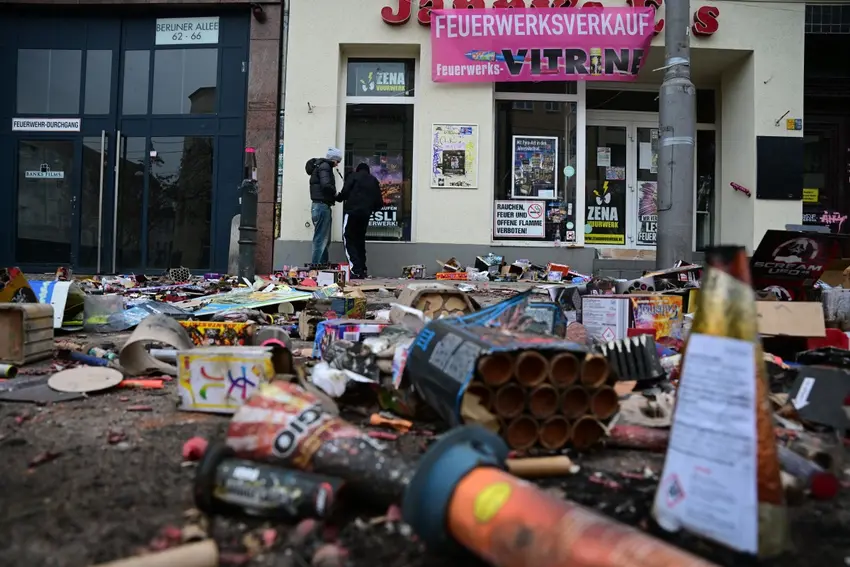
Mass push in Germany to ban fireworks after New Year's chaos
The explosive annual debate on fireworks use at New Year's Eve continued Monday as AFP reported that 1.5 million Germans backed a police union push to ban them.
Critics have long sought to end Germany's raucous use of pyrotechnics to ring in the New Year, citing safety concerns but also air pollution and the traumatic effects on domestic pets.
This year, five people died across Germany in accidents linked to legal and illegal fireworks, including powerful home-made devices, with many more people sustaining injuries.
More than 100 police officers were reported injured nationwide, including about 30 in the capital Berlin, which is known for its especially intense use of rockets and firecrackers, sometimes aimed at law enforcement personnel.
"This massive violence against our colleagues must stop," the national police union GdP's Berlin chapter said in a petition handed over to the interior ministry on Monday.
Interior Minister Nancy Faeser had last week called for tougher penalties for people who misuse fireworks.
"Hooligans and violent criminals who attack emergency services and endanger people's health with highly dangerous explosives will only respond to a tough line," she told the Bild daily, calling for up to five years' jail for offenders.
For his part, Chancellor Olaf Scholz, who faces elections on February 23rd, said in an interview with Stern magazine that he found the idea of a nationwide fireworks ban "somewhat strange".
READ ALSO: Inside Germany - Fireworks mayhem, an online visa portal and how to learn real German
Pace of German emissions cuts slows in 2024
German greenhouse gas emissions fell again in 2024 but at a slower rate, due to lagging green investment by industry and households, according to a study published Tuesday.
Emissions in Europe's biggest economy fell 3 percent in 2024, a "marked slowdown" from a 10-percent drop in 2023, according to the Agora Energiewende think tank.
Germany reflects a trend across the EU, where a 3.8-percent drop is expected in 2024, after 8 percent in 2023.
However, the study says that the 2024 emissions total of 656 million tonnes does represent a "historic low" and the year's 18 million-tonne drop is larger than the emissions target enshrined in domestic law.
Emissions are down 48 percent from 1990 levels, nearing the EU target of a 55-percent cut by 2030.
But progress continues to lag in sectors such as transport, construction and building use, while industrial emissions actually saw a slight rise of two percent despite Germany's general economic stagnation.
EU rules don't prohibit Musk's German far-right chat on X
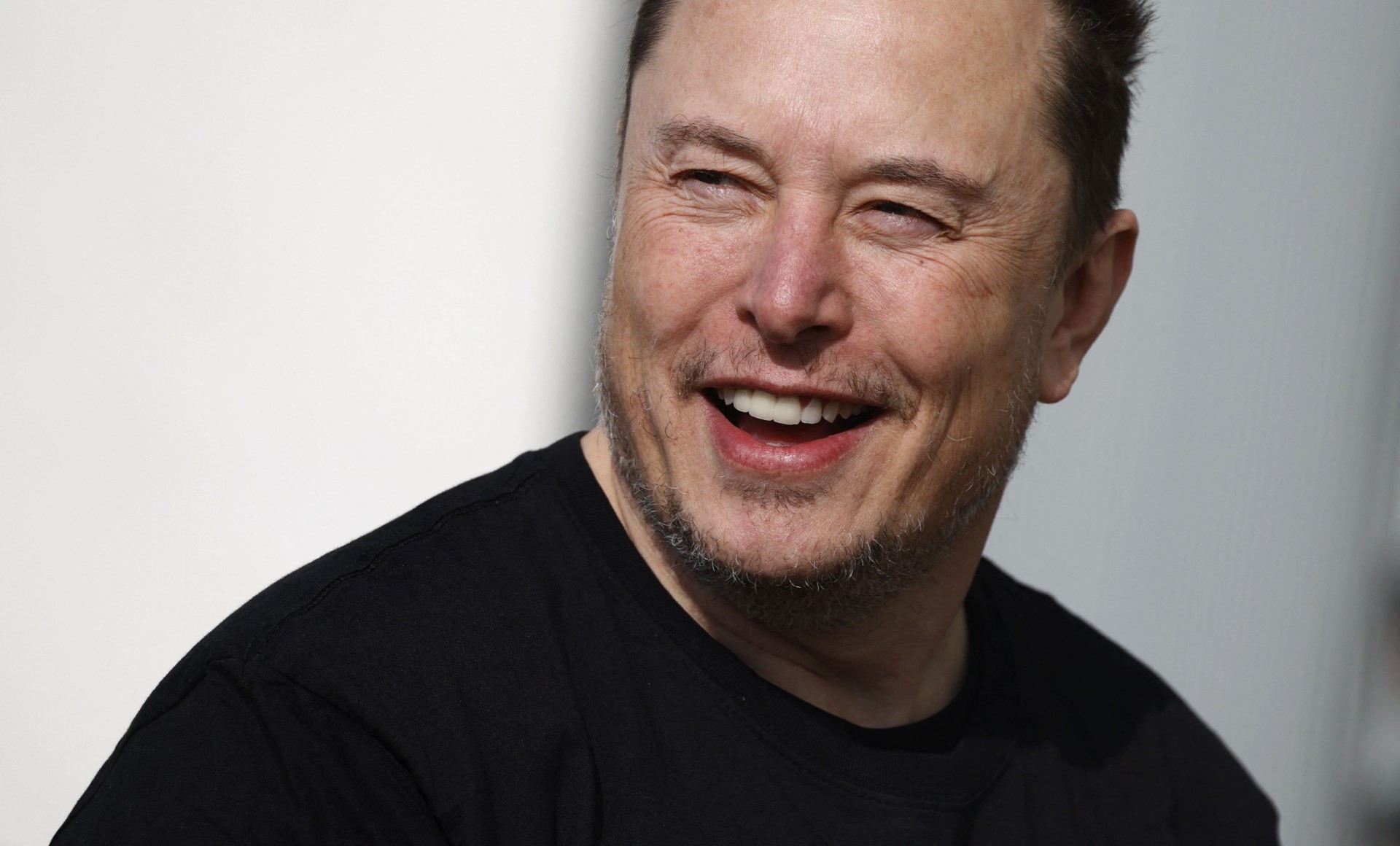
Elon Musk's controversial plan for a live chat with a German extreme-right leader on X this week is allowed under European Union laws but will be scrutinised for potential violations of electoral interference rules, Brussels said on Monday.
The world's wealthiest man -- who owns the X social media platform -- has provoked fury across Europe with a string of attacks on the continent's leaders, including German Chancellor Olaf Scholz.
READ ALSO: Scholz slams 'erratic' Musk comments, support for AfD
Musk has offered strong support to the extreme-right Alternative for Germany (AfD) ahead of snap elections in the country on February 23rd, and will host a discussion on X with the party's leader Alice Weidel on Thursday.
His X platform is already under investigation under the EU's landmark content law -- known as the Digital Services Act (DSA) -- regarding how it tackles the spread of illegal content and information manipulation.
The EU's digital spokesperson said a live discussion on X was not a violation of EU rules and insisted the DSA did not "censor any type of content".
"Nothing in the DSA prohibits the owner of a platform or anyone to host a live stream and express his personal views," spokesperson Thomas Regnier told reporters in Brussels.
Electric car sales fall by 27.4 percent in Germany in 2024
Sales of new battery-powered cars plunged by 27.4 percent in Germany last year, official figures showed Monday, as crisis hit the country's flagship auto industry.
Overall, some 2.8 million new vehicles were registered in Europe's largest car market in 2024, one percent fewer than in the previous year, the KBA federal transport authority said.
Of those, only 380,609 were electric vehicles, equivalent to a market share of 13.5 percent.
The weak sales figures represented a "lost year for electro-mobility", said EY analyst Constantin Gall.
After years of growth, demand for battery-powered cars in Germany has lost momentum since the withdrawal of government subsidies at the end of 2023.
In comparison, in Norway EVs accounted for 88.9 percent of new cards sold last year. According to a report by Focus, Norway's EV adoption has been driven largely by a sustained tax incentive policy, as opposed to Germany which had rolled out incentives temporarily and then walked them back in 2024.
READ ALSO: How much more will you pay for an electric car in Germany in future?

Right-wing extremist crimes increased last year
More than 33,000 right-wing extremist crimes were recorded in Germany in 2024, more than at any time since surveys on the topic began in 2001.
In total, the police registered 33,963 right-wing motivated crimes by November 30th of 2024.
Almost two-thirds of all of the politically motivated right-wing crimes - 21,311 acts - were propaganda offenses, and in 5,097 cases the police charged incitement to hatred (hate speech).
READ ALSO: FACT CHECK - Are people punished for using Nazi slogans in Germany?
A little more than 1,100 of those were acts of violence such as bodily harm.
The number of right wing extremist crimes has risen in Germany in recent years. Compared to 2023, the number increased by at least 17.34 percent last year.
These findings, as reported by DPA, were released as part of a response by the Federal Ministry of the Interior to an inquiry by the Left Party.
Germany calls for cool heads over Syria handshake snub
The German government has advocated a pragmatic approach to Syria's transitional government after the new leader in Damascus declined to shake the hand of visiting German Foreign Minister Annalena Baerbock.
Baerbock and her French counterpart Jean-Noel Barrot on Friday became the most senior Western figures to travel to the Syrian capital since Islamist-led forces toppled longtime ruler Bashar al-Assad last month.
But their meeting with new Syrian leader Ahmed al-Sharaa started off awkwardly when the devout Muslim shook hands with the French top diplomat on arrival but declined to do so with Barrot's female German counterpart Baerbock, instead greeting her by placing his hand on his chest and nodding.
German media reacted with outrage to the incident, which the mass-circulation Bild daily labelled a "diplomatic scandal".
German foreign ministry spokesman Christian Wagner on Monday said the declined handshake "simply shows who we are dealing with at the moment" at the helm of the war-scarred nation.
"We cannot just talk to people worldwide with whom we completely share all values and views," Wagner said.
Baerbock herself had also briefly reacted to the incident on Friday.
"As soon as I arrived, it was clear to me that there would be no ordinary handshakes," she told journalists, hinting that she and Barrot both disapproved of this.
With reporting from AFP and DPA
Comments