
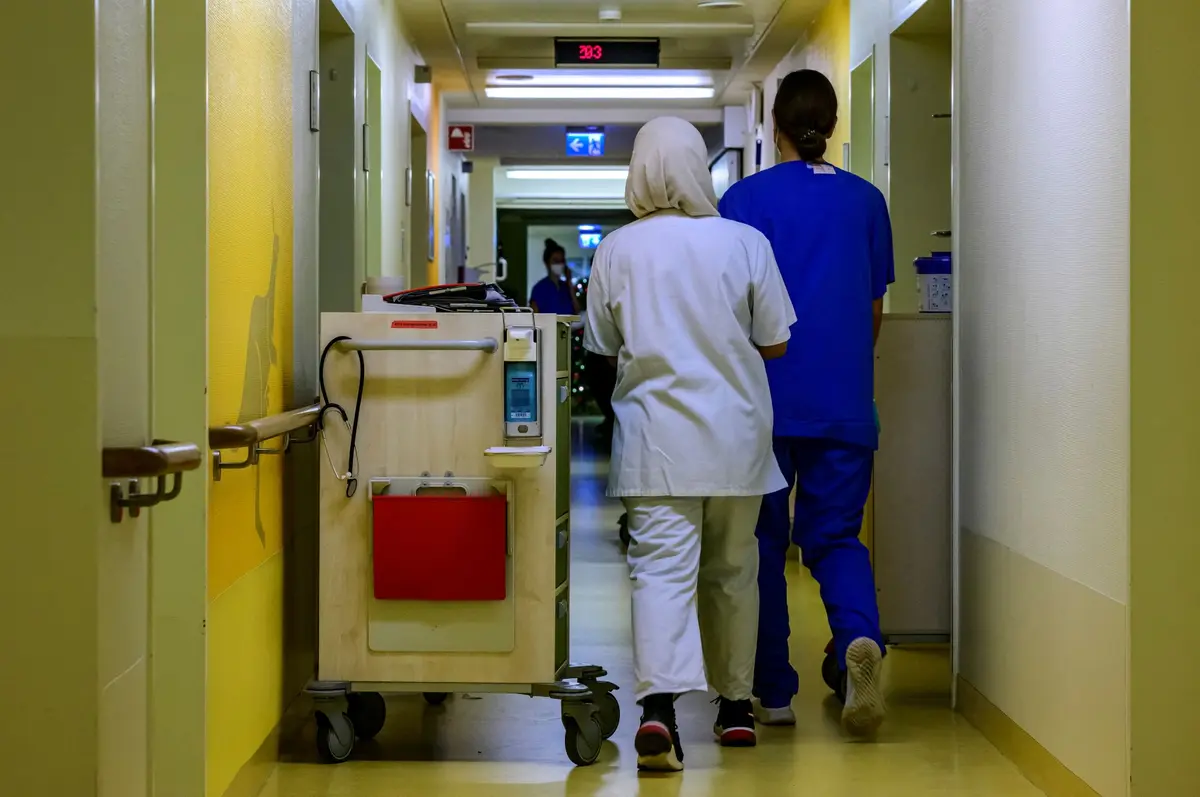
It's becoming harder and harder to get a doctor’s appointment in Germany.
So if the way you’ve been dealing with your minor ills recently is to just pop to the chemist for some painkillers, then I’m afraid I’ve got some bad news for you. Your pharmacist may have run out of ibuprofen.
What is more, if you end having to go to hospital for lack of treatment, you could well find that they’ve run out of saline solution when you get there.
Yes, you read that right: German hospitals are having trouble getting materials as simple as IV drips.
What is more, 70 percent of them are now operating at a loss (two years back, it was ‘only’ 30 percent) and the bill on reforming hospital care which passed the Bundestag on Thursday could force 15 percent of them to close. And yes, the next letter you get from your health insurer will probably be a notification that your premiums are set to rise – again.
Just a few years ago, Germany was envied the world over for its health system: most of us received a decent standard of care for roughly the same percentage of our salaries as in other comparable countries. So why are costs creeping up while provision goes downhill?
Essentially, the issue in Germany is that there is enough money in the health system, but that it is spent in the wrong places.
Why are medicine shortages so bad?
Take drugs, for instance. Germany has actually been suffering regular shortages since the mid-2000s – due to cost-cutting. Back then, the law was changed so that statutory health insurers no longer had to pay the list price for medicines prescribed by doctors: instead, they were told to go away and negotiate direct bulk-buy deals for generic drugs.
Given that the biggest insurers in Germany represent more patients than many countries have inhabitants (Techniker Krankenkasse, alone, has 11 million), they’ve since been able to negotiate huge discounts.
The downside of this is that reputable, Europe-based suppliers can’t afford to produce that cheap, so much of our domestic drugs industry has disappeared in recent years – one of the last painkiller production lines shut in Frankfurt this summer – and we now by bargain-basement pills from India and China.
To a certain extent, this problem affects all of Europe and the USA, where production costs are also high and insurers or governments are also cutting costs by bulk-buying generics. It’s worse here, though, because there is no national strategy: all of our insurers are competing against each other to get the cheapest deals, pushing prices down by up to 99 percent.
That leaves no margin on standard commodities like painkillers or IV drips – and so almost no-one who can afford to sell to us.
To his credit Health Minister Karl Lauterbach recognised how dangerous this race to the bottom has become and legislated last year to allow for fairer buying practices. That’s why – and here is some good news – the list of medicines affected by shortages he introduced is half the length it was last autumn.
But that’s of little consolation if the specific drug you need is one of the 500 currently scarce. And given that health insurers’ supply agreements run for up to five years, it could take a long while before we have markedly improved provision.
Why are hospitals set to close?
The same is true of hospitals, where Lauterbach’s long-planned reform, which passed Bundestag yesterday, will need years to take effect – and on whose effectiveness the jury is out. What our Health Minister has correctly identified is that Germany has far too many clinics which are too small.
Although they provide care close to home, many of them are actually harmful to patients because the per-case remuneration system incentivises them to carry out a maximum number of procedures – even if they don’t have the best equipment or real specialists.
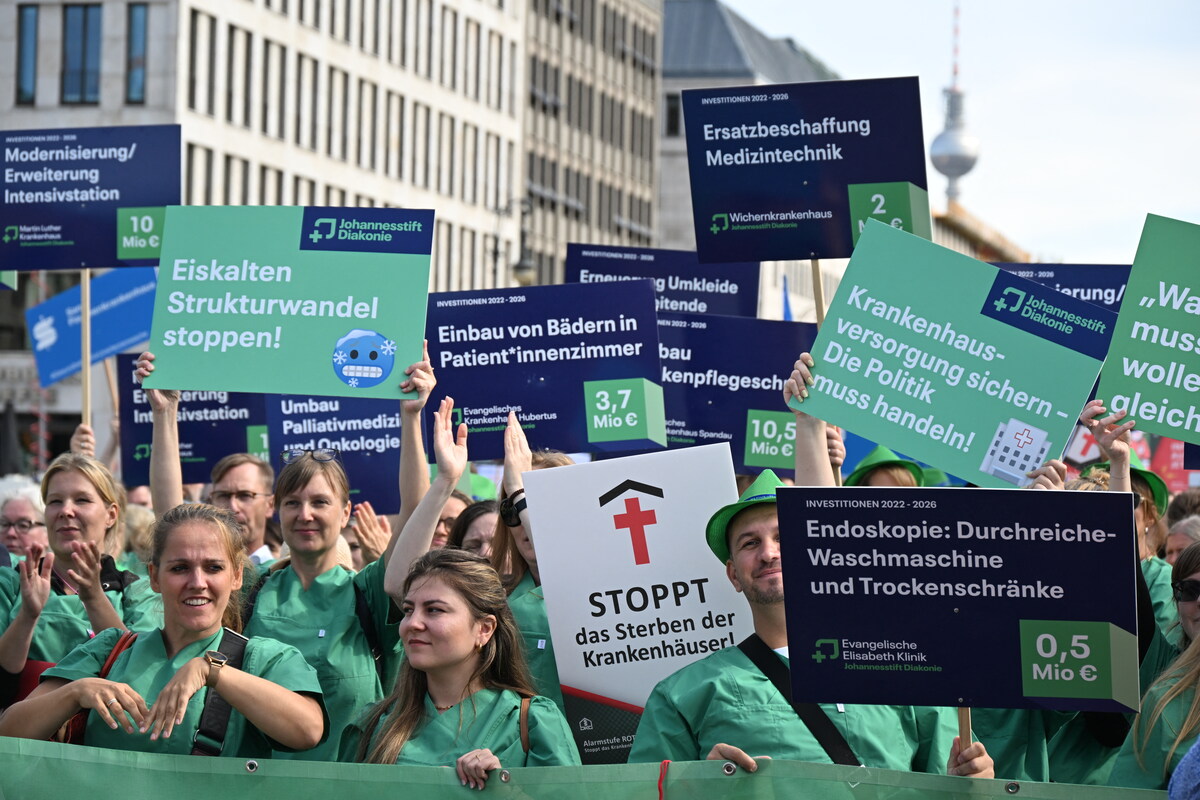
Despite some consolidation in recent years, there are still 1,800 hospitals here. To put this into context, when neighbouring Demark reformed its healthcare system, it calculated that – as long as they are truly excellent and supported by a network of medical centres and doctors’ surgeries – it only needed around 30 hospitals to cater to the needs of its 5 million inhabitants.
Were we to introduce a similar system, we would only need 500 hospitals. The problem with Lauterbach’s reform, however, is that the Danish central planning approach is lacking. Instead, the reform rejigs financing in favouring bigger and better clinics with more departments so that less effective ones will be forced to close. For those of us in cities with large university hospitals (I, for one, live within limping distance of the excellent Universitätsklinikum Eppendorf), there will be little change; other parts of the country may see much of their clinical capacity jeopardised as money is re-routed away from underperforming providers.
Why are premiums rising?
Indeed, to soften the blow and give hospital operators time to restructure, Lauterbach’s legislation has earmarked a nominal sum of €50 billion. As we all know, money doesn’t grow on trees – especially not in recession-hit debt-brake Germany. And so this money will be taken from the statutory health insurers. That – alongside the fact that we are getting older, fatter, and sicker – is one reason why your premiums are set to rise again.
Unless, of course, as ever, you’re privately insured. After all, private health insurers are just that: private – health – insurers. Legally, all they have to do is cash premiums and pay for contractual levels of cover in return. So despite Lauterbach’s public pleas that they chip in, they don’t have to (and won’t want to) pay for hospitals to close departments, merge with others, and move premises.
This, of course, is in a situation where private patients get preferential treatment in hospitals (single-bed rooms, more frequent consultations, better food) while paying a lower percentage of their income in contributions. Absurdly, Beamte charged with administering public services – civil servants, teachers, police officers – are among those who generally benefit from attractive private policies.
This is a state of affairs so perverse that, as I wrote in reference to the priority given private patients at doctor’s surgeries, “it’s enough to make you want to join the Communist party”, as Nana used to say.
Now, even conservative newspapers like Westfälische Nachrichten, hardly a hotbed of socialism (I once worked there), are questioning the wisdom of a two-tier insurance system which leads to money being lavished on well-off patients while failing to guarantee provision of even the most basic medicines.
Another family saying passed on by old Nan: “Only two things are certain in life: death and taxes.” Currently, despite rises in the latter, the former is looking even more certain than ever.
What's your view on the state of healthcare in Germany? Do you agree with the picture Brian paints?
Comments (1)