

With Germany in need of skilled workers, the requirements for obtaining citizenship have recently been relaxed.
Still, applicants need to show that they are fitting into everyday German life with a few key pieces of evidence, as part of their application.
Whether this is enough to ‘integrate’, however, remains a sensitive topic.
Here are the official requirements…
In order to qualify for naturalisation, applicants must demonstrate that they have at least a basic comprehension of German.
This is usually shown with a certificate displaying a result of at least ‘B1’ on the Common European Framework of Reference for Languages (CEFR).
The certificate can be obtained by taking a test with an accredited provider, and constitutes a written, listening and speaking test.
READ MORE: 'Memorise grammar': How foreigners in Germany passed the B1 language test for citizenship
Prospective citizens also need to have passed what is called the ‘Life in Germany’ test, which is an examination testing knowledge of Germany’s political systems, history and culture.
Applicants have 100 minutes to answer 33 multiple choice questions, and 17 is considered a passing grade. New questions are periodically added in response to changes in German society.
TEST: Could you pass the German citizenship exam?
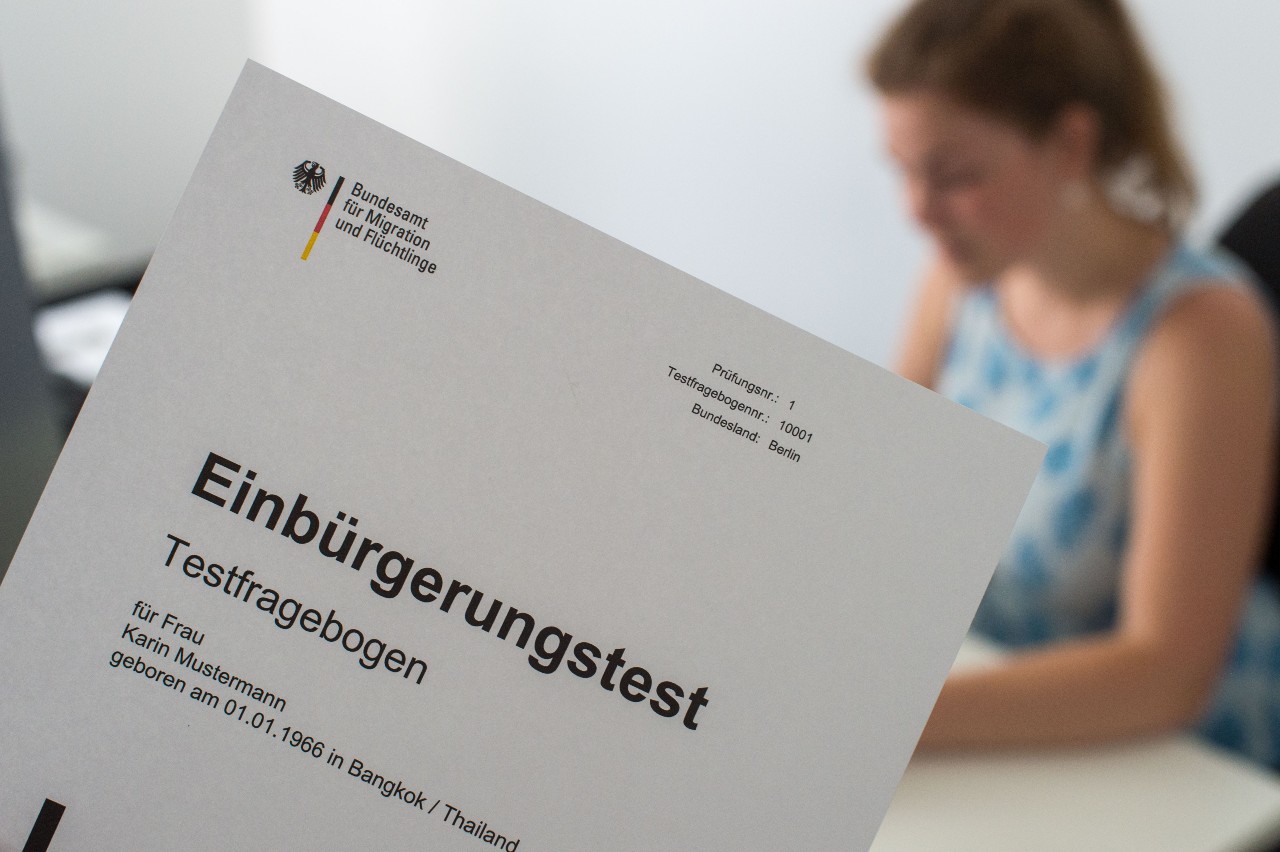
Recent changes to the naturalisation law also mean that applicants who have C1 level German and can demonstrate ‘exceptional integration’ can shave years off the residence requirements.
Examples of ‘exceptional integration’ might include completing a degree at a German university, or making a valuable contribution to your local community through volunteering.
Meanwhile, applicants also have to show that they can support themselves financially. Under the new law, you need to prove that you’ve not collected unemployment benefits and have supported yourself for at least 20 months out of the previous 24 before you apply.
This means that having regular work and contributing economically to Germany is viewed as important.
An ‘integrated’ foreigner, of course, must also obey the country’s laws and not pose any threat to Germany security.
READ ALSO: What do I need to apply for German citizenship under the new law?
…but is that enough?
Whether the existing ‘integration’ requirements for German citizenship actually constitute a smooth transition into German society remains a topic of debate.
There are around 21 million people - out of a total population of around 84 million - with a migration background living in Germany and integration means a different thing to everyone.
When the coalition government, made up of the Social Democrats (SPD), Greens and Free Democrats (FDP), were putting forward the plans to allow dual nationality for all, they argued the new law would remove barriers and improve integration of people from different cultures and backgrounds in Germany.
But others - particularly centre right and far-right politicians - have argued that allowing multiple nationalities is disloyal to Germany.
The country’s conservatives, currently in opposition, have also recently been reigniting the idea of Leitkultur, or ‘dominant culture’,
This theme was at the centre of the CDU/CSU's new party programme. According to the CDU, Leitkultur means "a shared awareness of home and belonging", an "understanding of our traditions and customs" and knowledge of German culture and language, as well as a commitment to the German constitution. Immigrants should accept these things "without ifs or buts", the programme states.
They seek to more strictly define what it means to be ‘German’, implicitly placing the country’s cultural mores over others.

…and which ‘Germany’?
There’s also the question of Germany’s distinct regional identities - as embodied in distinct stereotypes.
Essentially, values and attitudes that may be celebrated in some regions may not be in others, and that is a further challenge to those visualising ‘integration’.
Dialect also plays a huge role. There are believed to be over 250 regional variants of German, aside from ‘Hochdeutsch’.
One - Plattdeutsch - is even considered to be its own distinct language. Mastering German can be hard enough, but those seeking to make a home outside of Germany’s large cities may find mastering the niceties of Schwabisch or Bairisch, for example, a further hurdle to integration.
READ MORE: What to know about languages and dialects in Germany
So, what can you do to more fully integrate (and is it possible)?
While ‘integration’ as a concept is clearly open to interpretation, there are a few relatively simple things that prospective citizens or long-term residents in Germany can do to become part of their communities.
And perhaps that's the best way to think about integration. You will never please everyone, but it is helpful to feel like you're part of a community.
Participation clubs - whether sporting or otherwise - is a good way of getting involved. Germans love the idea of a Verein (association or club) and there are plenty of them, whatever your interest is.
Volunteering is also something worth looking into, and like participating in a club, gives new arrivals the opportunity to practise German and meet friends in a more relaxed environment than an office.
Ultimately, making the effort to meet Germans in their social and community spaces will bear fruit in terms of integration - and can make the citizenship journey a far more enjoyable one.
READ ALSO: Why do foreigners find Germany such a hard country to settle in?
Comments (1)