
Strikes enter third day
The nationwide German Train Drivers' (GDL) strike is continuing on Friday.
Around 80 percent of long-distance and regional trains won't be running, and S-Bahn services are affected too. It comes after drivers on passenger trains walked out as part of industrial action at 2am on Wednesday.
The strike is expected to last until Monday at 6pm - so expect disruption over the weekend - unless a solution is found to the dispute about pay and conditions.
READ ALSO: Could Germany's rail strikes end sooner than expected?
German population is growing
According to an estimate by the Federal Statistical Office (Destatis), the population in Germany grew to around 84.7 million people at the end of 2023.
Compared to 2022, it has grown by around 0.3 million, Destatis announced on Thursday.
The increase corresponds to the average for the years 2012 to 2021 and is significantly lower than in 2022, when record immigration - primarily due to refugees coming from Ukraine - led to a sharp increase of 1.1 million people.
According to Destatis, net immigration - the difference between immigration and emigration - was again the sole cause of population growth in 2023. It is estimated to be between 680,000 and 710,000 people.
'Up to 9,355 minors' abused by German Protestant church
A study into child sex abuse in the German Protestant church estimated that the number of minors who fell victim may be as high as 9,355.
The study published on Thursday had made the estimate after reviewing 2,225 documented cases of wrongdoing and identified 1,259 potential perpetrators.
The figure based on the available evidence was just "the tip of the tip of the iceberg", author Martin Wazlawik said at a press conference.
The total estimated number of perpetrators was close to 3,500 among the church's ministers and officials, according to the EKD-commissioned study.
The study brings some light to the extent of abuse within the German Protestant Church, which had long managed to avoid the sort of scandal which has engulfed its Catholic counterpart.
France's Le Pen distances herself from Germany's AfD over immigration row
French far-right National Rally leader Marine Le Pen said Thursday she disagreed with the idea of mass expulsion of immigrants, an idea that's believed to have been talked about by parts of Germany's AfD, her EU parliament ally.
Members of the Alternative for Germany (AfD) party, which is riding high in opinion polls, reportedly discussed the idea at a meeting with extremists, including a prominent Austrian far-right leader.
The proposed policy - known as remigration - was the mass deportation of foreigners as well as "non-assimilated citizens".
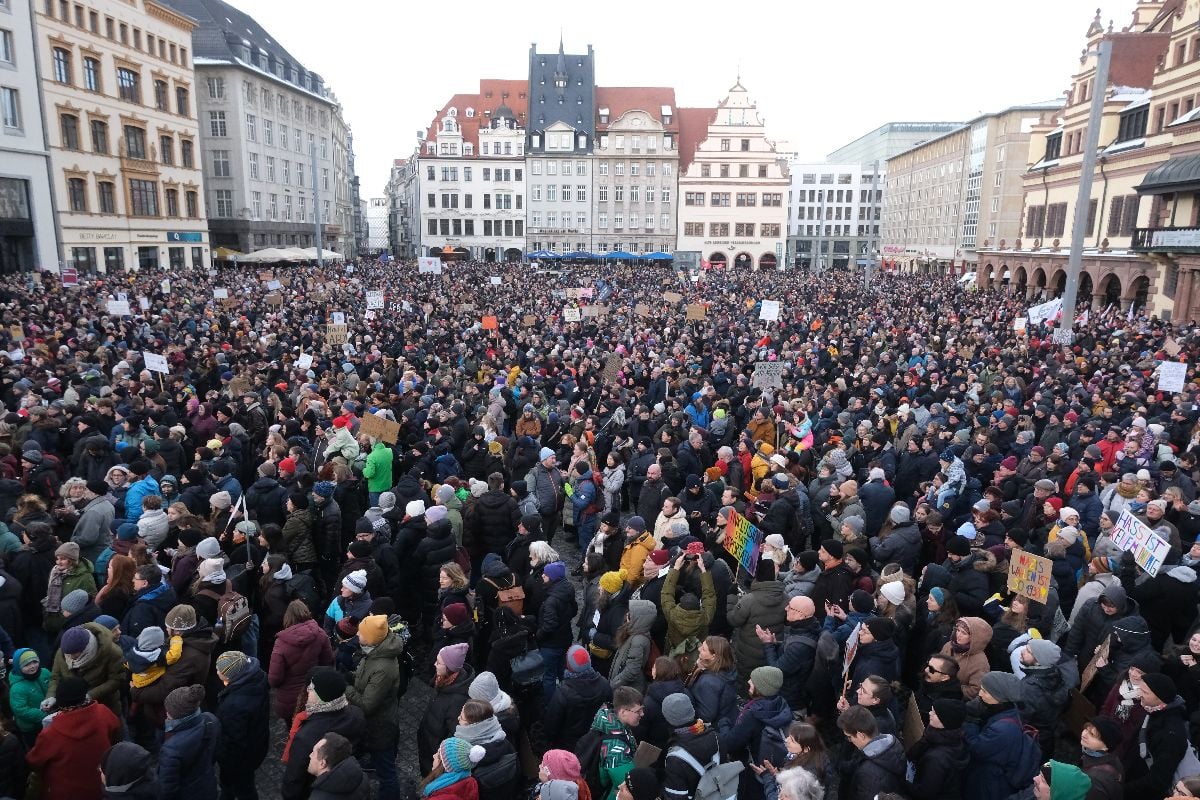
Since news of the meeting was leaked earlier this month by investigative media outlet Correctiv, hundreds of thousands of people have taken to the streets across Germany in protest, including on Thursday night.
"I am in complete disagreement with the proposal that was apparently discussed, or decided on, at that meeting," Le Pen told a news conference.
OPiNION:
- Even with German citizenship, foreigners must be wary of lurch to the far-right
- How worried should Germany be about the far-right AfD after mass deportation scandal?
German consumer mood dips at start of year
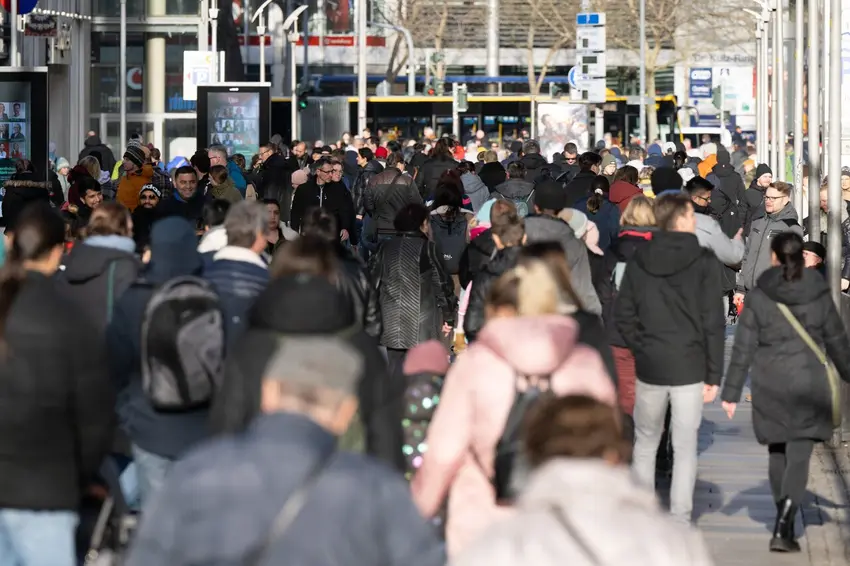
German consumers are feeling significantly more pessimistic heading into February, a key survey showed Friday, as the downturn in Europe's largest economy drags on.
Pollster GfK said its forward-looking survey of around 2,000 people plunged to minus 29.7 points, a drop of 4.3 points compared with a month earlier.
Analysts surveyed by financial data firm FactSet had expected another rise in consumer sentiment after two months of increases.
"Crises and wars, as well as persistently high inflation are unsettling consumers and thus preventing an improvement in consumer sentiment," said GfK, which published the survey with the Nuremberg Institute for Market Decisions (NIM).
German economy 'stuck in recession'
As well as consumers, German business morale sank further in January, a key survey showed this week, as the slump in Europe's largest economy showed few signs of passing quickly.
The Ifo institute's closely watched confidence barometer, based on a survey of around 9,000 companies, slid to 85.2 points in the first month of the year, after falling to 86.3 points in December.
The New Year drop disappointed analysts surveyed by financial data firm FactSet, who had expected a gentle increase in the indicator.
"The German economy is stuck in recession," said Ifo president Clemens Fuest, with companies assessing the current situation and the outlook as worse than a month before.
Comments