
What sets it apart from your standard Glühwein is what happens next: First, a fire tong, which is a special metal kitchen utensil, gets placed over the bowl with the red wine.
This tong holds a "sugar hat" (Zuckerhut), or a mound of sugar, which gets soaked in brown rum that is poured into the bowl. Then the rum-soaked sugar mound is set on fire.
While the sugar melts, it caramelizes and drips, still burning, into the liquid below. This gives the beverage a distinct and very sugary taste. Thus a Feuerzangenbowle is born.
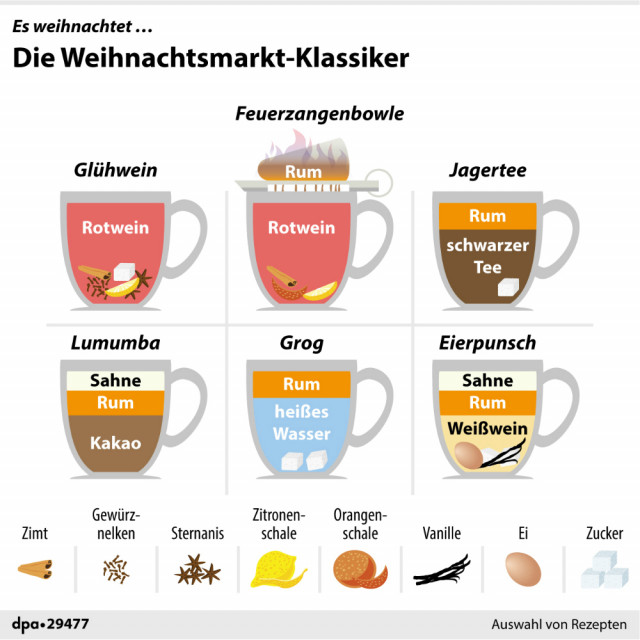 Various German Christmas market drinks. Image: picture-alliance/ dpa infographic
Feuerzangenbowle is especially popular throughout the Christmas season and gets sold at many German Christmas markets. Due to its high alcohol content, it is especially famous among students.
Tucked into a corner of the Nuremberg Christmas market, you can find the largest Feuerzangenbowle in the world. The heaving bowl stands 3.4 metres tall and holds up to 9,000 litres of hot red wine, which is sold by the cup full at a bar built around the massive container.
READ ALSO: An essential guide to Bavaria's Christmas markets this winter
Even though the drink appeared in records as early as in the 19th century, its widespread popularity can be linked to the release of the 1944 film Die Feuerzangenbowle. This German movie starts with a group of elderly men, who are drinking the punch and talking about their school years.
Right up to the present day, the movie is shown in universities around Christmas time and is hugely popular. Students even bring their own mulled wine, flashlights and other props to participate in parts of the movie.
Use it like this:
Könnte ich bitte eine Feuerzangenbowle haben?
Could I please have a burnt punch?
Ich mag keine Feuerzangenbowle, weil sie mir zu süß ist.
I don't like burnt punch because is too sweet for me.
Comments